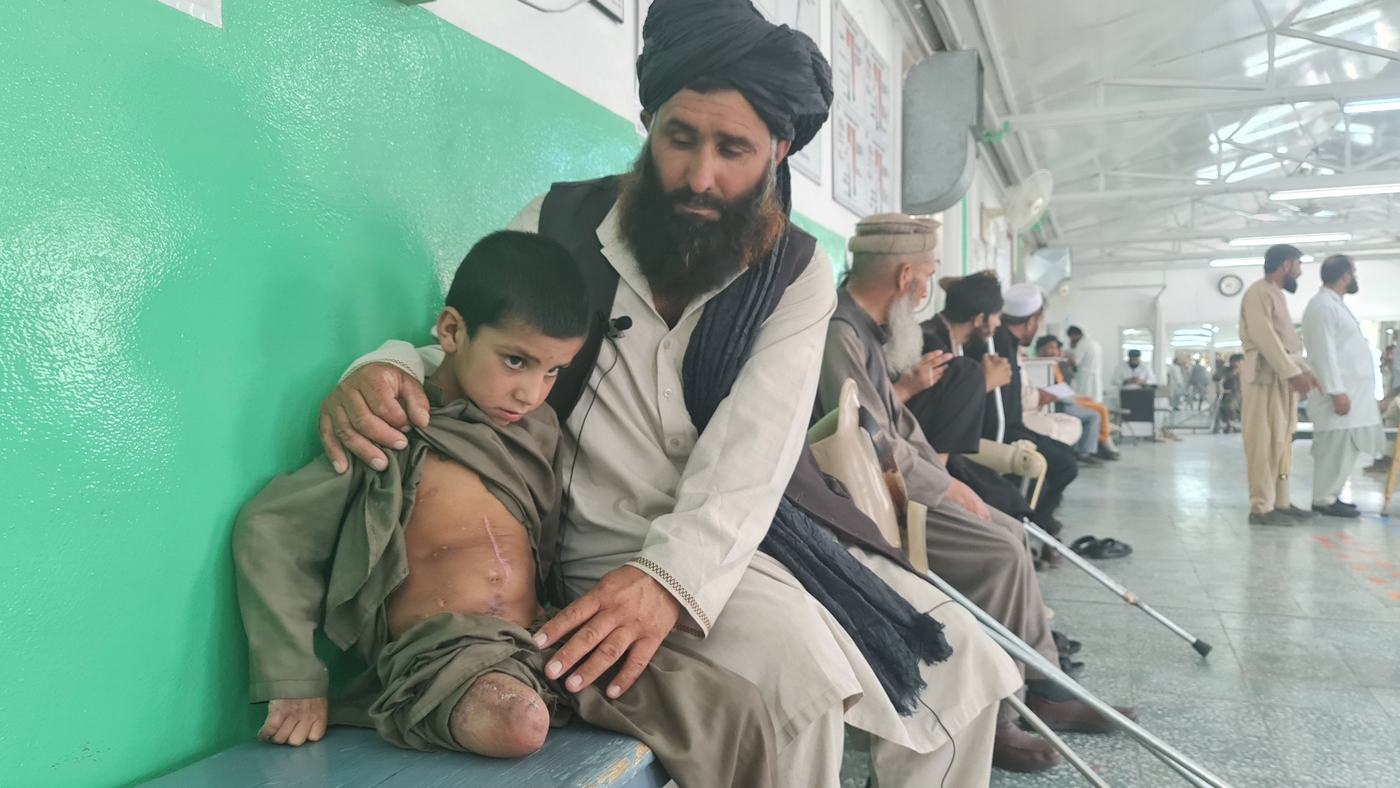
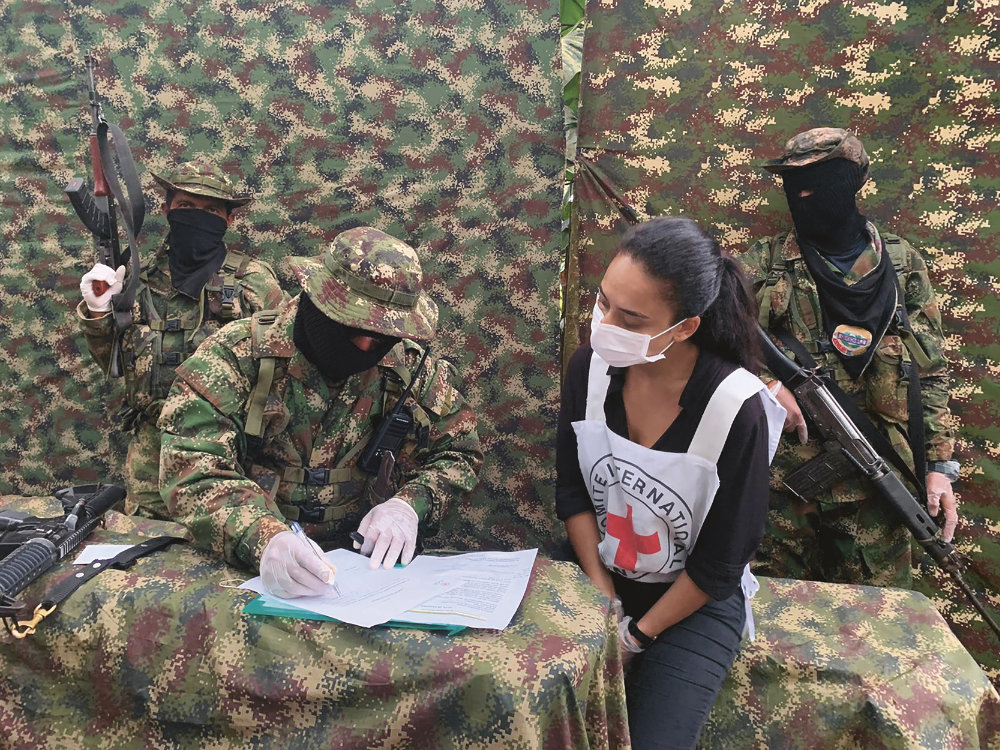
In line with its mandate, the ICRC engages with all parties to an armed conflict, including non-state armed groups. The ICRC has a long history of confidential humanitarian engagement with armed groups to alleviate and prevent the suffering of persons living in areas controlled by these groups. However, this engagement has become increasingly complex. Accordingly, the ICRC undertakes an annual internal exercise to evaluate the status of its relationships with armed groups and to identify developments to strengthen its future engagement worldwide.
In this post, ICRC Adviser Matthew Bamber-Zryd discusses key findings from the 2025 exercise. The ICRC estimates that 204 million people live in areas controlled or contested by armed groups. In 2025, there were more than 380 armed groups of humanitarian concern. A key development in 2025 is the ICRC’s deepened engagement with non-state armed groups that are parties to armed conflict and bound by international humanitarian law (IHL), achieving significantly higher contact rates with these groups than with other armed actors. Yet engagement remains constrained by three major obstacles: deteriorating security conditions, operational constraints including limited resources and competing priorities, and state-imposed barriers, notably counter-terrorism legislation.
To access populations in need, the ICRC engages with all parties to a conflict, including non-state armed groups (NSAGs). This longstanding practice of confidential dialogue enables the ICRC to deliver life-saving aid, visit detainees, facilitate family contact, serve as a neutral intermediary in prisoner releases, and provide humanitarian assistance in areas under armed group control.
Engagement with armed groups serves multiple essential purposes: ensuring safe access to affected populations, establishing the ICRC’s credibility as an independent and impartial humanitarian actor, promoting IHL compliance, and fulfilling the mandate granted under Common Article 3 of the Geneva Conventions. Without this engagement, the ICRC cannot effectively alleviate and prevent the suffering of millions living under armed group control.
Conflicts can be fast-moving, with armed groups quickly emerging or consolidating, or gaining or losing ground. Each year, the ICRC surveys its delegations to track its engagement with armed groups, spot emerging trends, and find ways to strengthen its humanitarian response.
This article shares findings from the 2025 survey. The data captures ICRC delegations’ operational realities rather than a comprehensive academic study. These figures are snapshots that may naturally vary year to year as conflicts evolve, operational priorities shift, and survey methods improve.
The evolving armed group landscape in 2025
In 2025, the ICRC estimates that there are more than 380 armed groups of humanitarian concern globally, more than 130 of which are non-state armed groups (NSAGs) legally classified as parties to armed conflict.[1] This reduction from over 450 groups in 2024 primarily reflects methodological refinements, ICRC’s more limited operational capacity and the consolidation of some groups in key contexts, rather than a fundamental decrease in armed conflict. The most significant development is that non-state armed groups – parties to armed conflict bound by international humanitarian law – now constitute 36% of all tracked groups, representing the highest proportion in the survey’s history. This increase from 29% in 2024 reflects the ICRC’s strategic institutional focus on groups with the greatest humanitarian impact.
In 2025, the ICRC estimates that approximately 204 million people live in areas controlled or contested by armed groups – 74 million under full control and 130 million in contested areas. While global totals remain similar to 2024, significant country-level changes reflect territorial transformations driven by conflict dynamics. Territorial advances and consolidations by armed groups in several contexts have increased populations under full control, while major decreases have occurred in other key conflict zones.
Africa remains the fulcrum of armed group activity globally. The continent hosts 41% of all armed groups of humanitarian concern (158), the highest proportion of any region. Further, Africa accounts for over half of the population living under armed group control worldwide, with 111 million people affected – 43 million under full control and 68 million in contested areas. The continent also has the highest concentration of groups controlling or contesting territory, with 118 armed groups exercising some form of territorial control. This includes both longstanding groups with entrenched control and newly emergent actors in evolving conflicts, reflecting the complex and multifaceted nature of armed violence across the continent.
Regional patterns elsewhere reveal striking differences. The Near and Middle East accounts for 22% of global armed groups (85), with 37 million persons living in territories controlled by armed groups (23 million in fully controlled areas and 13 million in contested areas). The Americas present a contrasting picture: its 72 armed groups (19% of the total) affect 35 million people, with 2 million living under full control of armed groups, while 33 million live in contested areas. Asia and the Pacific accounts for 15% of global armed groups (58), with 21 million people living in areas controlled by armed groups, with 6 million under full control and 15 million contested.
Currently, 25% of armed groups fully control territory (92), while 37% contest territorial control (138). Significantly, 81% of armed groups that control or contest territory have done so for four years or more (185), indicating the entrenched nature of many contemporary armed conflicts.
As part of its survey on armed groups, the ICRC distinguishes between the structure, motivation, and ideologies of these groups to inform its approaches to engagement. Although recounting all the findings is too numerous for this post, one category of armed groups that has a significant humanitarian impact is those groups that have Islam as a reference point. In 2025, approximately 43% of the total population lived in areas under these groups’ control. This includes at least 41 million people living in areas fully controlled by armed groups that have Islam as a reference point, with an additional 45 million residing in areas where these groups contest control.
A distinct subset of this category of armed groups is self-described al-Qaeda-linked or Islamic State group-affiliated jihadist armed groups. Nearly a fifth of the total population lives in areas under the control of these jihadist armed groups. Specifically, this represents 18% of the total, approximately 33 million people.
The significant proportion of persons living in areas controlled by these different groups underscores the importance of investing resources in engagement with groups that use Islam as a frame of reference, strengthening the ICRC’s understanding of Islamic law as a root of restraint and building on the ICRC’s pioneering work in building bridges between international humanitarian law and Islamic law.
Armed group governance and weapons use by armed groups
Many armed groups that control territory – and even some that do not – provide a degree of de facto governance in the areas they control. In 2025, 85% of armed groups provided public services, imposed/provided security, and/or extracted taxes from the population under their control (328). This is similar to last year, with the regional breakdown showing that 138 armed groups in Africa provide at least one of these governance provisions, 68 in the Near and Middle East, 64 in the Americas and 48 in Asia.
Of all armed groups, the two most common forms of governance provision were the 68% of armed groups that impose/provide security measures (248) and 50% that extract taxation (165). Other common governance provisions include the 33% that provide justice or dispute resolution mechanisms (109). More complex public services – such as social support (27%, 94 groups), healthcare (15%, 49), education (13%, 33), public utilities (9%, 25) and legal documentation (4%, 15) – are typically provided by armed groups with long-established territorial control.
These figures underscore the widespread control exercised by armed groups. Despite some service provision, basic needs are often not fully met, making ICRC engagement essential to understand and address humanitarian needs, including protection of detainees, restoration of family contacts, and treatment of populations in accordance with international law. An upcoming ICRC policy report focuses on the experience of people living in areas under the control of armed groups, which includes some of the challenges listed here.
Understanding armed groups’ capabilities is also critical for humanitarian engagement. In 2025, the ICRC expanded its survey to include an assessment of the use of weapons by armed groups. Infantry weapons and explosives (grenades, machine guns, IEDs) are used by around 90% of armed groups. Approximately 32% use ground combat vehicles such as tanks, with a similar proportion employing missile and artillery systems. More sophisticated weaponry is less common: 12% use aerial weapons like drones, and 2% possess naval capabilities. While 45% of armed groups use only one weapon type, 43% employ multiple weapon systems.
ICRC engagement in 2025
Successfully engaging an armed group is a complex endeavour with significant obstacles. However, it is imperative for the ICRC to fulfil its humanitarian mandate to alleviate and prevent the suffering of people living in areas afflicted by armed conflict.
In 2025, the ICRC’s level of contact with armed groups has improved modestly compared to previous years. The ICRC is now in contact with 64% of all armed groups that are of humanitarian concern (245 groups), up from approximately 60% in 2024. The ICRC has an operational dialogue with 60% of armed groups (229), focused on negotiating access and security guarantees. Additionally, the ICRC conducts dissemination sessions with 29% of armed groups (111). The ICRC raises specific protection concerns with 28% of armed groups (106), aiming to protect individuals affected by armed conflicts and other situations of violence and work towards these groups’ compliance with international humanitarian law or other norms and standards, as applicable.
One of the most significant findings in 2025 is that the nature and depth of ICRC engagement varies considerably depending on whether armed groups are legally classified as parties to armed conflict. The ICRC maintains significantly more frequent and direct communication with non-state armed groups – those legally bound by international humanitarian law – compared to other armed groups. Contact rates illustrate this disparity: the ICRC engages with 82% of NSAGs compared to only 54% of other armed groups. Beyond contact frequency, the ICRC conducts a broader range of protection and prevention activities with NSAGs, including visiting detainees, reuniting families, and disseminating international humanitarian law and other legal frameworks.
This differentiated approach reflects both the legal obligations binding NSAGs under IHL and the practical reality of engagement. NSAGs, as parties to non-international armed conflicts, are bound by IHL, frequently have the greatest humanitarian impact and therefore represent priority engagement targets for the ICRC. In addition, armed groups qualifying as parties to conflict typically exercise more consolidated territorial control and governance functions, facilitating deeper engagement.
Beyond the legal classification difference, and building on the ICRC’s work on understanding the sources of influence on armed groups’ behaviour, the ICRC has identified several factors that impact our ability to engage a group successfully. These include the geographic region where an armed group operates, its organizational structure, and the degree of control it exercises over territory. Engagement is more successful with those armed groups that are deeply rooted in their communities or those that have held full control over territory for four years or longer.
In addition to armed groups, there are new actors that demand attention. The ICRC has continued to develop its engagement with civilian hacker groups (also called “hacktivists”) who are increasingly involved in armed conflicts. Dozens, if not over 100, different civilian hacker groups are taking part in today’s armed conflicts, especially those between states. Their operations frequently target civilian infrastructure, including banking, transport, local governance, and essential services. To reach these diverse actors, the ICRC has publicly communicated ‘8 Rules for Hackers during War’ and is building bilateral dialogue on IHL with both key groups and states.
Engagement challenges in 2025
While the current levels of ICRC engagement with armed groups are significant, the ICRC encounters substantial challenges that hinder its ability to engage effectively with some groups. These obstacles have evolved in notable ways since 2024, revealing shifting dynamics in the humanitarian operating environment.
The security situation remains the most common obstacle to dialogue, now negatively impacting engagement with 54% of armed groups (228), up from 50% in 2024. More critically, the nature of these security constraints has deepened: security concerns now completely prevent ICRC engagement with 13% of groups (49), while partially restricting activities with 41% (158). This deterioration reflects the increasingly volatile and dangerous environments in which many armed groups operate and the rising proportion of groups with which engagement is entirely impossible – rather than merely restricted – signals a hardening of operational realities on the ground.
In 2025, the ICRC explicitly tracked how its own resource limitations affect engagement: operational constraints – including limited financial resources, staffing constraints, and competing operational priorities – now negatively impact engagement with 48% of armed groups worldwide. These constraints render engagement entirely impossible for 6% of groups (21) and restrict potential activities with 42% of groups (161). This finding highlights an often-overlooked dimension of humanitarian access: even when security conditions and state permissions theoretically allow engagement, practical resource limitations force difficult choices about where to invest limited capacity.
State-imposed barriers remain substantial as limitations imposed by states restrict ICRC engagement with 42% of armed groups (213), a slight decrease from 48% in 2024. Engagement is entirely impossible with 9% of armed groups (36) and partially restricts activities with 33% (127) due to state-based obstacles. While this represents a modest improvement, this improvement is primarily driven by conflict changes in one context only, and the absolute numbers remain concerning. The listing of armed groups as “terrorists” by states in which they operate continues to have a clear and detrimental impact. At the global level, over a quarter of armed groups are listed domestically as “terrorist” groups (26%, 102), down slightly from 28% in 2024. ICRC engagement is negatively affected for 18% of all armed groups (68) due to domestic terrorist listing – making engagement impossible for 6% (23) and partially restricted for 12% (45).
The reluctance of armed groups to engage with the ICRC was, as in past years, not a significant barrier to engagement. Reluctance makes engagement impossible with only 2% of armed groups (7) and partially restricts engagement with 25% of armed groups (101). This finding challenges a common assumption in humanitarian discourse. Donors, states and other humanitarian organizations frequently cite armed group reluctance as a reason they do not fund, facilitate or even attempt engagement with armed groups. However, the data reveals that armed groups are generally willing to engage when approached – the barriers lie elsewhere, primarily in security conditions, state-imposed restrictions, and humanitarian organizations’ own capacity constraints. This suggests that expanding humanitarian engagement is less about convincing armed groups to participate and more about addressing the structural obstacles that prevent such engagement from occurring.
Behind these statistics are 204 million people whose daily lives unfold in areas controlled or contested by armed groups. Reaching these populations faces multiple obstacles – security volatility, operational constraints, and state barriers – yet armed groups themselves remain willing to engage. As 81% of territorial control persists for four years or more, sustained humanitarian engagement becomes increasingly critical. Meeting this challenge requires continued advocacy to strengthen humanitarian exemptions and strategic approaches that maximize impact within existing constraints.
References
[1] In the ICRC’s usage, the generic term ‘armed group’ denotes a group that is not a state but has the capacity to cause violence that is of humanitarian concern. This includes those groups that are classified as non-state armed groups, as they qualify as parties to a non-international armed conflict. For both the qualification of non-state armed groups and why engagement with armed groups is necessary, please see Why engaging with non-state armed groups? | International Committee of the Red Cross (icrc.org)
See also:
- Matthew Bamber-Zryd, ICRC engagement with armed groups in 2024, October 31, 2024
- Tilman Rodenhäuser, Internment by non-state armed groups: legal and practical limits, October 15, 2024
- Matthew Bamber-Zryd, ICRC engagement with armed groups in 2023, October 10, 2023
- Tilman Rodenhäuser, Detention by non-State armed groups: translating law to practice, April 4, 2023
- Matthew Bamber-Zryd, ICRC engagement with armed groups in 2022, January 12, 2023