

Cluster munitions cause harm both at the moment of attack and long after fighting has ended. By scattering submunitions across wide areas, often with high failure rates, they expose civilians to immediate danger while leaving behind unexploded ordnance that can kill and injure for decades. For survivors, the consequences can last a lifetime, extending beyond the initial injury to affect physical and mental health, education, livelihoods and participation in community life. The Convention on Cluster Munitions was created in response to these documented and enduring humanitarian consequences, combining prohibition of the weapon with obligations to clear contaminated areas and assist victims.
In this post, ICRC Legal Adviser Fahad Ahmed and ICRC Physical Rehabilitation Program Coordinator Maarten Abeel examine the humanitarian case for strengthening the implementation and universalizing the Convention ahead of its Third Review Conference in Laos in September 2026. Drawing on the experience of survivors and the role of physical rehabilitation in preventing injury from becoming lifelong exclusion, they argue that the Convention has demonstrated the value of humanitarian disarmament in both preventing future harm and addressing its consequences. They call on states to reject any normalization of cluster munition use, strengthen victim assistance and rehabilitation, and accelerate universalization of the Convention.
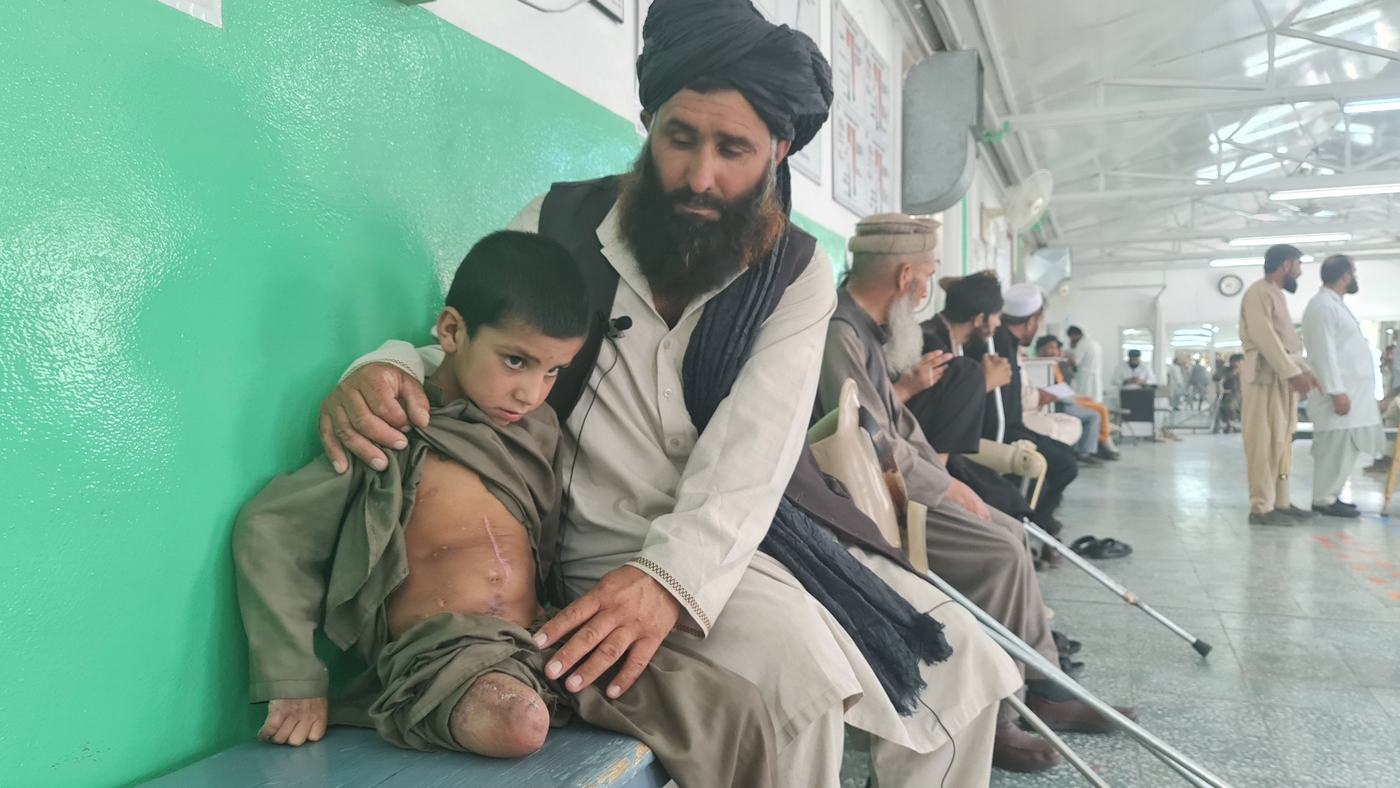
Seven-year-old Omar’s daily routine used to involve going with his brother and some friends to the fields near their home in Kabul’s Khake Jabar district and gathering food for their cattle. He knew the chore well and could quite easily find his way around those familiar fields. But everything changed for him on one day in May 2023.
Omar does not remember what happened clearly. An unfamiliar object in the field had caught the boys’ curiosity. Before they could figure out what it was, the object exploded, killing Omar’s nine-year-old brother and severely injuring the others. Omar lost his right leg and sustained deep wounds on his abdomen.
“Children from our neighbourhood are usually assigned the chore of gathering fodder for our cattle from the nearby fields. On 4 May, when they went to the fields, they discovered a strange-looking metal object. They may have handled it or thrown it, causing an explosion,” says Wakeel, Omar’s father. He received news of the incident from the local authorities. “I had to first go and bury one of my sons and then rush to a hospital in Kabul to see my other son, whose body was covered with wounds,” says Wakeel.
Sitting beside Omar, who has remained very quiet since the traumatic incident, Wakeel recalls that his son loved playing cricket and had recently enrolled in a primary school. “He aspired to be a doctor or an engineer one day. Though the incident has made life significantly more difficult for him, I’m confident that he will be able to achieve his goals after receiving an artificial limb. He needs help to persevere through the struggles that lie ahead.” The trauma and resulting impairment have already led to a long-term disability, which, without proper support, could further isolate him socially and economically.
Omar is one of tens of thousands of survivors harmed not during active fighting, but by explosive remnants left behind after fighting has stopped. Cluster munitions not only affect individuals like Omar; they affect whole communities, contaminating large areas, preventing safe returns for displaced persons, and blocking access to fields for decades. In Omar’s case, a cluster munition remnant had remained in the ground, turning a familiar field into a source of deadly danger.
Beyond survival: rehabilitation as protection to safeguard dignity
Omar’s story is a stark reminder of the devastating impact of explosive remnants of war, which can cause disabilities that have ripple effects during and after conflict. As the UN Secretary-General has highlighted:
“[P]ersons with disabilities tend to be among the worst affected in situations of risk and in humanitarian emergencies. They are more likely to be victims of violence, abuse, exploitation, natural and human-made disasters, humanitarian emergencies and conflict, and they tend to be overrepresented among forcibly displaced persons. Persons with disabilities are more likely to live in poverty, which heightens their vulnerability and exposure to hazards. As such, during and after natural disasters, they experience greater human and material losses, at times suffering twice the death rate of persons without disabilities.”
For survivors like Omar, the long-term vulnerabilities caused by their injuries often intensify over time, leading to escalating costs for families, healthcare systems and societies for many years to come. The immediate physical and psychological impacts are compounded by barriers to healthcare, education, and livelihoods, especially in conflict-affected areas where infrastructure is damaged and resources are scarce. Rehabilitation is not just a service – it is a lifeline that prevents survivors from being left behind and helps break this cycle of escalating vulnerability.
The ICRC’s Physical Rehabilitation Programme (PRP) plays a vital role in this process, offering comprehensive, person-centred services that address the complex needs of survivors. For Omar, this means more than just receiving a prosthetic leg. Early and sustained physiotherapy helps him rebuild strength and mobility, while prosthetic and orthotic services provide tailored solutions that adapt to his growing body.
Equally important is mental health and psychosocial support (MHPSS), which helps survivors like Omar process the trauma, the loss of loved ones, and the challenges of adapting to a new reality. Rehabilitation is not limited to physical recovery; it is about restoring dignity, agency, and the ability to participate fully in society. By addressing both the immediate and long-term needs of survivors, the PRP helps reduce the risk of marginalization, ensuring that people with disabilities can rebuild their lives and contribute to their communities.
Breaking this cycle requires more than compassion. It calls for a deliberate, rights-based commitment to rehabilitation and victim assistance that addresses the systemic barriers survivors face throughout recovery. Four elements are particularly important:
- Timely access to rehabilitation: Early rehabilitation is not only a medical necessity; it is essential to protecting a person’s health and dignity. Significant delays between injury and rehabilitation can limit recovery and perpetuate cycles of inequality and exclusion. Timely intervention gives survivors the best opportunity to reclaim their dignity and regain independence.
- Comprehensive and intensive services: Rehabilitation must be holistic and sufficiently intensive to be effective. Providing prosthetics without physiotherapy or mental health support, for example, fails to address the full range of survivors’ needs and can limit their ability to fully participate in society.
- Evidence-based practices: In resource-constrained environments, adopting evidence-based, cost-effective practices is both a practical necessity and an ethical obligation. Inefficient or outdated practices waste scarce resources while limiting survivors’ access to the highest attainable standard of care.
- Functional health outcomes: Mortality and morbidity alone are insufficient measures of successful victim assistance. What matters is also whether a survivor can return to school, regain employment, participate in community life, live independently and experience emotional well-being. These outcomes better capture whether rehabilitation is enabling survivors to rebuild their lives.
By addressing these systemic gaps, we can uphold the dignity and rights of survivors, ensuring they are not left behind but are empowered to rebuild their lives and contribute to their communities.
The ICRC’s PRP has made a significant impact worldwide, supporting survivors of conflict to regain their independence and dignity. In 2025, the PRP worked in 28 conflict-affected countries, reaching 254,506 service users with physical rehabilitation services, 25,343 of whom were wounded by landmines or explosive remnants of war.
Yet rehabilitation alone cannot prevent the next child from suffering the same injuries.
The humanitarian problem that demanded a legal response
The humanitarian problems associated with cluster munitions are twofold. First, they scatter large numbers of submunitions across vast areas; civilians easily become victims of the attack, especially when cluster munitions are used in populated areas. The second, and perhaps more widely recognized problem, is that large numbers of submunitions fail to detonate as intended after their release, contaminating large swaths of land with deadly explosive ordnance.
The Convention on Cluster Munitions is not only about banning a weapon; it is a response to the suffering caused by cluster munitions, which have killed and injured many thousands of civilians in countries where they have been used. The preamble of the Convention explicitly refers to the Convention on the Rights of Persons with Disabilities and the equal rights of persons with disabilities.
In May 2008, 107 states concluded an international treaty prohibiting these weapons. The negotiations that led up to this were part of the “Oslo Process”, a Norwegian initiative whose aim was the conclusion of such a treaty. The Convention was opened for signature on 3 December 2008 and entered into force on 1 August 2010.
In 2008, over 100 countries came together to ban cluster munitions under the Convention on Cluster Munitions — one of the most significant disarmament treaties of the modern era, with thousands of square kilometres of land cleared and thousands of lives saved. ICRC legal adviser Fahad Ahmed explains what these weapons are, why they were banned, and why the international community cannot afford to forget.
The humanitarian problem was apparent long before the Convention. When cluster munitions were first used against the British port of Grimsby during the Second World War, three quarters of the submunitions dropped by aircraft failed to explode as intended and had to be cleared. The weapons were found in roadways, on rooftops and caught in trees. Three quarters of the 61 casualties occurred after, not during, the attack. Children brought these “bomblets” home, some narrowly escaping death. Their removal demanded massive resources.
The legal foundations run even deeper. The 1868 St Petersburg Declaration established the principle that, for certain weapons, “the necessities of war ought to yield to the requirements of humanity.” This path continued with the adoption of the two Additional Protocols to the Geneva Conventions in 1977. The first of these requires that the civilian population “shall enjoy general protection against dangers arising from military operations”, that “all feasible precautions”, including in the choice of weapons, be taken to protect them, and that indiscriminate attacks are prohibited. This path is also traced in the groundbreaking precedents set by the Anti-personnel Mine Ban Convention and the Protocol on Explosive Remnants of War. These instruments establish that states have a responsibility to prevent and address the harm caused to civilians by “weapons that keep on killing”.
From prohibition to protection: why the Convention works
The Convention on Cluster Munitions is an important addition to international humanitarian law (IHL), reinforcing fundamental customary IHL rules that are applicable to all states. These rules require parties to a conflict to distinguish at all times between civilians and combatants, to direct operations only against military objectives and to take constant care to spare civilians and civilian objects. On the basis of this Convention, cluster munitions are considered – alongside exploding and expanding bullets, chemical weapons, biological weapons, anti-personnel mines, weapons using undetectable fragments and blinding lasers, and nuclear weapons – to be weapons whose prohibition is rooted in IHL.
Beyond the Convention’s categorical prohibition for States Parties, the use of cluster munitions has also been scrutinized under customary IHL rules governing distinction and precautions in attack. Several international courts and commissions have found particular uses of cluster munitions in populated areas to be unlawful. In Martić, for example, the ICTY found their use to be indiscriminate, while other bodies, including the Inter-American Court of Human Rights and the Eritrea-Ethiopia Claims Commission, have found particular uses unlawful under the rules on precautions in attack. Although these findings are context-specific, they point to the serious legal concerns raised by the use of cluster munitions in populated areas, where it is “more than questionable” whether such weapons can be directed at a specific military objective as required by IHL.
The Convention demonstrates how humanitarian disarmament treaties save lives even beyond their States Parties because they reshape international expectations regarding acceptable weapons. Disarmament plays a critical role in upholding humanitarian norms, reducing the risk of escalation and building confidence among states. There is a need to prioritize humanitarian disarmament, both in times of peace and during armed conflict, through disarmament instruments and endeavours that seek to uphold and strengthen IHL by preventing, mitigating and remediating human suffering and environmental harm caused by the use of certain types of weapons such as cluster munitions. It is based on this humanitarian rationale that the ICRC and the larger Red Cross Red Crescent Movement continue to call upon states to join humanitarian disarmament treaties.
Today, 112 states have comprehensively banned cluster munitions, reinforcing the stigma against their use. There are 12 signatory states and others committed to the goals of the convention. Additionally, huge quantities of stockpiles have been destroyed since the Convention was adopted. Over the last two decades, 42 States Parties have destroyed all the cluster munition stocks that they had declared, amounting to nearly 1.5 million cluster munitions and 180 million sub-munitions. Each one destroyed is one less that could become an ERW and kill or disable a child like Omar and his friends.
Military utility does not outweigh the humanitarian cost
After first appearing in the Second World War, cluster munitions developed through the Cold War, primarily to attack concentrations of armoured vehicles, though they were frequently used more broadly. The massive armoured attack has largely disappeared from modern warfare as a concept and in the age of pervasive surveillance, precision munitions and the combination of long-range and “first-person view” drones, cluster munitions look increasingly outdated in that role.
The critical question that parties to armed conflicts and military commanders need to answer is whether the use of cluster munitions can ever be balanced against the well-known humanitarian consequences in any attack other than targeting concentrations of armoured vehicles in the open field, and in particular in any attack against military objectives in urban areas.
While it is often claimed that these weapons play a critical role in attacks, little empirical evidence has been provided to substantiate this assertion. One of the few available assessments questions rather than confirms such claims. The study, conducted by the Norwegian Defence Research Establishment in 2008, concluded that many of the cluster weapons in military stockpiles today have “a more modest effect than usually assumed,” and that while they do “have a satisfactory or adequate effect against most targets”, “no evidence has been found to claim that such weapons are far better than their alternatives to the extent that they are indispensable”.
Given the indiscriminate effects of these weapons and the well-documented patterns of harm they cause to civilians, the ICRC has urged all those who continue to use cluster munitions to cease such use immediately.
The Third Review Conference: an opportunity to renew commitments
The Third Review Conference of the Convention on Cluster Munitions will take place in Laos, a country deeply affected by cluster munition contamination since the Second Indochina War six decades ago, in September 2026. It should be more than a diplomatic stocktaking exercise. At a time when cluster munitions continue to cause civilian harm, the Conference offers States Parties an opportunity to defend the norm against these weapons and strengthen implementation of the Convention. States Parties should use the Conference to:
- Reject any normalization of cluster munition use. Any use, anywhere, by anyone, under any circumstances, must be condemned.
- Prevent further withdrawals and work against any efforts to circumvent the Convention on Cluster Munitions or any humanitarian treaty.
- Accelerate the universalization of humanitarian treaties and prioritize outreach to states not party and signatory states, particularly in affected regions.
- Strongly reaffirm the value of humanitarian restrictions in war and take positive steps to strengthen respect for IHL.
- Raise public awareness of how disarmament and IHL can save lives, and foster understanding of the risks of undermining the protection they provide.
- Fulfil the obligation to destroy all existing stockpiles and encourage states not party to do so.
- Address contamination with a coordinated, well-planned and adequately resourced humanitarian and development response.
- Adopt an ambitious Vientiane Capital Action Plan with concrete, time-bound and verifiable commitments.
They should also strengthen the Convention’s promise to survivors and recognize the significant social and economic costs of injury to individuals, families and societies by:
- Adopting comprehensive victim assistance approaches: In accordance with Article 5 of the Convention on Cluster Munitions and guided by the Convention on the Rights of Persons with Disabilities, integrate medical care, physical rehabilitation, mental health support, and social reintegration into Victim Assistance policies to address the full range of survivors’ needs and rights.
- Prioritizing timely rehabilitation: Ensure early access to rehabilitation services as part of Victim Assistance programs to prevent escalating vulnerability and enable survivors to regain independence and dignity.
- Focusing on quality of life: Redefine success in victim assistance by prioritizing outcomes such as functionality, education, employment, and community participation.
- Investing in national rehabilitation systems: Build sustainable rehabilitation systems by training sufficient and qualified local professionals, establishing accessible centres, and ensuring affordable assistive devices.
Conclusion: from rehabilitation to prevention
Omar now walks with the assistance of a prosthetic limb and continues to receive physical and psychosocial support at an ICRC-supported rehabilitation centre in Kabul. A prosthetic limb may restore mobility, and rehabilitation can help restore independence. But only prevention can ensure that another child does not suffer the same injury.
The Convention on Cluster Munitions is ultimately about more than prohibiting a weapon. It is about protecting civilians, restoring dignity to survivors and ensuring that no community is forced to live with the deadly legacy of past wars. As states gather in Laos for the Third Review Conference in September 2026, they will have both an opportunity and a responsibility to reaffirm this commitment through concrete action.
Author’s note: The authors would like to express their thanks to Robertangelo Ciccone (PRP Manager Afghanistan) for enriching this article with the story of Omar and overseeing the program that is ensuring Omar’s continued treatment.
Related articles
- Dan Kuwali, Why Africa should act now on explosive weapons in populated areas: Malawi’s case for action, May 28, 2026
- Laura Boillot, Laurent Gisel, Paul Holtom, Frederik Siem, Dina Abou Samra and Juliana Helou van der Berg, Protecting civilians in conflict: the Political Declaration on EWIPA, April 22, 2026
- Anders Ladekarl, Eero Rämö, Grete Herlofson and Ulrika Modéer, Why Nordic governments must uphold the global ban on anti-personnel mines, April 2, 2026
- Eirini Giorgou, Preventing and eradicating the deadly legacy of explosive remnants of war, February 23, 2023
- Eirini Giorgou, Explosive weapons with wide area effects: a deadly choice in populated areas, January 25, 2022