The updated ICRC Commentary on the Fourth Geneva Convention (GC IV) includes a number of important updates to its treatment of Common Article 3 (CA3). These relate primarily to three areas: the treatment of coalitions in non-international armed conflict (NIAC); the provision of support by one party to another; and questions of gender and the treatment of other marginalized groups.
In this post – part of a joint blog symposium on the updated GC IV Commentary with EJIL: Talk! and Just Security – Associate Professor Katharine Fortin examines these developments, highlighting their significance and strengths while also pointing to areas that may warrant further reflection or study.
Wherever possible, the drafters have sensibly adopted an “if it ain’t broke, don’t fix it” approach. In other words, they have largely chosen to leave the existing Commentary to CA3 intact wherever possible, resisting any urge to comprehensively rewrite, rephrase or revisit their original text. There are primarily three areas of change. The first two relate to the ICRC’s approach to armed actors operating together in armed conflict, and what this means for the notion of a Party for the purposes of international humanitarian law (IHL). The third concerns the Commentary’s treatment of gender and sexual orientation, as discussed below. In addition, a small number of further issues are addressed which, while of more limited general significance, will nevertheless be of interest to scholars of armed conflict and international law.
Coalitions in NIAC
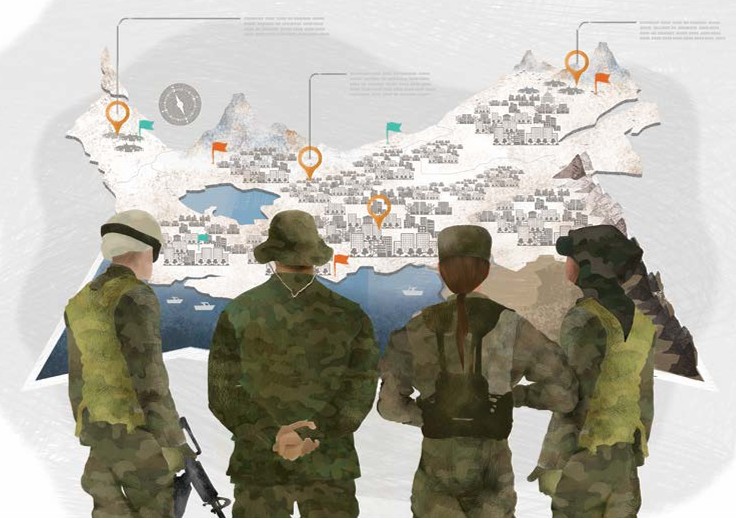
A first change in the 2025 Commentary to CA3 relates to the ICRC’s approach on how best to approach NIACs where there are multiple parties on either side acting “in a coalition”. To understand the relevance of the new text on this topic, it is helpful to briefly sketch out its history. The ICRC has long expressed concerns that treating all members of a coalition (whether states, organized armed groups or international organizations) as individual entities may lead to “legal and operational loopholes” (p. 51 of 2019 ICRC Challenges Report and here). Assessing whether the intensity requirement is met between each individual entity and the other side opens the possibility that the intensity requirement will not be met for some groups, but will be for others. On a practical level, this means that a state may have to operate under different legal frameworks, i.e. IHL and international human rights law (IHRL) or IHRL only, when fighting against two armed groups that are effectively working together.
As a solution to these concerns, the ICRC has long put forth the view (both in its 2019 ICRC Challenges Report, p. 51, and in its 2024 Opinion Paper, p. 17) that the indicators traditionally associated with the intensity requirement can be assessed in an aggregated fashion for members of a coalition. Obviously, this approach requires prior clarity concerning what a “coalition” is. In its 2019 Challenges Report, the ICRC suggested that “coordination and cooperation” was a necessary criteria (p. 51). But in its 2024 Opinion Paper, it indicated that “coordination” is sufficient (p. 17). The 2025 Commentary repeats this latter requirement, indicating that “when multiple organized armed groups maintain a sufficient level of coordination in a coalition, the intensity of violence between each of them and an opposing Party may be aggregated when considering whether the threshold of intensity has been reached” (para 505 of 2025 Commentary). It goes on to clarify that ‘a shared ideology’ between entities is not sufficient to show ‘a sufficient level of coordination in a coalition’. Instead, it is necessary to have a coordination structure, the sharing of operational tasks, the existence of common standard operating procedures and/or rules of engagement, the coordination of simultaneous attacks against the opposing Party and the conduct of joint military operations (para 506 of 2025 Commentary).
It is interesting to note that while this position has long been the favoured approach of the ICRC (presumably as a matter of lege ferenda), it is – as the new Commentary to CA3 notes – also the position taken recently by the International Criminal Court trial chamber in the Al Hassan case (Trial Judgment, para. 1266, fn. 4064), albeit a controversial one given that it is based on very little discernible legal precedent. One can also wonder whether the implications of such a test have been sufficiently discussed or identified in a broad enough forum. While I see that operational loopholes and inconsistency are undesirable from the standpoint of states’ behaviour, I’m not yet fully convinced that the easier application of IHL when it comes to coalitions of armed actors is necessarily desirable from the perspective of civilians.
Support-based approach to determine Parties in NIACs
Another related change in the 2025 Commentary (one that is also found in the ICRC’s Opinion Paper from April 2024, p. 16) relates to the question of when an entity supporting a party to a pre-existing NIAC becomes a party in its own right (para 518-520 of 2025 Commentary). In the 2016 Commentary, the ICRC had already put forward the view that it is not always necessary for the actions of multinational forces to meet the level of intensity required for the existence of a new NIAC for them to be considered a Party to that conflict. It had clarified that the decisive element would be the contribution that such forces make to the collective conduct of hostilities. It had also made a two-pronged distinction between (i) activities that have a direct impact on the opposing Party’s ability to carry out military operations, and (ii) those activities that enable the pre-existing party to the NIAC (that is being supported) to build up its military capacity/capabilities (para 446, 2016 Commentary). According to the ICRC, only the former would turn multinational forces into a Party to a pre-existing NIAC for the purposes of IHL.
In the 2025 Commentary to CA3, the contours of this test follow the same lines as in the ICRC’s 2024 Opinion Paper (p. 16). Instead, the 2025 Commentary makes clear that not just any contribution to the collective conduct of hostilities will suffice. It states that it needs to be proved that the third party’s activities need to make a “direct and effective contribution” to the hostilities (para 519). Repeating the same two-pronged distinction it made before in the 2016 Commentary, and further clarifying the ICRC’s 2024 Opinion Paper, it specifies that it needs to be “objectively evident”[1] from the supporting entity’s actions that “it is pooling or marshalling military resources or coordinating actions with one of the Parties to the pre-existing non-international armed conflict in order to fight a common enemy”.
There are two things that stand out to me regarding this text. The first is that this final criteria (which is also in the Opinion Paper) is a bit puzzling. In my mind, the concept of an entity “pooling” its military resources with another party is rather associated with activities enabling a party to build up their military capacities, rather than a “direct and effective” military contribution. The second is that while the ICRC clearly considers this position important, it is hard to discern from the footnotes whether it can be considered to be based on state practice.
Gender, gender identity and sexual orientation and other differentiated experiences
In addition to these updates pertaining to conflict classification, there are also important changes in the 2025 Commentary to CA3 on the issue of gender, gender identity and sexual orientation. These changes can notably be seen in the sections of the Commentary on humane treatment and adverse distinction.
For example, when noting that humane treatment needs to be context-specific and requires taking into account both objective and subjective elements, the previous Commentary had made clear that the elements to be considered included “the environment, their personal and mental condition, age, social, cultural, religious or political background and past experiences”. Added to this list is now a person’s location, gender, gender identity and sexual orientation. Similarly, whereas the following sentence had indicated “there is a growing acknowledgement that women, men, girls and boys are affected by armed conflict in different ways”, the updated version now indicates that “women and men, girls and boys, persons with disabilities, older persons and persons of diverse sexual orientation and gender identity are affected by armed conflict and deprivation of liberty in different ways” (see para 627 of 2025 Commentary, and compare to para 553 of the Commentary to CA3 of 2016).
Similar additions have been made relating to the principle of adverse distinction, which now explicitly clarifies that the words “any other similar criteria” in CA3 can include “gender, ethnicity, disability, gender identity, sexual orientation, caste, level of education and family connections” (para 640 of 2025 Commentary).
When looking at the amendments, it seems almost strange to consider that some of these references were not already in the 2016 version of the Commentary. Indeed, while some of the new additions rely on post-2016 documents, there are also quite some references to documents that were drafted before 2016. This highlights that these amendments cannot (obviously) only be understood as reflecting new developments in law or being influenced by emerging scholarly literature on the topic (see here, here and here). Instead, it would seem that the gender-related amendments indicate a much welcome updated focus on this issue within the ICRC.
While the manner in which the ICRC has “added gender” to these specific passages is in line with the general minimalist approach by the ICRC to this updated Commentary of CA3 in general and seems sensible, it seems to have a hint of the “add women and stir” approaches to gender equality, criticized by early feminists like Gardam and Chinkin. They made the point that adding words signalling that gender is “on the agenda” is rarely sufficient, unless accompanied with “radical rethinking of policies or gender awareness”. Such a radical rewiring requires seeing that gender issues do not only pertain to the obvious issues relating to humane treatment and adverse distinction, but are also relevant to non-obvious issues such as targeting, civilian protection and everyday life.
It is not possible for me to assess the extent to which this has been done in the Commentary on GC IV without conducting a careful review of the rest of the Commentary with this specifically in mind. However, certainly, recent reports coming out of the ICRC suggest that such a rewiring is indeed one of the organization’s current priorities (see here, here and here).
Smaller miscellaneous issues
In addition to these three most substantial changes, there are quite a few further additions that will be of interest to scholars working on different themes. For example, at paragraph 525 of the 2025 Commentary, there is confirmation that private companies can constitute a Party to a NIAC if they satisfy the same criteria as other organized groups. This addition is hugely significant, given that (i) the scholarship and interest on business and IHL has exploded in the last few years; (ii) there has been some uncertainty regarding whether and how companies are bound by IHL; and (iii) it is becoming rapidly clear that the ability for businesses to be involved in, and influence, armed conflict is rapidly expanding (e.g. military AI and tech).
It is also interesting to see the ICRC making the point that not too much attention should be given to the interpretation of IHL put forward by judicial decisions relating to individual criminal responsibility for violations of CA3. In making this argument in several places in the 2025 Commentary to CA3 (see para 428 and 660), the ICRC underlines that the IHL provisions in CA3 may be broader than the war crimes connected with it. It states that there “may be acts that constitute a violation of CA3 by the concerned party to the conflict, which have not yet been charged as war crimes in tried cases, or which cannot be prosecuted as war crimes”. It also mentions that while a “mental element” is often required for a crime to have been committed by an individual, this is not required for a finding of the responsibility of the parties. This addition is helpful and important, countering the favoured tendency of states to rely on the lack of findings by criminal courts as a reason to stay silent in the face of apparent IHL violations.
Conclusion
The most significant changes in the new Commentary to CA3 relate to the threshold requirements for non-international armed conflicts (NIACs) and will not be a surprise to those who have followed recent discussions on the matter. They relate to issues where the ICRC is seeking to close legal and operational loopholes, by fixing difficult problems with workable solutions.
While on some points I have some doubts about whether it is so easy to present these points as valid interpretations of CA3 on the basis of lex lata, there is no doubt that the updated Commentaries very helpfully bring together ICRC interpretations that are otherwise spread around in a number of publications.
As a final remark, I would simply like to congratulate the drafting team for this impressive and important endeavour, one that shows an organization succeeding at something very difficult in turbulent times: being careful, coherent and consistent on the law.
[1] NB: while the word “objectively” may seem new, it is already in the opinion paper, albeit in another place, i.e. p. 16.
See also
- Jelena Nikolic, Tilman Rodenhäuser and Thomas de Saint Maurice, The risks and legal limits of involving ‘self-defence groups’ in non-international armed conflict, September 18, 2025
- Samit D’Cunha, Tristan Ferraro, and Thomas de Saint Maurice , Defining armed conflict: some clarity in the fog of war, May 2, 2024
- Julie Lefolle and Jelena Nikolic, Sean Fahey, Armed conflict in Sudan: a recap of the basic IHL rules applicable in non-international armed conflicts, June 15, 2023
- Chiara Redaelli, A common enemy: aggregating intensity in non-international armed conflicts, April 22, 2021
- Jelena Nikolic, Thomas de Saint Maurice & Tristan Ferraro, Aggregated intensity: classifying coalitions of non-state armed groups, October 7, 2020