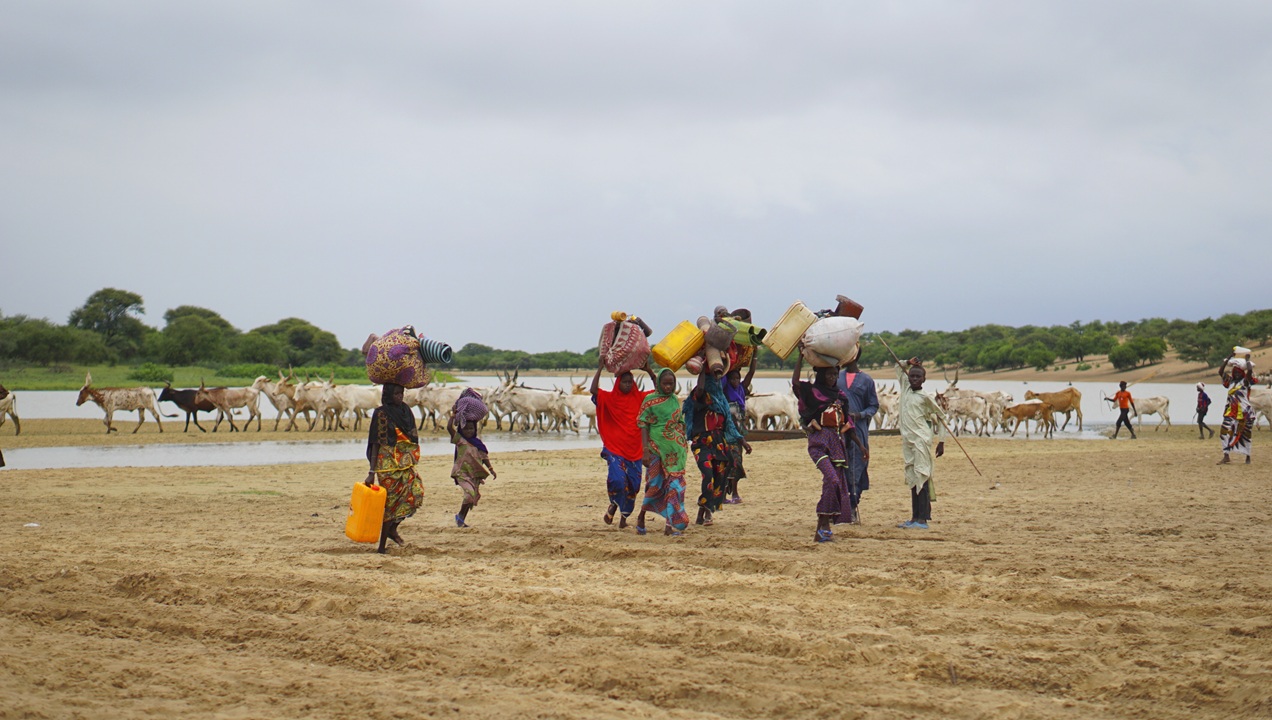
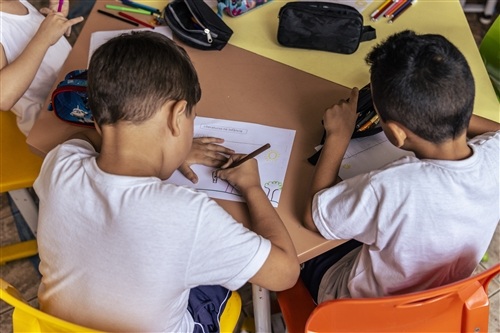
When armed conflict ends, education does not always return with it. In many post-conflict settings, schools remain closed long after ceasefires, while children stay at home, enter work, remain displaced or navigate unsafe environments. Education systems remain constrained by destroyed infrastructure, militarization, unexploded ordnance, trauma and fear. Although international humanitarian law (IHL) and international human rights law (IHRL) require the continuity of education even during armed conflict, schooling is frequently disrupted in practice, raising questions about how education can be safely restored after conflict.
In this post, as part of our Emerging Voices series, Geeta Mahapatra proposes a framework to facilitate children’s safe return to education, centred on child-specific harm assessments, safe access and inclusive recovery. It contends that stronger compliance with IHL rules protecting schools and children during armed conflict helps preserve the conditions necessary for restoring education in post-conflict settings. IHL regulates the conduct of hostilities and contains important protections for children and access to education during armed conflict. Lessons drawn from these protections can help inform recovery decisions as societies transition from conflict to peace, including after the cessation of hostilities, when recovery begins but IHL may still apply.
The transition from war to peace is neither linear nor secure.
International humanitarian law (IHL) provides essential protections for schools, educational facilities and children during armed conflict. Yet because its applicability is linked to the existence of an armed conflict and generally ends at the ‘general close of military operations’, challenges surrounding children’s access to education often persist beyond the cessation of hostilities, exposing a gap between wartime protection and the practical realities of restoring education systems.
Children’s return to school therefore becomes more than a technical recovery question. It is also an early indicator of whether protection during war can translate into stability once violence subsides.
Direct, indirect and cumulative impacts of conflict on education
Armed conflict disrupts education through layered harms that endure long after hostilities end. As reflected by the ICRC, the long term consequences of damage to educational facilities must be considered when assessing their civilian value in proportionality assessments. Damage to a single school can rapidly disrupt wider community systems.
Direct impacts are immediate and visible. Schools are damaged or destroyed by explosive weapons, forcing prolonged closures. Routes to school become unsafe due to explosive remnants of war, which in turn deters attendance. Teachers and other education personnel are killed, displaced or unable to return, leaving classrooms understaffed even where buildings remain standing.
Indirect impacts compound these losses. Trauma significantly reduces children’s concentration and learning. Displacement interrupts schooling and economic hardship pushes families to rely on child labour. Children who remain out of school face heightened risks of recruitment by armed groups. Girls, in particular, experience increased exposure to harassment and sexual violence, driving gendered patterns of dropout.
Over time, cumulative harms emerge. Entire cohorts lose critical years of education, social cohesion weakens and prospects for recovery and peace diminish. Damage to education ripples across generations, shaping the conditions for reconstruction and non-recurrence.
In turn, conflict-sensitive education can help rebuild social cohesion, reducing risks such as recruitment by armed groups and strengthening awareness of rights and protections, thereby contributing to the prevention of future violence and violations against children.
Current protections for schools and children under IHL
IHL provides a well-developed framework for protecting education and affording children special respect and protection during armed conflict. Under the principle of distinction, schools and universities are ordinarily civilian objects and must not be targeted unless they become military objectives. Even when attacks are directed at legitimate military objectives, the principles of proportionality and precautions apply, and in cases of doubt, IHL establishes that civilian status must be presumed.
Schools carry high civilian value and foreseeable consequences of their damage must be considered when assessing proportionality. Children are entitled to special respect and protection under customary IHL. This includes access to care and education, regardless of whether a child has participated in hostilities.
In situations of belligerent occupation, obligations are more specific: Article 50 of the Fourth Geneva Convention requires the Occupying Power to facilitate the proper functioning of educational institutions, with the cooperation of the national and local authorities. In non-international armed conflicts, Additional Protocol II similarly requires that children receive an education (Art. 4(3)(a)).
The ICRC has also highlighted the risks and legal limitations of the military use of educational facilities and supports the Safe Schools Declaration and its associated Guidelines, which commit endorsing states to avoid such use to the maximum extent feasible and enable safe reopening.
These rules help protect education during armed conflict, but they do not directly regulate post-conflict recovery.
The post-conflict education gap
Restoring education systems in post-conflict settings often proves more complex than reopening school buildings, revealing a gap between wartime protection and the realities of recovery. This gap does not reflect a deficiency in IHL. Rather, it reflects that IHL is designed primarily to limit the harms of armed conflict, not to blueprint social recovery.
As a result, several issues that become central in post-conflict settings are addressed only indirectly within IHL. Questions such as the sequencing of reconstruction, psychosocial recovery or ensuring equitable returns to education for marginalized groups are more directly addressed through international human rights law (IHRL).
In practice, the scale of post-conflict education challenges is often closely linked to the degree of compliance with IHL during armed conflict. Destruction of educational infrastructure, displacement of communities and prolonged disruption to learning can all increase the scale of recovery efforts required once violence subsides. Conversely, respect for IHL rules protecting schools and students during armed conflict helps preserve the conditions necessary for the realization of the right to education after conflict.
The consequences of this gap are significant: fragmented recovery approaches, children slipping through institutional cracks and missed opportunities to use education as an early peacebuilding tool and as a form of reparation. In this context, broader discussions around the responsibility to rebuild, within the Responsibility to Protect framework, highlight the importance of extending protection efforts into recovery, reconstruction and reconciliation.
International human rights law and transitional justice as complements
IHRL applies at all times, including during and outside of armed conflict, providing the legal continuity needed once hostilities end. The right to education is not subject to derogation and states retain immediate and ongoing obligations to ensure education is available, accessible, acceptable and adaptable, including the restoration of damaged school infrastructure.
Transitional justice mechanisms can complement these obligations by addressing both past harm and future risk. Reparations can recognize educational disruption as an injustice, for example through school reconstruction or scholarships programmes. Guarantees of non-recurrence focus on prevention, including curriculum reforms, the institutionalization of safe learning environments and measures to ensure inclusive access to education.
Peace agreements can also provide a further bridge between conflict and recovery. By incorporating education and safe access clauses, such as commitments to school demilitarization and mine clearance near school routes, negotiated settlements can operationalize the Responsibility to Rebuild. IHRL and transitional justice can give practical effect to the protective purposes underlying IHL.
An IHL guided framework for children’s safe return to education
To address these challenges, this post proposes a framework to support children’s safe return to education, structured around three mutually reinforcing elements:
(1) child-specific harm assessment
(2) safe access and clearance
(3) coordinated, non-discriminatory recovery.
While the restoration of education after conflict is primarily grounded in IHRL, the framework also draws on lessons from IHL protections of schools and children during armed conflict.
1. Child-specific harm and recovery assessment
Post-conflict education planning often prioritizes physical reconstruction while overlooking the cumulative effects of conflict on children. A child-centred approach therefore requires recovery actors to incorporate child-specific indicators when assessing harm, recognizing how conflict-related disruption affects learning capacity and social reintegration.
Grounded in the right to education (Article 28, UNCRC) and the principle of the best interests of the child (Article 3, UNCRC), recovery planning should recognize that a school is only fully restored once children can truly return and learn there safely.
2. Protection logic applied to access and safety
Children’s safe return depends on removal of threats that affect access to schools. This includes the complete demilitarization of schools and the systematic clearance of UXO and landmines along routes to and from school. Given children’s distinct patterns of life, safety assessments must extend to playgrounds, paths and surrounding areas, not only buildings. Where schools were previously used for military purposes during the conflict, restoring their civilian character is particularly important to ensure that they are no longer perceived as military objectives.
3. Coordinated, non-discriminatory recovery
Finally, the framework aligns IHL’s protective object and purpose, including its prohibition of adverse distinction and its requirement of special respect and protection for children, with the broader non discrimination standards of IHRL. This ensures that recovery does not replicate any pre-existing or conflict-induced inequalities.
Girls, displaced children and children with disabilities face intersecting risks and are often the last to return to education once hostilities end. A rights-based recovery approach therefore requires gender responsive measures that prioritize these groups.
Together, these elements highlight the structural relationship between wartime protection of education and its post-conflict restoration.
Pathways for practice: Three steps to operationalize the framework
To operationalize the proposed framework, this post suggests three practical pathways.
1. Integrate child-specific impact assessments into recovery plans.
Post-conflict education planning must adopt a victim-centred approach. Assessments should evaluate foreseeable indirect harms, while using child-specific indicators and age and gender disaggregated data helps capture cumulative harms and identify barriers faced by marginalized groups.
2. Embed education and safe access commitments into ceasefires and peace agreements.
Legal certainty is essential in the transition phase. Ceasefires, Status of Forces Agreements and peace accords should codify school demilitarization, the clearance of UXO and landmines and the formal return of facilities to civilian authorities. Monitoring mechanisms can help ensure schools function as enduring zones of peace, supporting teacher return and preventing reoccupation.
3. Encourage structured cooperation across protection, education and security actors.
Safe return requires coordinated action among IHL actors, protection clusters, ministries of education, UNICEF and civil society actors. Beyond infrastructure, cooperation must prioritize psychosocial support, trust building and inclusive reintegration, ensuring education contributes to early peacebuilding rather than becoming a delayed afterthought.
IHL cannot rebuild classrooms or heal trauma. Yet compliance with IHL during armed conflict plays a decisive role in preserving the infrastructure and social conditions upon which post-conflict recovery depends.
Ensuring children can safely return to school is one of the clearest ways in which restraint during war is carried forward into recovery. When children can walk back through the school gate without fear, education can shift from being a casualty of conflict to becoming a foundation for reconciliation and peace.
See also
- Michel Anglade, Mark Chapple and Elizabeth Rushing, Protecting education from attack during armed conflict, September 13, 2023
- Jerome Marston, Protecting education from non-state armed group attacks, September 12, 2023
- Laura K. Taylor and Alexandra Jacobs, Rebuilding peace in divided education systems, January 23, 2020
- Filipa Schmitz Guinote, Three reasons why education needs the support of humanitarian actors in conflict zones, December 12, 2019
- Ezequiel Heffes and Carolin Nehmé, Ten armed groups share their views on education in armed conflict, May 2, 2018