

Across contemporary armed conflicts, the presence of civilian groups who take up arms to defend their communities raises enduring and complex legal challenges. At what point do these groups become parties to an armed conflict or otherwise bound by IHL? Do civilians who participate in hostilities lose protection against attack, and if so, for how long? Who bears responsibility for ensuring that they, and other civilians drawn into conflict, respect IHL?
In this post, ICRC Legal Advisers Jelena Nikolic, Tilman Rodenhäuser and Thomas de Saint Maurice examine these questions in the context of non-international armed conflicts, seeking to help in the analysis of determining whether and at what point groups of civilians become parties to armed conflicts, what their legal obligations are, and who is responsible for their conduct.
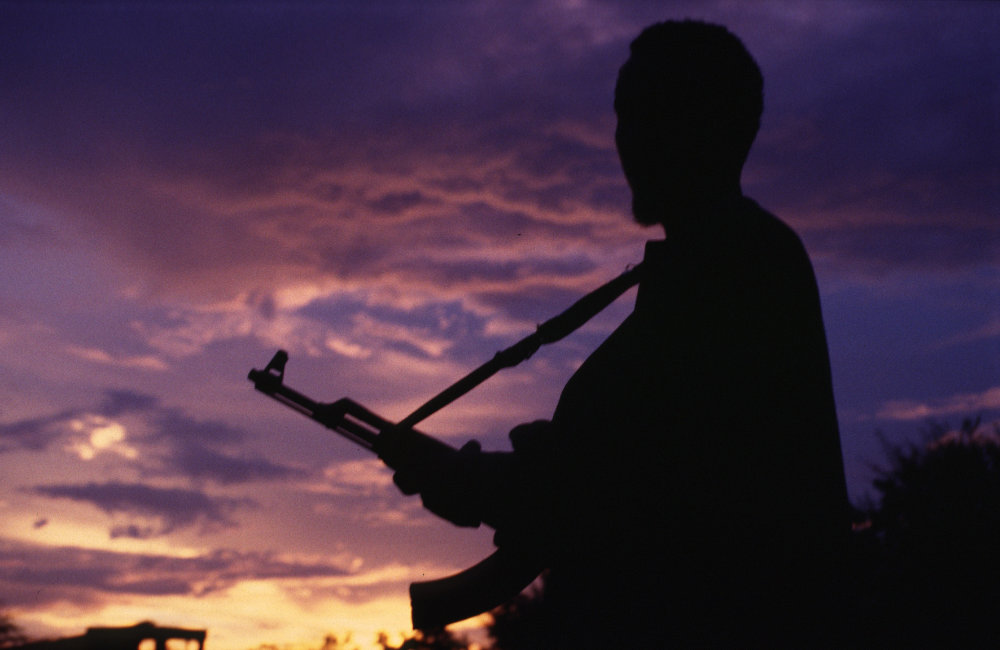
From Myanmar to the Sahel, from the Middle East to the eastern Democratic Republic of the Congo, self-defence forces or committees, ‘militias’, and other groups of civilians who take up arms are present in many of today’s armed conflicts. These groups vary in their size and degree of organization, as well as their involvement in hostilities. In some cases, they form spontaneously to defend their communities, opposing either state or other non-state forces, sometimes in an independent manner and sometimes in support of a party to an armed conflict. In other cases, their establishment and conduct is directed or facilitated by a party to the conflict, with such groups acting as auxiliaries to or in support of regular state forces.
In all cases, involving civilians in armed conflict poses risks and adds to the complexity of today’s battlefields. The closer civilians are drawn to hostilities, the greater the risk of them – and other civilians close to them – being harmed because distinguishing between combatants and civilians becomes increasingly difficult for the warring parties. In extreme cases, whole communities from which the self-defence groups emerge have been misperceived as ‘enemies’ and unlawfully attacked. Additionally, when civilians do directly participate in hostilities, their knowledge of and respect for IHL is often lacking.
The legal obligations of self-defence groups in non-international armed conflict
IHL sets out obligations primarily for parties to armed conflicts. When civilians – individually or in groups – take part in an armed conflict, determining whether they form part of a state or non-state party, or constitute a new party to the conflict, is important to determine which bodies of law apply to their conduct, who must ensure they respect their legal obligations, and who is legally responsible for possible violations. For an impartial humanitarian organization like the International Committee of the Red Cross (ICRC), assessing elements of legal responsibility also allows us to address a very practical question: with whom shall we speak to when concerns arise over their conduct?
To assess legal obligations and responsibility, the first step should be to determine whether a self-defence group can be considered as taking part in the conflict – either independently or because they form part of an existing party to the conflict. At the ICRC, we make such assessments frequently, based on well-established legal criteria, as set out in a recent opinion paper.
Self-defence groups fighting on behalf of states
In some contexts, self-defence groups are set up or encouraged by, or under the control of a state. Whether an entity is an organ of a state, or whether its conduct is otherwise attributable to the state, needs to be assessed under public international law, notably the International Law Commission’s Articles on the Responsibility of States for Internationally Wrongful Acts.
While a state is, in principle, only legally responsible for the conduct of its organs, and not that of private individuals or groups, this changes if, for example, the conduct of a private person or group is ‘empowered by the law of that State to exercise elements of the governmental authority’, or if the person or group is ‘in fact acting on the instructions of, or under the direction or control of, that State’.[1]
Three points related to these rules are particularly important to recall here. One, as public security may generally be considered an exercise of ‘government authority’, a state is responsible for the conduct of self-defence groups which it assigns, by law, to conduct security or military tasks. Two, the state is responsible if it exercises ‘effective control’ over the specific operations in which an IHL violation is committed, meaning the state directed or enforced the operation. Three, with regard to organized armed groups, arguably, the state may also be legally responsible if it exercises ‘overall control’ over the group (here, paras 440-444), meaning that the state not only finances, trains and equips or provides operational support to the group but also has a role in organizing, coordinating or planning its military actions.
In each of these scenarios, the conduct of self-defence groups will be regulated by IHL if the state is party to the conflict. As a result, the state can be accountable for violations committed by self-defense groups. In any case, the state is responsible for providing training on IHL and other applicable rules, for ensuring that members of such groups follow these rules, and that they distinguish themselves from the civilian population.
Self-defence groups that are part of non-state armed groups
If individuals or groups operate on the side of a non-state party to an armed conflict, international law does not provide rules on attribution. Under customary IHL, however, a non-state armed group would be responsible for any person or group acting in fact on its instructions, or under its direction or control. This would be the case, for instance, if a self-defence group operates ‘under the command and control of a “parent” NSAG’. In addition, similar considerations on attribution as the ones outlined above regarding state responsibility could be relevant by analogy; however, this is a subject on which international law is not clear and further research and analysis may be helpful (for some analysis, see here, pp. 304-313).
Self-defence groups that are independent parties to armed conflicts
If an act of a group cannot be attributed to a party to the conflict, it would be necessary to assess whether that group qualifies as an independent party to an armed conflict and is therefore bound by IHL. Three scenarios are particularly relevant in this assessment.
One, a self-defence group could become a party to a new non-international armed conflict if the group is sufficiently organized and engaged in intense violence against another party.
Two, a group may become an independent party to an armed conflict if it has a sufficient level of organization and supports a party to an ongoing armed conflict by directly contributing to its collective conduct of hostilities (the so-called ‘support-based approach’, see here, p. 16).
Three, in a situation in which several sufficiently organized self-defence groups operate in a coalition by pooling and marshalling military resources with the view of combating the same enemy, under certain conditions, this may lead to those groups each becoming a party to a new armed conflict (see here, and here, p. 17).
In all three scenarios, the self-defence groups become directly bound by IHL and legally responsible for ensuring IHL compliance of their members.
IHL obligations of civilians taking part in armed conflict
If the conduct of a self-defence group cannot be attributed to a party to the armed conflict, or independently classified as such, its members are nonetheless bound by IHL as long as their conduct is carried out in the context of and is associated with an armed conflict. While IHL addresses primarily parties to the conflict, individuals who operate in the context of an armed conflict must comply with relevant IHL rules, too. Indeed, for IHL to be effective, it must bind anyone who conducts hostilities, holds detainees in the context of an armed conflict, or carries out other acts on which IHL imposes limits. This position is long reflected in the views of states (Montreux Document, para. 26(a) of Part One) and, regarding criminalized rules of IHL, in international criminal law jurisprudence. As one war crimes tribunal stated: ‘the laws and customs of war are binding no less upon private individuals than upon government officials and military personnel’.
The protection – and loss of protection – of civilians during armed conflict
If self-defence groups are operating in the context of an armed conflict, the question of whether and when their members are protected against attack is key. As the cardinal principle of distinction stipulates: Under IHL, parties to the conflict must at all times distinguish between civilians and combatants. Attacks may only be directed against combatants and must not be directed against civilians. The more civilians become involved in (supporting) hostilities, however, the more this fundamental principle of IHL can become difficult to implement as it becomes less clear when they are entitled to protection and when not.
All members of the armed forces of a party to the conflict are combatants, except medical and religious personnel. For the purposes of the principle of distinction, ‘armed forces consist of all organized armed forces, groups and units which are under a command responsible to [a] party for the conduct of its subordinates’. This includes, first and foremost, a state’s regular armed forces, as defined by their national laws. In addition, members of self-defence groups that operate under a command responsible to a state would not be considered civilians.[2] In such groups and units, as well as in organized armed groups that constitute the armed forces of a non-state party to an armed conflict, the ICRC has taken the view that membership is determined by assessing “whether a person assumes a continuous function for the group involving his or her direct participation in hostilities”. In the conduct of hostilities, in case of doubt whether a person is a civilian, that person shall be entitled to the protection against the attack.
Anyone who is not a member of the armed forces of a party to the conflict as defined above, is, under IHL, a civilian. Civilians must not be attacked unless and for such time as they directly participate in hostilities. The legal notion of ‘direct participation in hostilities’ has received significant attention by states, experts, and the ICRC. With regard to civilians or self-defence groups in the context of armed conflicts, we would like to reiterate two points.
First, individuals defending themselves against acts of violence prohibited under IHL, or against ordinary crime, cannot be considered as directly participating in hostilities (here, p. 61). Such acts of individual self-defence cannot be considered as supporting one party to the conflict against another. This would be the case, for instance, when civilians use force to defend themselves or others against unlawful killing or sexual violence by marauding forces.
Second, parties to armed conflict regularly request information from civilians, or encourage civilians to collect militarily relevant information. Providing information to parties to an armed conflict – verbally, through signalling, or by phone – may only amount to direct participation in hostilities if the provision of information is an integral part of a concrete and coordinated military operation designed to harm the adversary (here, p. 54-58). While this may be the case in exceptional circumstances, this must not be assumed.
In non-international armed conflict, there is no prisoner-or-war status and no de jure entitlement to combatant privilege upon capture by the adversary. Yet, all persons deprived of liberty in the context of a non-international armed conflict, including any member of a self-defence group, must be treated humanely and in accordance with IHL. Furthermore IHL requires that ‘at the end of hostilities, the authorities in power must endeavour to grant the broadest possible amnesty to persons who have participated in a non-international armed conflict, or those deprived of their liberty for reasons related to the armed conflict, with the exception of persons suspected of, accused of or sentenced for war crimes’.
Ensuring respect for IHL by self-defence groups taking part in armed conflict
IHL is built on the assumption that those who take part in hostilities are trained in the applicable law and subject to a disciplinary system enforcing these rules. Under IHL, “each party to the conflict must respect and ensure respect for IHL by its armed forces and other persons or groups acting in fact on its instructions, or under its direction or control”. Thus, if self-defence groups were part of the armed forces of a belligerent, or otherwise acting under the responsibility of a party to the armed conflict, that party must ensure their respect for IHL.
If the conduct of individuals or groups cannot be attributed to a party to an armed conflict, the parties – in particular states – have nonetheless the obligation to ensure respect for IHL. This obligation has a negative and a positive dimension.
Under the ‘negative’ dimension (para. 191), states and parties to armed conflict must not encourage, aid, or assist individuals or groups to violate IHL. For instance, they must not encourage anyone to attack civilians or civilian objects.
Under the ‘positive’ dimension (para. 183), states must – among other things – exercise due diligence to prevent and repress breaches of IHL by the civilian population “over which they exercise authority, i.e. also to private persons whose conduct is not attributable to the State”. While a state cannot be expected to prevent all IHL violations committed by private civilians over which they exercise authority, it must take feasible measures to prevent or repress them. The precise measures a state may be required to take depend on the specific circumstances. At the very least, however, under all four Geneva Conventions states have committed to disseminate IHL “as widely as possible in their respective countries”, to prosecute persons alleged to have committed grave breaches of IHL (i.e. war crimes), and to take measures necessary for the suppression of all other IHL violations – irrespective of whether they are committed by members of the armed forces, self-defence groups, private companies, or other civilians.
***
The growing involvement of ‘self-defence groups’ in armed conflicts complexify today’s battlefields and raise a range of practical and legal issues. It is hoped that this post helps in the analysis of determining whether and at what points groups of civilians become parties to armed conflicts, what their legal obligations are, and who is responsible for their conduct.
References
[1] See articles 5 and 8 of the International Law Commission Articles on the ‘Responsibility of States for Internationally Wrongful Acts’, 2001. There are further bases for attribution of conduct to a State. For other relevant rules, see arts. 4-11. Some of these rules are also reflected in customary IHL. See ICRC, customary IHL Study, rule 149.
[2] For further discussion, see ICRC, Interpretative Guidance on the Notion of Direct Participation in Hostilities (hereafter ICRC, Interpretative Guidance on the Notion of Direct Participation in Hostilities, 2009), ICRC, Geneva, 2009, pp. 22 and 30-32.
See also:
- Ruben Stewart, From “total war” to “total defence”: tracing the origins of civilian involvement in armed conflict, April 30, 2025
- Laurent Gisel and Tilman Rodenhäuser, A steppingstone for more? Progress on the protection of civilian populations from ICT activities during armed conflict, February 13, 2025
- Cordula Droege, Tilman Rodenhäuser, Laurent Gisel, and
Joelle Rizk, Protecting civilians against digital threats: four worrying trends and recommendations to address them, October 19, 2023 - Tilman Rodenhäuser and Mauro Vignati, 8 rules for “civilian hackers” during war and 4 obligations for states to restrain them, October 4, 2023
- Zoi Lafazani, Human shields under IHL: a path towards excessive legalization, November 16, 2021