Across contemporary armed conflicts, the use of explosive weapons in populated areas (EWIPA) has emerged as one of the gravest threats to civilians. Urban centres are increasingly sites of hostilities, where the use of explosive weapons with wide-area effects causes devastating and often predictable harm. In Africa, where rapid urbanization intersects with persistent insecurity in several regions, the humanitarian consequences are particularly acute. Civilians, essential infrastructure, and long-term development prospects are all at risk, raising urgent questions about how international humanitarian law (IHL) can be better implemented in practice.
In this post, Brigadier General (Professor) Dan Kuwali, Chief Strategist, Commandant-Emeritus of the National Defence College-Malawi and Chairperson of the Malawi National International Humanitarian Law Committee, argues that African states should urgently endorse and implement the Political Declaration on EWIPA. He argues that this approach is not only a humanitarian imperative, but also a strategic decision that strengthens civilian protection, enhances military credibility, and reinforces Africa’s collective voice in advancing responsible conduct in contemporary warfare.
In contemporary conflicts, the character of warfare has shifted dramatically from the Clausewitzian conception of war in the early 19th century and Henry Dunant’s humanitarian awakening following the Battle of Solferino in 1859. Urban centres – once considered sanctuaries – have become battlegrounds. Markets, schools, hospitals, and places of worship are increasingly caught in the crossfire, often involving belligerents with limited or no regard for IHL.
The consequences are catastrophic: thousands of civilians are killed or maimed each year, essential services collapse, and communities are displaced for generations. These abhorrent realities are not confined to the past – they are unfolding as we speak. Most of the victims are often people with no connection to the fighting.
This is the motivation for states adopting the Political Declaration on Strengthening the Protection of Civilians from the Humanitarian Consequences Arising from the Use of Explosive Weapons in Populated Areas in 2022.
Why a Declaration despite existing legal frameworks?
While IHL provides a comprehensive legal framework for the conduct of hostilities, including the protection of civilians and civilian objects, the adoption of the Political Declaration on EWIPA reflects a critical and timely recognition: that the realities of modern, urban warfare pose significant challenges to the effective implementation of these rules in practice.
The Declaration responds directly to the operational experiences of contemporary conflict, where the intermingling of military objectives and civilian populations has made adherence to IHL both more complex and more urgent. In such environments, the use of explosive weapons with wide-area effects has resulted in often foreseeable and unacceptable patterns of civilian harm.
Despite IHL’s clear prohibitions against indiscriminate attacks, persistent implementation gaps remain. Too often, the application of legal obligations falls short, resulting in civilian casualties, mass displacement, destruction of essential civilian infrastructure, and long-term socioeconomic and humanitarian consequences.
The Declaration seeks to close these gaps by promoting policies and operational practices that both support compliance with IHL and go beyond the legal minimums to prevent and mitigate civilian harm. It reinforces the shared understanding that the use of explosive weapons with wide-area effects in populated areas entails a high risk of indiscriminate impact and encourages restraint unless sufficient mitigation measures are in place.
In doing so, the Declaration aims to influence military doctrine, operational planning, rules of engagement, and national policy frameworks. It also promotes transparency, data collection, victim assistance, and the exchange of best practices – critical areas where existing IHL treaties are either silent or provide limited guidance.
Importantly, the Declaration does not seek to replace or reinterpret IHL. Rather, it represents a practical evolution – an effort to better operationalize the protective ethos of IHL in 21st century conflict. It reaffirms the fundamental principles of distinction, proportionality, and precaution, while expressing a collective political will to strengthen compliance in urban warfare.
The Declaration underscores a shared commitment to do more – through strengthened policy, doctrine, and multilateral cooperation – to fulfill the humanitarian promise that lies at the core of the law of armed conflict.
Why the Declaration matters for Africa
Contemporary conflicts increasingly involve Fighting in Built-Up Areas (FIBUA), Military Operations in Urban Terrain (MOUT), or broader urban operations, where the dense presence of civilians and civilian infrastructure magnifies the humanitarian consequences of explosive weapons. The issue is not merely about weapons – it is about how wars are fought, and the values that govern our collective humanity.
Explosive weapons with wide-area effects, such as artillery shells and air-dropped bombs, are designed for open battlefields, not for urban neighbourhoods. Their blast radius, fragmentation, and secondary effects are indiscriminate in densely populated areas. Beyond the immediate human toll, the reverberating effects – the destruction of water systems, power grids, health facilities, and schools – create cascading humanitarian crises. These long-term effects threaten the very fabric of society, impeding reconstruction, governance, and peacebuilding efforts long after the guns fall silent.
For African states, including Malawi, the relevance is even more pronounced. Our urban areas are expanding rapidly, often without resilient infrastructure. While parts of the Southern African region have enjoyed relative stability, African troops are regularly deployed in peacekeeping operations in volatile theatres where civilians – and peacekeepers – face the brunt of violent conflict.
The humanitarian toll, particularly where explosive weapons are used in civilian areas, has been devastating. Ensuring restraint and adherence to IHL principles – distinction, proportionality, and precaution – is therefore not optional. It is essential for protecting lives, stability, and legitimacy.
Malawi stands in solidarity with affected states and calls for greater regional cooperation to reduce the impact of such violence. It endorsed the EWIPA Declaration on 18 November 2022 at the Dublin conference, where 83 states adopted the Declaration. This step reflects a commitment to ensuring that no African state is left behind in efforts to protect civilians, especially the most vulnerable, from the horrific effects of explosive weapons.
Why Malawi endorsed the Declaration
While 15 African states have endorsed the Declaration at the time of writing, this number remains strikingly low given the scale of the challenge across the continent. For sub-Saharan Africa in particular, the relevance is clear. From the Sahel to the Horn of Africa, civilians continue to bear the brunt of conflict, and the use of explosive weapons exacerbates their suffering.
Malawi’s endorsement reflects a firm commitment to international humanitarian norms and the protection of human dignity in armed conflict. Our decision was driven by three key considerations:
First, the Declaration reinforces core IHL principles, particularly the obligation to distinguish between civilian and military objectives, and to avoid the use of weapons whose effects cannot be limited to the intended military objective.
Second, it aligns with Malawi’s foreign policy commitment to peace, security, and human rights, as enshrined in our Constitution and reflected in our participation in peacekeeping operations under the Charter of the United Nations and the African Union Constitutive Act.
Third, the endorsement reflects Malawi’s moral leadership in promoting responsible behaviour in armed conflict. As a country that has endured the humanitarian consequences of regional instability, Malawi recognizes that preventing harm is far better than responding to it after the fact.
By endorsing the Declaration, Malawi has joined a growing community of states determined to transform political will into practical restraint.
Why more African states should endorse the Declaration
At the time of writing, only 27.3 percent of all the African countries have endorsed the Declaration – a figure that remains a drop in the ocean given the prevalence of armed conflict on the continent.
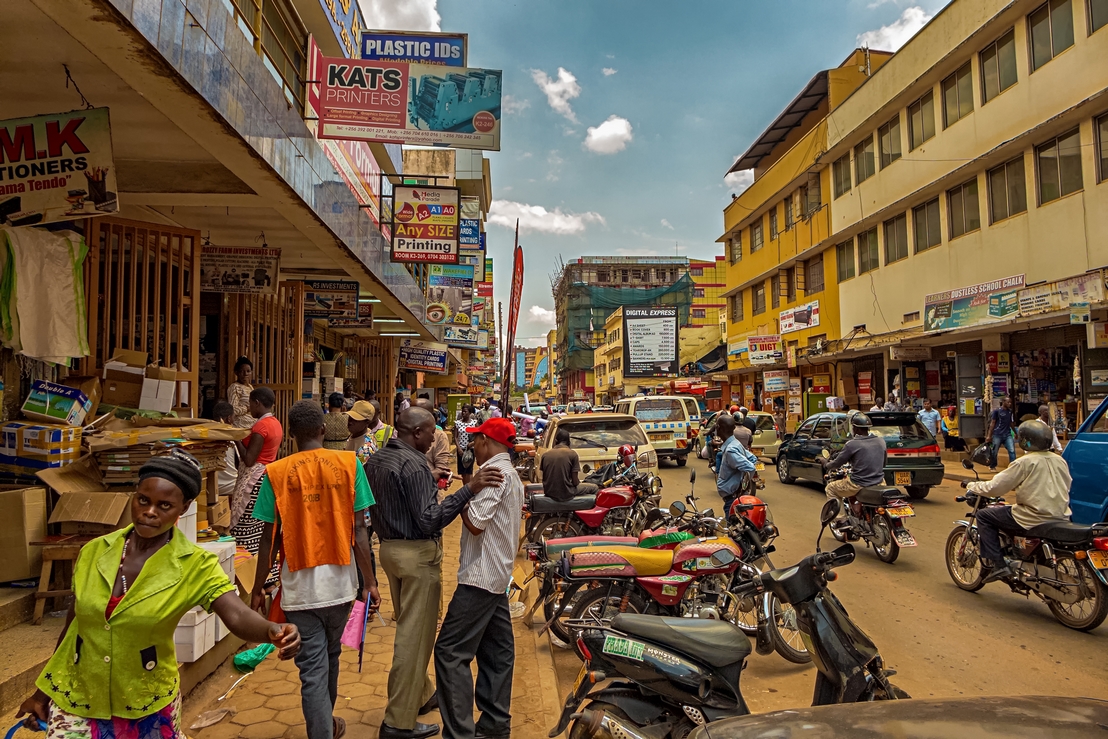
Africa is undergoing a profound demographic transformation, with around 45% of its population now residing in urban areas – a figure projected to double by 2050. At the same time, conflicts are increasingly being fought in cities. Urbanization and population density offer combatants opportunities for concealment and blending in with civilian populations. Moreover, cities serve as critical nodes of economic, political, and social power, rendering them strategically significant and, consequently, high-value targets. The complex and constricted urban terrain also affords significant tactical advantages to non-state armed groups, particularly those employing insurgent or guerrilla warfare tactics, while simultaneously complicating operations for conventional military forces, especially in terms of maneuverability, coordination, and adherence to the principles of distinction and proportionality under IHL.
Explosive weapons are often used in such contexts because of their ability to inflict significant damage quickly. They can also serve as a means of intimidation and coercion, aiming to weaken the enemy’s resolve or ability to resist. Advances in technology have further increased their accessibility and appeal.
Yet it is civilians – often the most vulnerable – who bear the brunt of this violence. This is particularly troubling given that their protection lies at the core of IHL. In light of this reality, one of the most effective measures available is the robust endorsement and implementation of the Political Declaration on the use of EWIPA. Such a commitment signals a clear stance against the use of explosive force in populated areas and provides a practical framework for reducing civilian harm.
Africa’s collective voice matters. Our continent plays a significant role in peacekeeping, mediation, and post-conflict recovery. By speaking with one voice on EWIPA, African states can strengthen compliance with IHL, enhance the credibility of our armed forces, and better protect our own populations from the humanitarian and developmental consequences of urban warfare.
Endorsement is not merely a legal or moral commitment; it is also a strategic choice that signals Africa’s commitment to humanity, restraint, and responsible conduct in warfare. As we say in Malawi “Rats don’t dance at the same time, but when they do, the cat must beware.” Unity matters. Through collective action, African states can help shape a future in which the safety and dignity of civilians are genuinely prioritized, and the devastating impact of explosive weapons in populated areas is progressively eliminated.
See also
- Timothy P. Williams, Alexandra Jackson, Vanessa Murphy, Beyond the rubble: eight ways urban warfare affects children, August 22, 2024
- Laura Boillot, Laurent Gisel, Paul Holtom, Frederik Siem, Dina Abou Samra, Juliana Helou van der Berg, Protecting civilians in conflict: the Political Declaration on EWIPA, April 22, 2024
- Eirini Giorgou, Explosive weapons with wide area effects: a deadly choice in populated areas, January 25, 2022
- Laurent Gisel, Pilar Gimeno Sarciada, Ken Hume, Abby Zeith, Urban warfare: an age-old problem in need of new solutions, April 27, 2021