
Many women and children are exposed to violence, exploitation and other risks, including death and family separation, during their migration journeys. Despite the recognition that gender and age shape migration experiences, there is limited data and analysis that systematically and directly addresses how and why migrant women and children go missing or become separated. To reduce this knowledge gap and identify steps to mitigate risks for women and children, the ICRC’s Central Tracing Agency and the Red Cross Red Crescent Global Migration Lab undertook research across the Americas, Africa, and Europe. [1]
In collaboration with 17 National Red Cross and Red Crescent Societies, [2] we spoke to over 800 migrant women and children, families of missing migrants, and key informants to hear their stories, concerns, and proposed solutions. In this post, we present key insights from the recently published research reports that draw on migrants’ lived experience to identify drivers of deaths and separations, obstacles to maintaining contact and searching for their missing loved ones, and strategies to ensure the safety, dignity, and well-being of migrant women and children.
The data contain hundreds of accounts of deaths and separations, highlighting how age and gender heighten vulnerability to these risks. Women and children are exposed to a range of threats, including the actions of various actors, dangerous travel conditions, sexual and gender-based violence (SGBV), limited access to essential services, and potential loss of contact. Women and children are at greater risk of becoming separated from family during their journeys and are also more vulnerable to other risks when such separation occurs. Despite these risks, these accounts also reveal how migrants draw on their own capacities to reduce risk and support one another.
Women and children on the move: key drivers of deaths and separations
Non-state actors play a major role in driving deaths and separations. Migrants in Africa and the Americas reported kidnappings, extortion, and violence and described their experiences at the hands of smugglers, criminal groups and armed groups. In Europe, many accounts linked smugglers to abuse leading to deaths and disappearances. Smugglers and criminal groups are also linked to forced separations: migrants reported documents and phones destroyed or confiscated in the Americas; women and children separated when boarding boats and trucks in Africa and Europe; and women and children separated and kidnapped to exert control, or to facilitate SGBV, trafficking or ransom in all regions.
Smugglers would put men together and women with children alone together. So even if it was a woman who left the country with her fiancé, for example, they wouldn’t put them together… (Interview with migrant in Europe).
Deaths and separations also result from harsh conditions and reliance on unsafe transport. Migrant women and children die from exposure while travelling in extreme temperatures and across rough terrain by foot in Africa and the Americas, and from drowning while travelling on unseaworthy boats in Europe and Africa and overloaded canoes in the Americas. They also lose contact with family when travelling on crowded buses or lorries, or when boarding – or falling off – fast-moving vehicles.
You are walking and suddenly someone who was behind you simply disappears. That happens a lot on the trails… You have to run sometimes to get on the [truck] and not everyone can, this also causes separation… (Group discussion with migrants in the Americas).
A lack of access to essential services along routes enhances risk, especially for pregnant women and young children. In Africa and the Americas, lack of food and water leads to starvation and dehydration, particularly for babies. Pregnant women across all regions are at risk of death in childbirth due to lack of access to medical care. This also drives separations, with women and children forced to stay behind when unwell or too fatigued to keep up with the group.
There were families who reported losing young children to starvation, mothers who could not breastfeed their young ones… mothers don’t have milk… The mother cannot breastfeed herself because she is hungry… (Interview with key informant in Africa).
Migrants also face the risks of death, separation, and loss of contact at borders. Some border policies can increase time spent on unseaworthy vessels, with women and children at greater risk of drowning. Other practices may compel families to travel through remote and dangerous routes. Migrants may also be liable to extortion if they lack, or are accused of lacking, certain documentation – an issue that particularly impacted women travelling alone with children in the Americas. Some detention policies and practices also lead to loss of contact; for example, when detained migrants are placed in different locations or are unable to communicate with family members, as is reflected in data from Europe and Africa.
A woman has been separated from both her children somewhere along the journey. They have kept the children somewhere else, and she has been kept in another place with no contact with her kids (Interview with key informant in Europe).
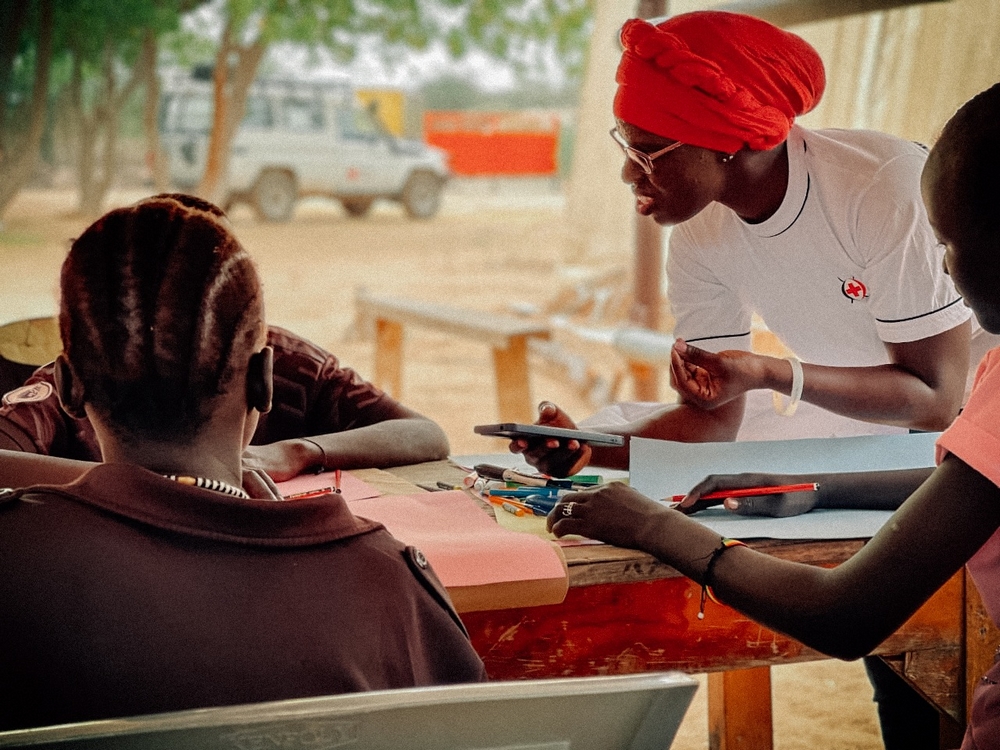
Communication barriers are a key factor in separation and loss of contact. The confiscation, selling and/or stealing of phones is common across all regions, as is a lack of access to mobile phone coverage or Wi-Fi networks in the Americas. Migrants highlighted the critical role of Restoring Family Links (RFL) services provided by National Societies (including access to free calls, battery charging and Wi-Fi), in preventing loss of contact.
There are people who… sell their phones to be able to eat, to be able to survive, to pay for a bathroom… How are they going to communicate without a telephone if the Red Cross did not exist? (Interview with migrant in the Americas).
The data highlight challenges faced by families searching for missing loved ones. This includes financial, administrative and technical issues such as being unable to travel to identify remains or provide DNA samples for identification if a body is recovered. Inconsistent pre-departure information – whether from travel companions or authorities – is also a challenge. Finally, institutional support for the return of migrants’ remains is limited, with community groups partially bridging the gap.
There are very complicated, lengthy processes and that are very inhumane because family members… are entitled to know what happened… but they are unable to confirm whether it is their relatives because they are unable to provide the DNA sample. They cannot physically go and identify their relatives wherever they are in the world (Interview with key informant in Europe).
Unsafe journeys: migration governance, SGBV, and barriers to essential services
The risks of death, separation and loss of contact need to be situated in the broader context of migration governance, while the interdependence between risks and threats – especially exposure to SGBV and barriers to essential services – cannot be ignored.
Data from all regions underscore the reality that when legal pathways for asylum and regular migration are limited, migrants are more likely to undertake risky journeys, increasing their vulnerability to death, separation, and loss of contact. A securitization approach (where migration and migrants are framed as a threat to stability and living standards) is linked to real harm, including abuse and forced separations by different actors. The fear of arrest, detention or deportation also creates an environment where migrant women and children do not seek humanitarian assistance. Similarly, externalization, the shifting of migration management beyond national borders, increases risks of separation and death.
In this context, the prevalence of SGBV and its link to migrant women and children’s deaths and separations must be highlighted. The risk of SGBV exists at all stages of the journey: at origin, where it can be a motivation for migration, in transit while travelling on remote routes, and at a destination, for example when staying in temporary accommodation while seeking asylum. Experiencing SGBV heightens risks of further abuse and loss of contact: victims/survivors may be fearful, unable or too ashamed to seek help or to be reunited with their families. Moreover, vulnerability to SGBV is heightened by the same dangerous conditions under which migrant women and children are often compelled to travel.
Barriers to essential services along routes and the link to deaths and separations should not be underestimated. Clandestine travel renders many migrant women and children unable (due to eligibility criteria) or unwilling (out of fear) to access services. Lack of food, water, shelter, and medical care frequently leads to dehydration, starvation, and death, especially among children, and contributes to separations when family members split up to seek assistance. Limited access to services is also linked to SGBV, with migrant women, in particular, being vulnerable to trafficking and sexual exploitation when they are unable to meet their basic needs and those of their children.
Beyond vulnerability: boosting women’s and children’s capacities to stay safe
While the data reveal risks migrant women and children face, they also reiterate that migrants possess capacities to navigate and reduce risk. Red Cross and Red Crescent actors should work with others, including states and migrants, to boost migrants’ capacities to stay safe, without encouraging or discouraging migration.
Information on how to stay safe and where to access services is key. The most common and trusted source of information is family and friends who have previously travelled, underscoring the importance of working with migrant communities and networks to design information and resources for migrants to increase their protection.
Assistance from both international and local actors is essential, with a need to scale up essential services, RFL and other support provided along migration routes, including gender- and age-sensitive support. This requires ensuring trained and qualified staff are available, including those with expertise in medical care for pregnant and nursing women, strengthening child-friendly approaches and services, and increasing support for victims/survivors of SGBV and trafficking.
Migrants’ lived experiences provide critical insights for stronger programming and advocacy. Efforts to prevent deaths and separations should be informed by the knowledge and experience of migrant women and children. This requires closer collaboration with migrants, and continuous awareness raising amongst staff and volunteers of the specific risks women and children face on their journeys.
Access to safe and legal pathways for safety and protection is critical to reducing risks of separation and death for migrant women and children. This underscores the need to continue to engage in evidence-based humanitarian diplomacy with states on migrant women and children’s specific vulnerabilities and the humanitarian impacts of restrictive migration laws, policies and practices on all migrants.
References
[1] Guided by the Movements’ humanitarian approach to migration, the research included people fleeing or leaving their homes in search of safety, opportunities or better prospects – such as asylum seekers, refugees, migrants in transit, returnees, and migrants deemed to be irregular by authorities.
[2] We thank staff and volunteers from National Societies in Argentina, Brazil, Belgium, Canada, Chad, Chile, Colombia, the Gambia, Greece, Guatemala, Honduras, Italy, Kenya, Nigeria, Tanzania, Panama, and the United Kingdom.
See also
- Zuleyka Piniella and Jessica Lenz, Beyond prevalence: new approaches to measuring sexual- and gender-based violence prevention in conflict settings, December 5, 2024
- Timothy P. Williams, Alexandra Jackson, and Vanessa Murphy, Beyond the rubble: eight overlooked ways that urban warfare is affecting children, August 22, 2024
- Maria Carolina Aissa de Figueredo, Forced to report: mandatory reporting of sexual violence in armed conflict, July 4, 2024
- Peixuan Xie, What are the transformative potentials of sexual and reproductive health and rights in humanitarian assistance: a feminist inquiry, April 18, 2024
- Megan O’Brien, Online violence: real life impacts on women and girls in humanitarian settings, January 4, 2024