
The law of naval warfare is a complex collection of international laws, developed in an era that could not anticipate today’s global interdependence, the scale of maritime trade, or the nature of modern maritime conflict. Recent attacks on civilian shipping and ports have underscored the significant humanitarian consequences for seafarers and the global community of states who are heavily dependent on open and secure sea lines of communication. While the existing legal framework – partly codified in the late 19th and early 20th centuries and supplemented by later conventions – remains robust, it was conceived for a different maritime world. Proactive, inclusive dialogue among states is urgently needed to identify and address legal implementation challenges and protection gaps.
In this post and through the naval warfare workstream of the Global IHL Initiative, ICRC Legal Advisers André Smit and Kelisiana Thynne outline the international community’s reflections, ideas and recommendations for protecting civilian lives and livelihoods affected by naval operations in an era of heightened geopolitical tension at sea.
International law has long sought to strike a delicate balance between the reality of nations engaging in armed conflict and the need to protect those who are not, or are no longer, part of the fight. Belligerents are not free to act without constraint in armed conflict at sea. Among other duties, they are obligated to protect the wounded, sick and shipwrecked, and to respect protected vessels as well as the rights, duties and interests of neutral states.
The law of naval warfare comprises three main bodies of law: international humanitarian law (IHL) applicable at sea, the law of maritime neutrality, and prize law. IHL applicable at sea governs the conduct of hostilities and the protection of persons from the effects of armed conflict at sea, including rules on means and methods of warfare and the treatment of the sick, wounded, and shipwrecked. The law of maritime neutrality governs the rights and duties of neutral and belligerent states during armed conflict at sea. Prize law is the body of rules and regulations that governs the capture and subsequent adjudication of enemy and certain neutral vessels, aircraft, or cargo as “prize” during an armed conflict at sea.
The law of naval warfare also draws upon other relevant rules of international law, including those from the law of the sea, international environmental law, international human rights law, international air law, and international criminal law, to the extent applicable.
Some describe certain aspects of the law of naval warfare as outdated or no longer valid, or that they have fallen into disuse. Yet other elements – particularly international humanitarian law – remain as relevant and necessary as ever for belligerent and neutral states to comply with their obligations, protect their rights, ensure compliance with relevant obligations by non-state actors at sea, and protect the victims of armed conflict at sea.
Evolution and codification of the law
With codification beginning in the late nineteenth century, notably with the 1856 Declaration Respecting Maritime Law (Declaration of Paris) and the 1899 and 1907 Hague Conventions, the law was largely based on the status of vessels and the belligerent or neutral state whose flag they fly. The 1909 London Declaration represented an attempt at further codification but never entered into force, while Part IV of the 1930 Treaty for the Limitation and Reduction of Naval Armaments and the related 1936 Procѐs Verbal relating to the Rules of Submarine Warfare reaffirmed important protections for merchant vessels and their crews.
The Second Geneva Convention of 1949, reinforced by aspects of the Third and Fourth Geneva Conventions, ensures protection of persons such as the wounded, sick, shipwrecked, and dead members of the armed forces, as well as members of the merchant marine and vessels such as hospital ships. Additional Protocol I of 1977 extended these protections to wounded, sick, shipwrecked and dead civilians at sea, codified important rules governing the conduct of hostilities, and updated important rules around humanitarian access and protections for hospital ships, medical ships, and coastal rescue craft. Many of its rules are now recognized as customary international law that is binding across all domains, including at sea and in naval operations.
Modern developments and the San Remo Manual
When the 1982 United Nations Convention on the Law of the Sea entered into force in 1994, it introduced important concepts such as archipelagic waters, archipelagic sea lanes passage, due regard for the rights coastal states in their Exclusive Economic Zones and on their Continental Shelves, and the peacetime certainty required for transit passage through straits used for international navigation.
Other modern treaties under the auspices of the International Maritime Organization have also been developed over time with the aim to protect and apply to seafarers, search and rescue and the marine environment in peacetime. It is timely to ask if and how such treaties continue to apply and interact with IHL treaties during armed conflict at sea.
Recognizing the urgent need for a restatement of the law of naval warfare that accounted for these developments, a group of 150 experts and observers – including the ICRC – supported the International Institute of Humanitarian Law in publishing the San Remo Manual on International Law Applicable to Armed Conflict at Sea (1994) and its Explanation (1995).
The highly regarded and widely accepted San Remo Manual provided a framework for harmonizing the evolved law of the sea with the law of naval warfare, serving states, naval practitioners, and academics well over the past three decades. However, questions remain, including the interplay between different legal regimes during armed conflict at sea. The San Remo Manual is currently undergoing an update project.
Evolving realities at sea
States and other actors at sea must not only navigate a complex legal framework, but do so in a maritime domain that has changed dramatically since that framework was conceived. IHL and other related bodies of law have also evolved alongside a deeper understanding of the effects of modern warfare on the civilian population and civilian objects, including the natural environment.
The nature of contemporary merchant vessels – the relation to their flag state, the identity and nationality of their owners, their captains and their crews – differ vastly from when the rules on naval warfare were adopted. Civilian seafarers with no connection to any belligerent may still risk harm during military operations against their vessel based on its flag or its ownership.
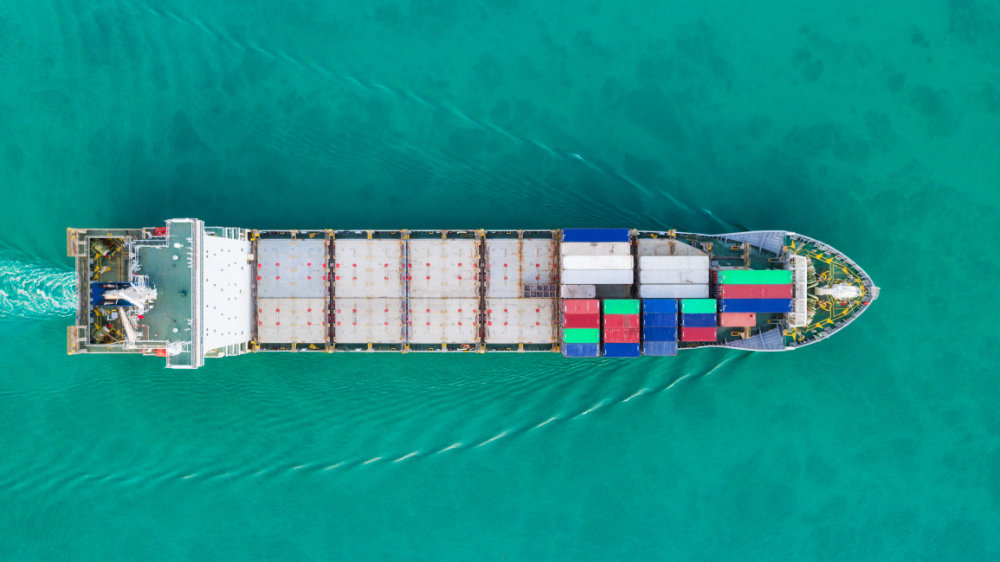
Today, such operations may include attempts at capture of an enemy flagged merchant vessel that resists with the use of force, or the targeting of an enemy flagged civilian vessel that has become a military objective due to its use. For example, the last merchant vessel sunk in the Atlantic in the Second World War had a crew of 29 and was flagged in the same country as the country of nationality of the master and most of the crew, while it carried cargo mostly linked to its flag state before the war. By contrast, in 2025, one of the largest container vessels afloat is Swiss-owned, Liberian-flagged, has an Indian Master, a multinational crew of 34, and capable of carrying 24,300 Twenty-Foot Equivalent Units or containers with cargo from or to a multitude of states. According to the United Nations Conference on Trade and Development, nearly three-quarters of the world’s merchant fleet is flagged in a country other than that of its beneficial ownership – making the meaning of, or even the very notion of, a neutral or enemy flag considerably more complex than in the past.
Interdependence and the vulnerability of global trade
The interconnected and interdependent nature of international trade, which relies primarily on maritime transport, means that the extended closure of one or more of the primary maritime choke points could have devastating effects for belligerents and neutrals alike. Although difficult to verify, it is widely reported that upwards of 80% of international trade by volume is carried by sea, including food, medical supplies, infrastructure components and parts, and other items essential for the survival of civilian populations.
Recent incidents – such as the grounding in the Suez Canal, insecurity in the Red Sea, and port attacks or closures affecting food exports – have revealed how quickly disruptions at sea can trigger humanitarian consequences far beyond the conflict zone. The simultaneous closure of multiple maritime primary and secondary choke points has yet to be properly quantified, but the impact would be significant.
Open sea lines of communication are also essential to ensure that food and other vital goods reach civilians on land. Maritime blockades or large-scale sea denial operations could therefore have dramatic humanitarian and environmental effects. The world’s understanding of the ocean’s fragility and life-sustaining role has grown, and states may no longer accept the level of environmental destruction once tolerated in large-scale armed conflicts.
The human cost of naval conflict
According to UNCTAD’s 2024 statistics, the world merchant fleet counts about 109,000 vessels of at least 100 gross tons, while the UN Food and Agriculture Organisation estimates 4.6-4.9 million fishing vessels. In 2022, the International Chamber of Shipping, reported 1.9 million seafarers serving on internationally trading merchant ships, though the true number of fishing vessel crew members remains unknown.
History shows that large-scale conflict at sea is especially dangerous for civilians. The repeated attacking of protected vessels or vessels carrying primarily protected persons during the Second World War included at least eight instances where the deaths exceeded those of the Titanic, in some cases approaching 10,000 deaths per vessel. Statistically, you were more likely to die during the Second World War if you served as a civilian crewmember aboard a US or a British Merchant Marine vessel than if you fought on the front lines as a soldier. By the end of the war, the US and Japan had both lost an average of 4.4 merchant ships for every warship.
Contemporary incidents echo this danger, and future large-scale maritime armed conflict has the potential to displace large numbers of civilians on land, which could trigger mass-movements across the maritime domain.
Submarine cables and digital dependence
The role and importance of submarine cables has also changed dramatically. When the rules around the protection of telegraph cables were agreed upon in 1884 and later in 1907, no one could foresee how submarine data cables would change our world and our lives.
In 1914 and 1939, the cuts of submarine cables as some of the first military actions of the World Wars did not result in the total collapse of the global civilian communication network or financial flows, did not stop breadwinners from accessing their salaries or buying food or medicine, and the cuts did not interrupt the operation of critical civilian infrastructure. Today, large-scale submarine data cable cuts could be expected to have all of those effects.
Technological advances also made it easier, cheaper, and less risky to interdict merchant shipping – while also increasing the potential harm to the merchant mariner population.
If the technology and impact have evolved so drastically, should the rules not evolve as well? The growing efforts by states to strengthen cable protection in peacetime suggest awareness of a vulnerability that would become critical in large-scale naval conflict.
The naval warfare workstream of the Global IHL Initiative
It is both right and timely to bring states together to discuss their most pressing concerns related to naval warfare. The Global IHL Initiative aims to mobilize state leaders across the globe to make IHL a political priority – ensuring that whenever armed conflicts are discussed, whether in international, regional or domestic fora, IHL is part of the equation.
The naval warfare workstream of the Global Initiative, co-chaired by the ICRC, Egypt and Indonesia, presents an opportunity for states to raise their concerns around the humanitarian consequences of armed conflict at sea in an inclusive, non-political international forum that can elevate these issues for global consideration. The first expert meeting and state consultation explored what preoccupies states regarding the humanitarian consequences of armed conflict at sea. The second and third consultations, together with two additional expert meetings, will delve further into key themes: the impact of conduct of hostilities at sea – both on land and at sea; the protection of people after attacks; the effects on the marine natural environment; and the challenges posed by new technologies at sea.
These consultations aim to hear from as many states as possible – not only those with significant naval power, but also those that would remain neutral in any armed conflict and smaller states that are deeply impacted by naval warfare without being a major maritime role-player.
As part of the Global Initiative, states have underscored the importance of neutrality in limiting the impact of armed conflict, by maintaining spaces unaffected by conflict and vessels capable of sustaining and supporting maritime activities by neutrals and by the ICRC.
During armed conflict at sea, the world’s oceans host vessels, activities, and nationals of neutral states, all of whom enjoy specific rights and protections. The protections afforded by the law of maritime neutrality has the potential to keep the world afloat, literally, during an otherwise devastating armed conflict at sea. Further discussion among states and experts on the importance and reach of maritime neutrality is necessary.
Contemporary geopolitical events are once again raising the prominence of international law applicable to armed conflict at sea. Waiting to address these concerns after conflict breaks out would be too late. It is therefore imperative to proactively identify the naval warfare issues that keep governments awake at night, to strengthen an already robust legal framework, clarify points of uncertainty, and ultimately close protection and other gaps in the law that may be necessary to minimize the adverse effects by belligerents of armed conflict, particularly at sea.
By the end of 2026, the naval warfare workstream of the Global IHL Initiative aims to adopt concrete, actionable recommendations that parties to armed conflicts, and all states, can implement to strengthen respect for IHL at sea. By addressing these challenges now, we can ensure that the “humanity compass” guides naval operations, protecting civilian lives and livelihoods even in the murkiest of times.
See also:
- Jean-Marie Henckaerts, Protecting civilians in good faith: the updated Commentary on the Fourth Geneva Convention, October 21, 2025
- Ansha Krishnan and Eve Massingham, Complying with IHL in large-scale conflict: navigating complexities in the Asia-Pacific, September 4, 2025
- Prashant Kahlon, War on the coastline: mitigating civilian harm in the littorals, May 17, 2023