
The ICRC continues to witness unacceptable levels of suffering when the law designed to protect families, prevent people from going missing, and ensure the dignified and respectful treatment of the dead is disregarded. At the same time, we have also documented countless, daily efforts by parties to armed conflict to prevent family separation, clarify the fate and whereabouts of missing people, and treat the dead with dignity and respect. This is a humanitarian imperative, a legal obligation that should be a priority of any party to an armed conflict.
In this post, ICRC Legal Advisers Tilman Rodenhäuser and Ximena Londoño present key findings of a recent ICRC study, “Non-State Armed Groups and the Separated, Missing and Dead: Obligations Under International Humanitarian Law and Examples of How to Implement Them”. Drawing on the doctrine and practice of 64 non-state armed groups (NSAGs) across the world, the study offers unique insights into practical measures that NSAGs can take to implement IHL and protect missing people and their families. This post provides a snapshot of the study’s main findings and operational relevance.
“When we were forced to move out of our house, I lost my husband. We left our house, and then we were separated. My husband went missing. … His disappearance forced us to get separated after spending most of our lives together, and it has been very difficult, and no word can fully describe this feeling. If only I could see him before I die, there is nothing I want more.” This harrowing testimony is from Rasmiya Mohammad Moussa in Iraq.
Rasmiya’s story is one of thousands shared by families across the world. In contemporary armed conflicts, hundreds of thousands of families are torn apart, separated from one another, left searching for missing relatives, and denied the chance to mourn because the bodies of their loved ones are nowhere to be found. In 2025 alone, the International Committee of the Red Cross (ICRC) registered more than 178,300 new missing person cases across the world – the highest yearly increase in at least two decades, resulting in a current total of nearly 410,000 cases that the organization is following.
Upholding family unity
The family is an essential, fundamental unit of society. Families provide people – especially children, older people and those with disabilities – with protection, support and psychological stability. Respecting family life is closely linked to preventing people from going missing. When families are separated the consequences can be devastating and long-lasting, affecting individuals and communities alike. For these reasons, international humanitarian law (IHL) requires all parties to armed conflicts to respect family unity as far as possible.
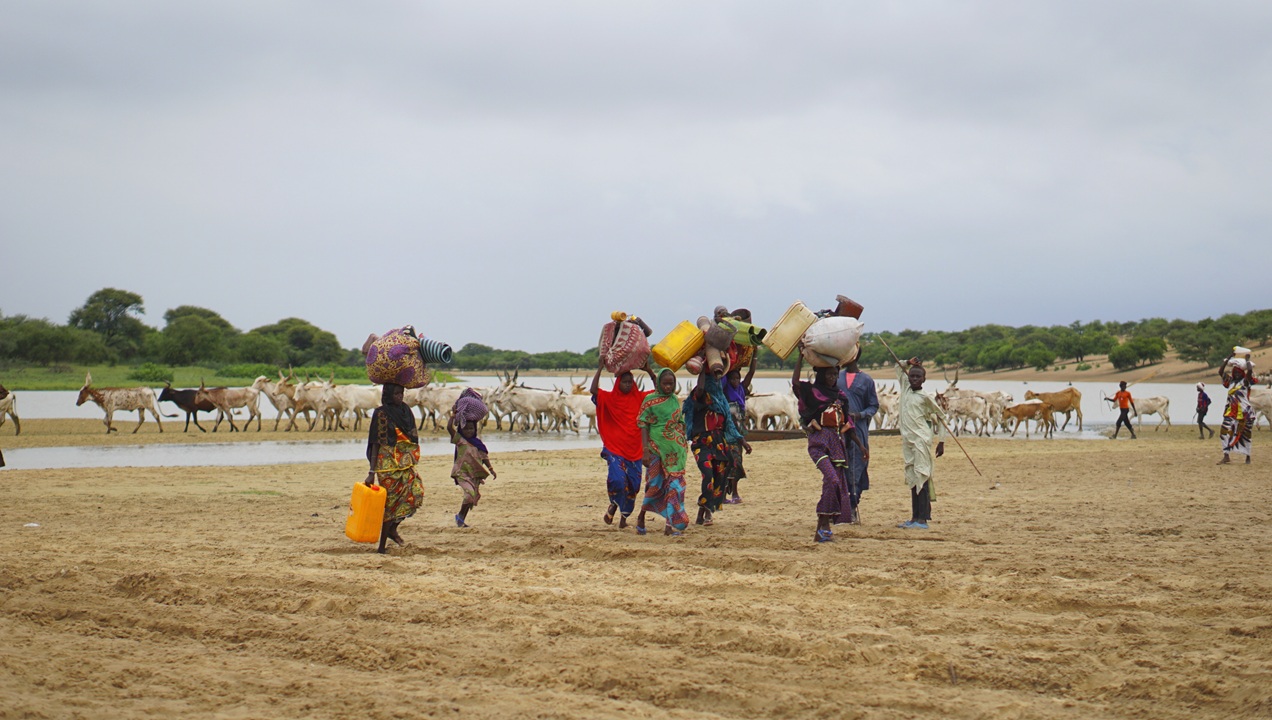
The risk of losing family contact is particularly severe when families are separated while fleeing hostilities. Too often, such displacement is the result of violence directed against civilian populations – by state and non-state parties. Scrupulous respect for the rules on the conduct of hostilities is therefore an important starting point. If parties to armed conflict are willing to respect family life, concrete steps can be taken to prevent family separation and therefore missing persons cases. In some contexts, we have observed that NSAGs have explicitly included in their codes of conduct and other internal rules the right of children not to be separated from their families. They have also informed communities – directly, through signals, through social media or through religious leaders – about their own upcoming military operations or about expected attacks from the enemy, enabling families to flee together to a safe area. In some situations, NSAG have asked heads of households to ensure that all members are present when fleeing, or have assisted families to flee, especially those with vulnerabilities like wounded or sick people, people with disabilities, children and pregnant women.
If communities are displaced, family separation is often a dire reality. NSAGs can play an important role in reuniting family members, for instance by searching areas under their control for dispersed family members. At the very least, NSAGs should allow displaced people under their control to contact family members, including through the help of humanitarian organizations such as the ICRC.
Accounting for missing people
We know that as a consequence of armed conflict, civilians are killed, buried under rubble, forced to flee hostilities, or become sick, wounded, detained or forcibly disappeared. It is also important to bear in mind that members of state armed forces or NSAGs are killed or captured and not properly accounted for. For those waiting to learn about the fate and whereabouts of a missing family member, knowing where their loved one is, whether they are dead or alive, and what happened to them is of the greatest importance – no matter whether they were a fighter or a civilian. To prevent or mitigate these tragedies, IHL prohibits enforced disappearances and requires each party to the conflict to take all feasible measures to account for persons reported missing and provide their family members with any information it has on their fate.
In areas in which NSAGs operate, civilians will often approach NSAGs to seek information about missing family members. If they receive such requests, NSAGs can and should take a range of practical measures to find missing people. Our research shows that NSAG commanders regularly share such requests with their members and collect relevant information. They also respond to such requests directly or by providing information through community elders, religious authorities or other intermediaries. In several contexts, recognizing their responsibility to clarify the fate and whereabouts of missing people, NSAGs have even designated focal points, or commissions, to focus on this work.
In non-international armed conflicts, it is often particularly challenging for parties to share information on missing people with the enemy or with families of enemy soldiers and fighters. In such situations, the role of intermediaries – be they local organizations, religious leaders, or humanitarian organizations like the ICRC – is particularly important. Families, as well as state and non-state parties to armed conflicts, have regularly approached the ICRC to help find missing family members. To allow the ICRC to play its role effectively, parties should – and often do – allow the ICRC to visit communities and places of detention under their control to look for people reported missing, advise their fighters to assist the ICRC in its efforts to trace missing people, and allow the ICRC to visit the families of the missing, assess their needs, and distribute financial and material assistance to them. Moreover, to establish practical solutions, parties to conflict should endeavour to conclude and implement special agreements to record and transmit information on detainees, missing people, and the dead. Such measures are not only humanitarian imperatives that help implement IHL, but also help restore a measure of dignity and certainty to families living with the anguish of not knowing.
Preventing detainees from going missing
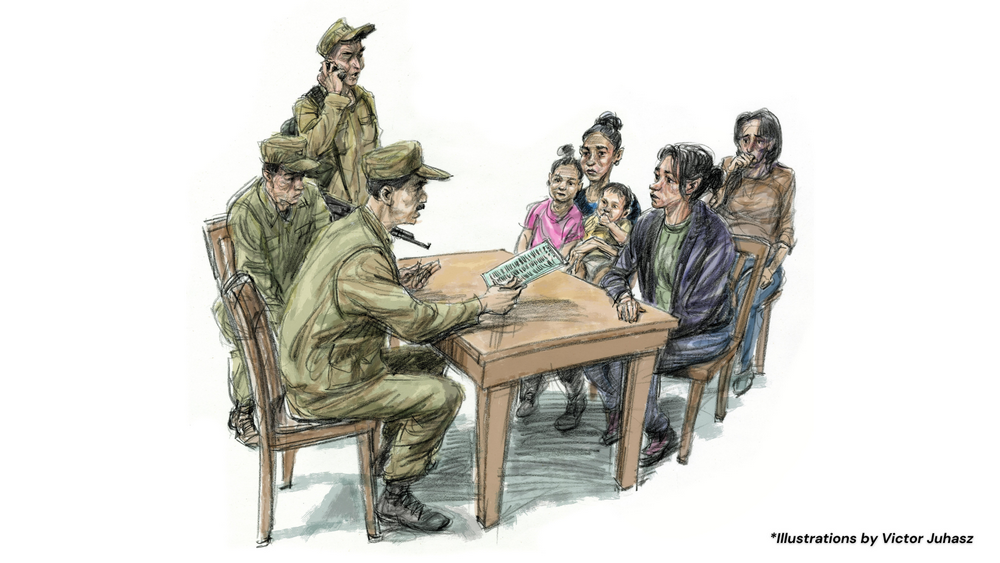
Today, dozens of NSAGs hold detainees – civilians and enemy soldiers and fighters. Too often, personal details are either not recorded or are recorded inaccurately, placing detainees at risk of disappearance and preventing the NSAG from effectively monitoring and tracking their transfer. In a recent ICRC publication we presented a range of concrete measures that NSAGs can take to prevent detainees from going missing. Two steps are essential, legally required, and feasible for all warring parties: One, maintaining up-to-date lists of essential information on detainees, either manually (in a registration book or card register) or in a secure digital database (on a computer or smartphone). And two, allowing detainees to correspond with their families – through letters or cards, phone messages, calls, or Red Cross Messages, and permitting families to visit their detained loved ones.
Treating the dead with respect and preventing them from going missing
Searching for, collecting, and evacuating the dead is a crucial step in preventing people from going missing. This obligation applies without distinction – whether the deceased are civilians or combatants, enemy or friend. In death, every person’s dignity must be respected, and parties must provide every family any information they have on their loved ones. For families, the return of their dead family members provides something invaluable: certainty. It allows to lay the deceased to rest in accordance with their religious traditions and personal beliefs. Without that certainty, families are left in a painful limbo, unable to mourn fully and move forward.
Too often, the ICRC witnesses violations of IHL rules on the protection of the dead. In some conflicts, the dead are ill-treated, and their personal belongings are stolen. Photographs of the dead are taken and used for propaganda. Bodies are left on the battlefield or under rubble, hampering identification efforts and impeding their return to their families. The anguish of not knowing the fate of a family member can last for years. Tragically, this pain is sometimes exploited, with parties to the conflict demanding payment in exchange for information about missing relatives.
Yet in other instances, NSAGs take practical measures to search for and collect the dead, for example by instructing members to do so or setting up dedicated units to search and evacuate the dead, and by effectively prohibiting fighters from mutilating dead bodies or stealing their belongings. In some cases, NSAGs work with local organizations or institutions to return dead people to their families, and if this is not possible, they buried the dead respectfully, marked and recorded the grave, and informed the family of the location of the grave. Some NSAGs have also taken practical measures to allow the future identification of dead bodies they have buried, such as recording the location of the graves (including GPS coordinates if available), marking the graves, and putting a glass bottle with a piece of paper containing the name of the dead person in the grave.
During our research and discussions with NSAGs, we also came across a range of measures that NSAGs take to help identify their own members if killed on the battlefield, and thereby prevent them from going missing. In addition to maintaining lists of fighters who take part in each operation, or requiring commanders to know this information, several NSAGs also provide their members with identification documents. These can be ID tags on the wrist, neck and waist, carrying a plastic card issued by the group, or even a piece of paper with their nom de guerre. Some NSAGs have also sewn a number into fighters’ uniforms and recorded this number, together with a nom de guerre, in a database to facilitate the identification of dead members of the group. These examples show that practical measures can be taken to prevent members of the group who are killed from going missing, while also taking into account the security of the party.
Conclusion
Protecting family unity, preventing disappearances, accounting for the missing and ensuring the dignified treatment of the dead are not optional acts of compassion – they are binding obligations under IHL. To uphold these obligations during war, parties to a conflict must take concrete, proactive steps, such as systematically collecting and preserving information that can help clarify the fate of the missing and dead, sharing such information with families, opposing parties, and humanitarian organizations, and having the capabilities necessary to treat the dead with respect and care. Efforts to find missing people must continue long after the fighting stops and should therefore be addressed in peace negotiations and agreements.
When these obligations are upheld, families are spared the agony of uncertainty, cycles of revenge are less likely to take root, space is created for trust to emerge during hostilities, and – at least in some small measure – the foundations of peace are built.
See also
- Jill Stockwell, Martina Zaccaro, and Simon Robins, Divided together: how families of the missing build peace, November 11, 2025
- Tilman Rodenhäuser, Internment by non-state armed groups: legal and practical limits, October 15, 2024
- Tilman Rodenhäuser and Eloïse Lefebvre, Detention by non-State armed groups: translating law to practice, April 4, 2023
- Ruben Stewart and Celia Edeline, The NSAG handbook: helping non-State armed groups reduce civilian harm during urban warfare, March 30, 2023
- Grażyna Baranowska, Left behind: reparations and assistance for families of missing and disappeared persons, June 2, 2022
- Filipa Schmitz Guinote and Eva Svoboda, Where are they? Three things the families of missing persons teach us about war and peace, May 6, 2021