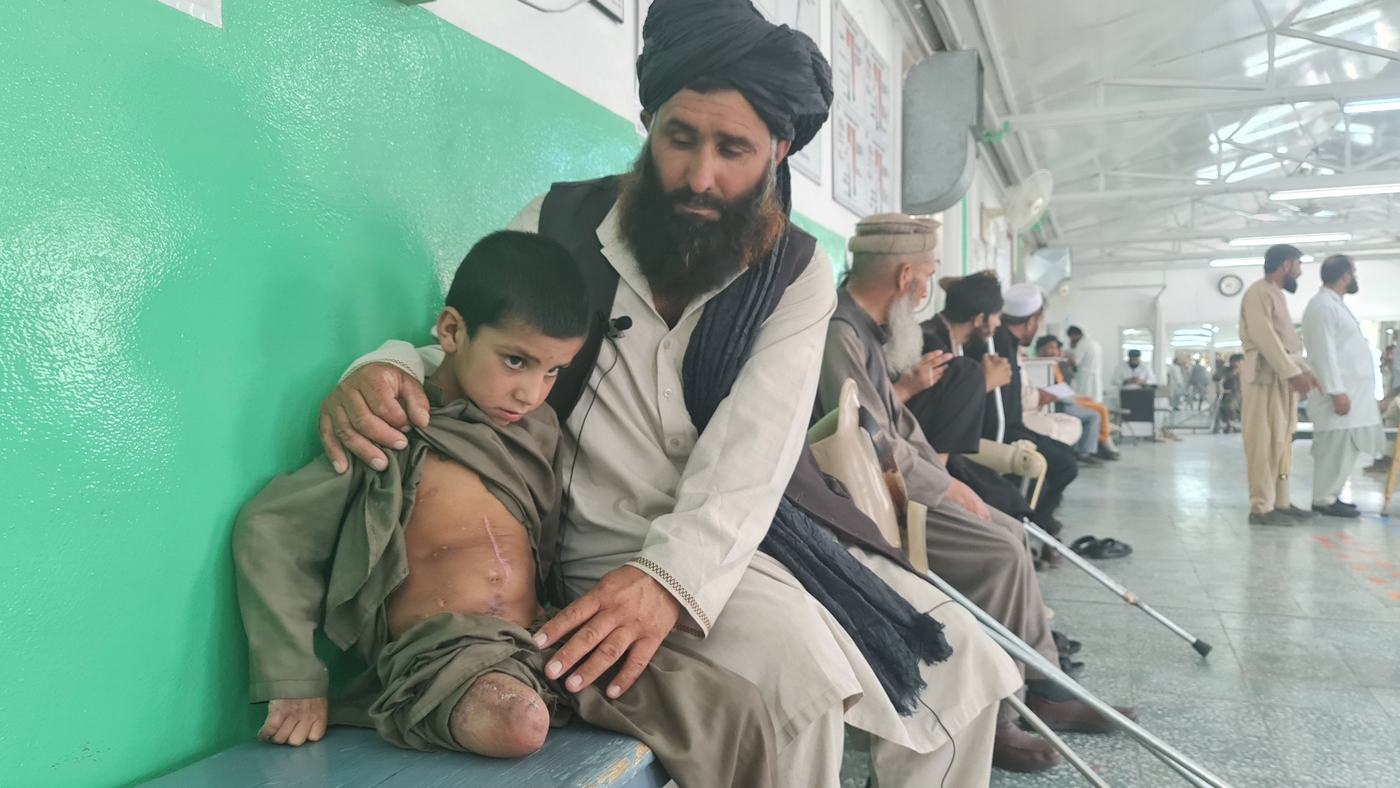
The humanitarian landscape is being reshaped by converging trends, including the rapid adoption of new technologies in warfare, growing restrictions on how and where humanitarians can operate, impacts of the climate crisis and steep reductions in funding.
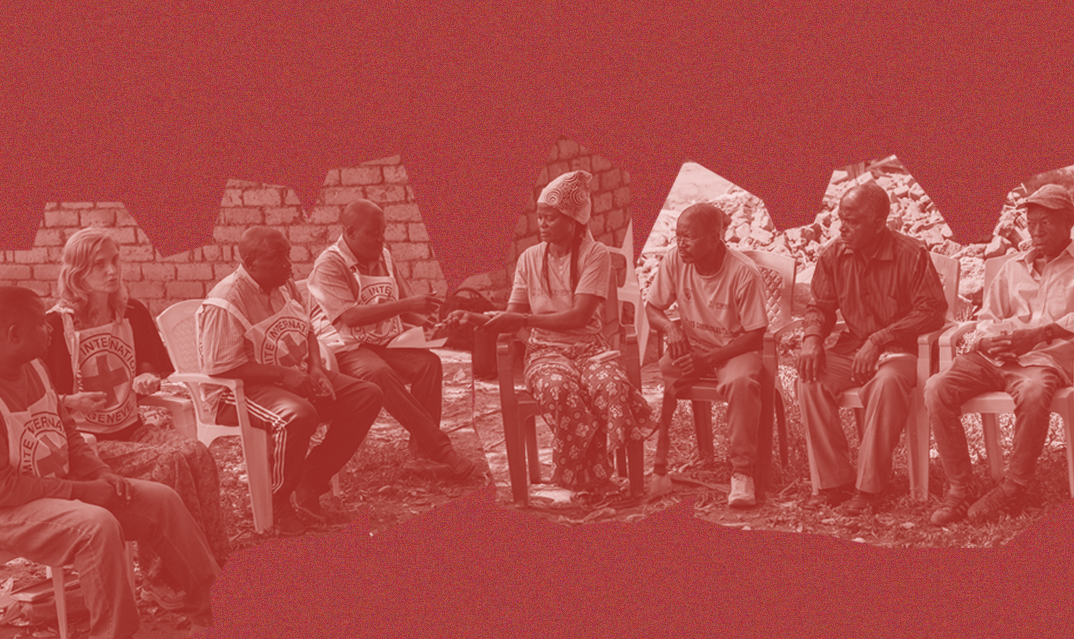
How are these trends shaping the needs of communities? What should communities realistically expect from humanitarians making difficult trade-offs in the face of an increasingly fraught operational space and precipitous funding declines? These are some of the key questions the ICRC’s new policy report seeks to answer, based on focus group discussions with communities in the Democratic Republic of Congo, South Sudan and Ukraine, alongside interviews with humanitarian practitioners and policymakers in and beyond these contexts.
In this post, part of our series “Delivering for people in an evolving humanitarian landscape”, ICRC Senior Policy Advisers Arjun Claire and Avigail Shai focus on what communities said they are experiencing in this changing environment and identify four priorities to meet these community needs and expectations.
A group of twelve people sit in an empty classroom. They are from Al Fasher, Nyala and Khartoum. They arrived in Wanyjok, a county town in Northern Bahr al Ghazal, South Sudan, in January this year. They are among the hundreds of thousands of people who have been forced from one place to another, escaping the ruinous war that has swept Sudan.
Many are coming to the very place they had left ten, twenty years ago, now simply labelled as South Sudanese returnees. They each have their own stories of how they built their lives in Sudan, how that life unraveled, and the travails they went through to reach this outpost of relative safety. They tell of families separated during flight, of children left behind, of desperation for any news of their whereabouts.
Along the way, few met any humanitarian agency, not when fleeing violence, nor when they crossed the border. Their arrival has coincided with one of the largest funding crunches humanitarians have experienced in recent years. Even before this, some humanitarian actors had begun disengaging from this part of South Sudan.
Food and water are their most immediate need – the kind of “emergency” humanitarians should be well-placed to address. Yet precipitous drops in funding have forced tough choices, with those organizations still present unable to cover even these basic needs.
They tell us how people from the local community welcomed them when they first arrived, “breaking bread” together and giving them small areas of land to set up shelters. But their hosts themselves struggle to get by.
We heard a variation of this story in the Democratic Republic of Congo (DRC) and Ukraine, too. Social networks remain a first line of support for most communities, including neighbours, relatives, community organizations or local religious groups. Institutional humanitarian support is often a vital complement to such inter-communal solidarity, but recent budget cuts, along with heightening insecurity, have made already-limited assistance even scarcer.
To varying degrees, humanitarian funding across all three contexts was already diminishing. Yet the abrupt nature of cuts in early 2025 forced rapid programmatic downsizing with limited time for strategic planning. And while humanitarian organizations have individually strived to mitigate the consequences of cuts and ongoing funding volatility, the overall impact into 2026 has been a more fragmented response: the disappearance of referral pathways for people affected by violence; geographical consolidation leaving gaps in coverage; and a retreat towards shorter-term interventions.
While the needs and expectations of communities differ from one place to another, four themes emerged consistently across our discussions with communities.
1. Adapting support to community needs
Communities continue to emphasize that the assistance they receive, while valuable, still does not always meet their needs. Some communities say they are given food items, when what they need is cash; others say they are given cash, when they would prefer farming materials or other items not readily available in the local market; still others express a preference for support in setting up small businesses or undertaking training so they can support themselves and make their own choices.
This points to ongoing structural limitations in the way much humanitarian assistance is designed and delivered. There is often little flexibility to adapt responses to diverse and evolving needs, either because of rigid funding conditions and planning processes, or because organizations develop expertise in particular ways of working overtime, making it easier to scale but harder to experiment. To allow humanitarians to better meet community expectations, donors must prioritize adequate, flexible and multi-year funding, and organizations must incentivize adaptive programming by country teams. Collectively, organizations must assess which actors are best placed to address specific needs in a given area, implementing complementarity in action.
2. Reinforcing communities’ existing resilience
Communities self-organize and support each other, and these mutual solidarity networks are essential to their resilience. But people cannot be expected to maintain endless resilience in the face of repeated shocks and conflict. In the DRC, livelihood-based village associations pool money and extend credit to members on a rotating basis so they can expand their businesses or meet their emergency needs. The resurgence of conflict, however, has bankrupted some of these associations as people struggled to pay back their loans. These networks still exist – all they need is a reinjection of some capital to resuscitate them.
Communities told us that humanitarian programmes do not always adequately account for such pre-existing community resilience structures or initiatives. And as many humanitarian actors focus on emergency responses in the face of funding cuts, programmes focused on strengthening resilience are in jeopardy. This is at odds with community expectations. Across our discussions with communities, the message was clear: communities want to be self-reliant, and humanitarian actors should help them in achieving this. One person put it simply: “aid must be sustainable”. Identifying and supporting existing community resilience mechanisms is one way of making this happen.
3. Securing protection capacities
Beyond assistance, communities are experiencing the impact of weakened protection capacities. They rely on humanitarians for a range of services, from help with evacuating frontline areas in Ukraine, to seeking treatment for gender-based violence in the DRC. These cover a continuum of action provided by a number of international, national and local humanitarians. Some of these services may be less tangible than material assistance but have a deep and long-lasting impact on people’s lives.
Protection services are interconnected and many of them require specific expertise, which once lost cannot be easily replaced. A survivor of gender-based violence, for example, may need medical care, psychosocial counselling and legal advice at the same time, and no one organization may have the expertise to provide the full range of services. Funding cuts have disrupted this continuum of support as organizations have had to cut back, leaving people with nowhere to turn, especially in places where public services are weak or absent.
The impact of cuts is also acutely felt on protection activities that are costly, take a long time, and require special expertise, such as clearing explosive remnants of war. In one village in the DRC, communities said the presence of these remnants had resulted in injuries, and was taking a huge psychological toll on people while also preventing them from farming their lands.
Parties to conflict must respect the law. Donors should support humanitarian actors in sustaining the full range of protection services and capacities. Humanitarian agencies should continue their efforts to embed these capacities, where feasible, in public services and institutions, and to promote respect for international humanitarian and human rights law.
4. Deepening conflict sensitivity to avoid undermining social cohesion
Aid cuts appear to have sharpened perceptions of bias relating to the distribution of assistance among some communities. With humanitarians forced to reduce assistance in the wake of cuts, communities we spoke with, especially in the DRC and South Sudan, frequently questioned why people were being increasingly excluded from receiving support. Some suspected community leaders of favouring certain members over others; at the same time, some community leaders noted that when organizations were unable to fulfil their commitments, communities tended to direct their frustration towards them. In this way, abrupt reductions in assistance, in the absence of transparent communication by humanitarians, risk stoking inter-communal tensions.
There can also be deeper dynamics underlying perceptions of bias. Communities told us they see conflicts as affecting everyone in their midst one way or another, considering it unfair to exclude those who aren’t deemed vulnerable enough. Humanitarians, meanwhile, have their own vulnerability criteria to ensure that their limited resources go to those most in need, and these too are not always aligned. The result is often a mismatch between how communities think aid should be distributed and how humanitarian actors distribute aid.
There is no easy resolution to this tension, especially as resources shrink – but at a minimum, understanding these differing perspectives and explaining selection criteria is important. Communities themselves said that when humanitarians actively consult people affected by conflict – and not just community leaders – then people can both better understand the choices and constraints, and offer solutions to ensure assistance is fairly distributed and durable.
Keeping communities at the center
A scarcity of resources and constraints on action will likely continue to define the landscape for humanitarian action. As humanitarian organizations adapt to this new reality, understanding what communities need should be central to decisions on how to deliver maximum impact with fewer resources.
There are many types of humanitarian actors, and many ways of doing humanitarian action. Each has its own values and principles, its strengths and its limitations. Strengthening and implementing complementarity among these different actors and ecosystems can help to better meet community expectations. But the combined scale of cuts, rising needs and growing risks means no amount of efficiency, new partnerships or implementation of complementarity can make up for the resourcing and action gap in humanitarian settings.
Ultimately, even the best-planned and funded humanitarian assistance can only be a partial response to the needs and aspirations of conflict-affected communities. As one woman in Ukraine said, “we can adapt to anything, but not to war.” This goes to the heart of what communities say they most want: for the wars which blight their lives to end. States and parties to conflict have the ultimate responsibility to put a stop to conflicts. Humanitarians can ensure their work is complementary, adaptive, conflict-sensitive and supportive of community resilience; and that they continue to advocate, unrelentingly, for respect for the law – and for peace.
Related articles
- Imane Karimou, “A number that learned how not to scream”: the case for community-led metrics on protection, July 7, 2026
- Mamuch Bey, The shelter that shone in the distance, June 18, 2026
- Eberechukwu Owuamanam SJ, We helped individuals while harming persons: what conflict-affected communities deserve beyond beneficiary status, June 11, 2026
- Sundus Tehreem Shahzad Khattak, Climate resilience is not optional: what people in fragile, urban settings should expect from WASH, June 9, 2026
- Sara Aleisseh, Life teaches before school does: the invisible curriculum of the super child, June 4, 2026