Large-scale armed conflicts consistently sever the systems that sustain civilian life, leaving populations without essential services or access to basic goods. International humanitarian law (IHL) sets out clear obligations for states to anticipate these foreseeable humanitarian needs and to ensure that impartial relief can reach affected communities swiftly and safely. Yet from customs hurdles to restrictive regulatory frameworks, many of the barriers to life-saving assistance are rooted not in conflict itself, but in peacetime choices.
In this post, part of the “Complying with IHL in large-scale conflict” series, ICRC Legal Adviser Ellen Policinski examines how states can proactively shape legal, administrative, and logistical systems that enable, rather than obstruct, humanitarian relief in moments of crisis. She underscores that meeting IHL obligations requires advance preparation – from easing import restrictions to ensuring postal and customs exemptions – so that when conflict erupts, assistance can move without avoidable delay.
No matter what is done to reduce the human costs of large-scale armed conflict, civilians too often find themselves cut off from essential services and the basic supplies they need to cover their daily needs. Especially in populated areas, evidence shows that they bear the brunt of the suffering.
As Isabelle Gallino and Sylvain Vité note in their introductory post to this series, states must take steps in advance to meet their IHL obligations, including preparing to ease the human cost that inevitably follows war. The Geneva Conventions, particularly the Fourth Geneva Convention on the protection of civilians (GC IV), set out a range of provisions for impartial humanitarian relief meant to address that suffering. This post draws on some elements from the ICRC’s recently updated Commentary on the Fourth Geneva Convention to explore how states can prepare to allow and facilitate the delivery of humanitarian assistance.
What are states’ obligations related to humanitarian relief?
Although impartial humanitarian organizations, like the ICRC, may offer their services on behalf of the affected population in both international and non-international armed conflict, each Party to the conflict bears the primary responsibility to meet the needs of the population living under its control. Consenting to humanitarian operations undertaken by impartial humanitarian organizations is one way to work towards meeting those needs.
Where a state is unable or unwilling to meet those needs, it is under an obligation to accept an offer of humanitarian relief placed by impartial humanitarian organizations and cannot refuse its consent on unlawful grounds. This is especially clear in occupied territory, as stated under Article 59 of the GC IV. Even states that are not party to armed conflict have to let consignments of essential goods transit through their territory if they are intended only for civilians or if relief is intended for occupied territory, subject to their right of control.
Once a Party has accepted an offer of services, it has an obligation to allow and facilitate the rapid and unimpeded passage of humanitarian relief, subject to its limited right to impose measures such as searching relief consignments, restricting the times and routes by which relief may be delivered, and requiring that delivery be supervised by an impartial humanitarian organization. Military necessity can be invoked to regulate humanitarian access but cannot obstruct humanitarian operations indefinitely, as recently confirmed by the International Court of Justice in its 22 October 2025 Advisory Opinion – any measures taken for reasons of military necessity must be temporary and limited geographically.
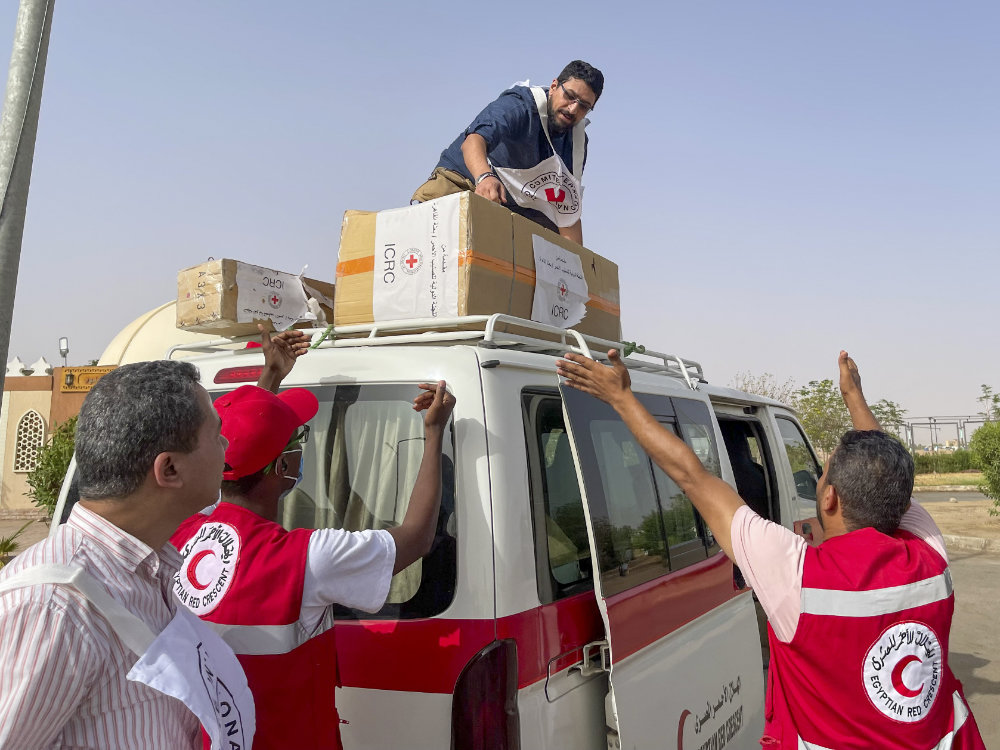
Facilitating relief operations is not limited to refraining from interfering with them; it requires proactive steps be taken to ensure that relevant legal and regulatory frameworks do not unnecessarily impede humanitarian efforts. This includes ensuring that the infrastructure is in a suitable condition for the delivery of consignments; making transport available; removing or simplifying administrative barriers relating to visas or other immigration matters, import/export issues and field trip approvals; and guaranteeing the privileges and immunities necessary for a state or an organization to carry out the relief schemes.
As seen in past armed conflicts, unduly delaying the delivery of necessary humanitarian relief can have devastating consequences as living conditions deteriorate, eventually leading to malnutrition, the spread of diseases, and unnecessary deaths. The cost is particularly high for children, who face not only the dangers of their immediate needs not being met, but also threats to their long-term growth and development. States can and should prepare in advance so they are poised to allow and facilitate impartial humanitarian relief in the event that it is needed. This starts by considering what restrictions on the movement of people and goods could be eased to help humanitarian relief reach its intended beneficiaries faster.
To that end, the ICRC recently called “on all states to simplify procedures, issue predictable authorizations, and adopt humanitarian exemptions in sanctions and counter-terrorism frameworks.” Much ink has already been spilled on the need for humanitarian exemptions to counterterrorism and other sanctions regimes, so it is not necessary to re-discuss them here, but there are other legal facilitations that states can enact in peacetime to ensure that humanitarian relief is able to reach its intended beneficiaries quickly and efficiently.
Lowering administrative hurdles on the import and export of humanitarian supplies
There are some specific IHL provisions requiring facilitation of the import of humanitarian supplies. For example, the Fourth Geneva Convention requires that relief consignments intended for occupied territory be exempted from “all charges, taxes or customs duties unless these are necessary in the interests of the economy of the territory.” Similar tax exemptions are required for humanitarian relief intended for prisoners of war and internees.
Logically, these exemptions should be extended to all relief intended for those who are not or who no longer participate in the conduct of hostilities as a way to facilitate the free passage of that relief. A custom or import duty is “a tax collected by customs authorities on goods that cross international borders”. The exemption from import taxes including customs and other dues covers a wider variety of taxes, duties and tariffs that would normally apply, whatever they are called.
The UN General Assembly has called on states “to refrain from levying taxes and imposing undue financial burdens” on humanitarian relief many times. Many states have incorporated import tax exemptions for humanitarian aid into their legislation, customs regulations and policies, sometimes arranging for cooperation at the regional level. The exemption from import tax is also reflected in the 1990 Convention on Temporary Admission, the 1996 UN Model Agreement on Customs Facilitation in Humanitarian Assistance and the 1999 Revised Kyoto Convention. In practice, states generally do not levy duties on relief shipments merely transiting through their territory.
There are also other types of restrictions that operate in peacetime that states should ensure allow for the free movement of humanitarian relief personnel, equipment and goods – for example, medications urgently needed by the population may be controlled substances. Import and export restrictions should allow some flexibility so that these medications can reach those who need them in a timely manner. Where applicable, export restrictions on other goods needed for humanitarian relief should also be eased.
IHL provides for the freedom of movement for humanitarian personnel subject to limitations for reasons of imperative military necessity. Immigration restrictions should be eased accordingly, to allow them to safely reach affected communities. The International Federation of Red Cross and Red Crescent Societies has produced a Checklist on Law and Disaster Preparedness which, while not aimed at armed conflict situations, can prove instructive as to further measures that could facilitate the delivery of humanitarian relief.
Some individual relief parcels and correspondence with people protected under the Geneva Conventions is sent by mail. Similar to exemptions from import duties, the Fourth Geneva Convention exempts from postal dues for anything sent by mail to or by civilian internees, prisoners of war, national information bureaux and the Central Tracing Agency (CTA). Article 16 of the Universal Postal Convention provides corresponding exemptions, while its Regulations detail implementation, including liability waivers for the Universal Postal Union’s members and marking requirements for free-of-charge items.
This obligation applies regardless of whether postal services are public or private. States must ensure operators do not impose charges, and may determine nationally how to compensate them, including advance arrangements (bilateral or regional) for mail transiting through multiple countries.
Without prejudice to any applicable remuneration provisions as outlined in the Universal Postal Convention or its Regulations, whether such postal operators receive any other financial compensation in order to fulfil those obligations is a decision to be made at the national level. This is something states should do in advance to ensure that they are prepared to uphold their obligations, including the arrangements that need to be in place in case the mail will transit through the territory of several states such as bilateral or regional agreements facilitating the passage of such mail.
Putting protections into practice
Once the appropriate legal and regulatory framework is in place on paper, the authorities need to ensure it is applied in practice, including through training relevant customs and border personnel on how humanitarian relief materials and relief personnel should be treated. They should also ensure that necessary lines of communication are open. To that end, the World Customs Organization has issued recommended practices for supporting humanitarian work, including “establishing effective communication channels between humanitarian partners and governmental agencies involved in the import process”.
States may also wish to negotiate agreements with international organizations, such as the ICRC or UN agencies, granting them privileges and immunities, including exemptions from custom duties and custom restrictions, and other facilities that can help them deliver life-saving aid quickly and efficiently.
As states call for more good-faith interpretation and application of international humanitarian law, they should also consider the concrete steps that would make such compliance possible in the event of large-scale armed conflict.
When aid is needed most, arranging its transport and delivery – particularly across borders – become exponentially harder. Meeting their obligations will be far easier if states take the measures described above in peacetime: laws and administrative systems meant to regulate imports or safeguard medicines and medical equipment must also guarantee the swift passage of relief and relief personnel, preserving lives, dignity, and the fabric of communities affected by armed conflict.
See also:
- Ansha Krishnan, Eve Massingham, Complying with IHL in large-scale conflict: navigating complexities in the Asia-Pacific, September 4, 2025.
- Dominique Loye, An evitable catastrophe: reclaiming humanity from the nuclear brink, August 7, 2025.
- Sylvain Vité, Isabelle Gallino, Complying with IHL in large-scale conflicts: detention operations in international armed conflicts, May 15, 2025.
- Isabelle Gallino, Sylvain Vité, Complying with IHL in large-scale conflicts: key preparedness measures, April 3, 2025.