

The waters stretching from the Eastern Indian Ocean through Southeast and East Asia to the Western Pacific sustain global trade, host abundant marine resources vital to the livelihoods of many, and power regional economies. They are central to the national security of many states and are also home to major powers, vast archipelagic states, and many smaller states, including small island nations. These waters are also marked by overlapping maritime claims, strategic maritime chokepoints, and a growing military presence, including states from outside the region. Tensions rise when maritime incidents occur and there is an ever-present risk of miscalculations spiraling into broader confrontations.
While armed conflict is not inevitable, if it were to occur it would likely unfold with considerable intensity, scale and tempo, with far-reaching and severe humanitarian consequences. Preparing for such a scenario requires not only preventing escalation but also ensuring that humanitarian impacts are mitigated and that impartial humanitarian action can take place, even in complex maritime environments where neutral states would also be called upon to shoulder important responsibilities.
In this post, part of the “Complying with IHL in large-scale conflict” series, ICRC Legal Advisers Ansha Krishnan and Eve Massingham explore some of the humanitarian challenges posed by potential large-scale conflict in the Asia-Pacific region. The maritime nature of the region, together with its vast geographical scope and the present geo-political realities means aspects of conflict preparedness bear specific consideration because of the practical measures required to comply with IHL obligations and prepare for likely humanitarian consequences.
The Pacific Ocean covers around one-third of the surface of the earth and its inhabited islands are separated by great distances. In today’s global economy, outlying Pacific states that may have once been self-sufficient are now dependent on resupply through maritime transportation, making them vulnerable to interruptions from the impact of naval warfare. Large-scale humanitarian consequences would be particularly challenging and need prior thought. Although the region can build upon its significant experience and expertise in responding to natural hazard-induced disasters, large-scale armed conflicts involve complexities that require additional consideration to ensure preparedness.
Expanding domains of warfare: the multi-domain battlespace
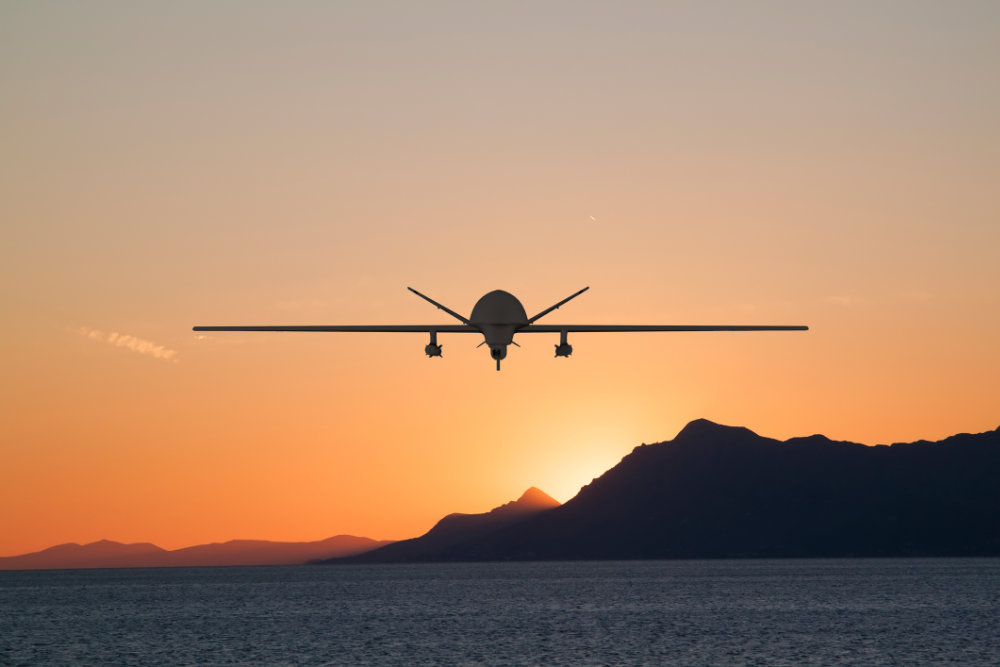
The maritime aspect of conflict in the Asia-Pacific will challenge not just legal frameworks including the law of naval warfare[1], but also the capacity of states to respond to practical humanitarian realities. The vast distances in the maritime domain will challenge preparedness plans. The proliferation of uncrewed systems, including vessels at sea, adds another layer of complexity. Naval drones have been used in offensive operations against ships, aircraft and coastal targets and the legality and appropriateness of autonomous weapon systems presents challenges. [2]
Contemporary armed conflict is also no longer confined to land, sea, and air—there is increasing military activity in the cyber and space domains, as well as in the information environment.[3] Cyber operations routinely targeting public infrastructure, communications networks, and transportation systems have become more frequent. These attacks blur the boundaries between military and civilian domains, often affecting essential services. The reliance on and vulnerability of submarine cables across the region is a good example of the interaction of domains that states are increasingly aware of. The risk of an attack on dual military and civilian use of submarine cables poses catastrophic humanitarian consequences both for the region and the world.[4]
Partnered warfare: obligations for coalition partners
It is likely that any large-scale conflict centred around the Asia-Pacific region would involve a number of militaries in partnered operations taking place far from military bases. Coalition partners must clarify roles and responsibilities in joint detention operations,[5] contemplate the maritime transfer of detainees, agree on the applicable legal frameworks and procedures, and establish coordination mechanisms, including for detainee transfer between partners.[6] As recent memory of multinational operations has primarily been in situations not constituting international armed conflict, it is clear that many players in the region, despite having experienced coalition operations, have not had to consider these issues in the international armed conflict framework, nor at such scale.
Consider a hypothetical maritime operation in support of one of the parties to the conflict, comprised of multiple coalition partners involved in large-scale capture, transfer and temporary detention operations of enemy combatants at sea. This scenario gives rise to several practical and legal questions such as, who is exercising control over the detainee? What legal and procedural frameworks are in place governing capture and transfers between partners? Have formal technical agreements, memoranda of understandings or standard operating procedures compliant with IHL been developed and concluded by the detaining and transferring powers? Are there review procedures in place for the transferring partner to assess whether the transferred person will be in danger of fundamental rights violations? Are naval forces prepared to receive and temporarily hold detainees aboard vessels in compliance with IHL? Are there appropriate disembarkation points for securing safe transportation, and are the facilities on land available and suitable?[7] Have neutral states located in proximity to the operations been effectively consulted? In the context of large-scale detention operations involving multinational forces, the principle of non-refoulement[8] is an example where legal and military interoperability require strong coalition coherence.
For specific preparatory measures to comply with IHL in large-scale detention operations, see the previous post in this series.
Neutral states: obligations of search, rescue and repatriation
The interpretation and application of the law of neutrality applicable to neutral and belligerent states in times of armed conflict is an increasingly critical consideration. Historically, the law of maritime neutrality has always risen in prominence during large-scale armed conflict between powerful naval powers. What large-scale armed conflict in the Asia-Pacific region means for neutral states, particularly those with vast maritime zones or archipelagic waters, is therefore a topic they are very interested in.
In particular, neutral states may find themselves inadvertently drawn into the conflict through incidental detention or benevolent maritime search and rescue operations.[9] Under international law of the sea, neutral states retain an obligation to coordinate and facilitate maritime and aeronautical search and rescue efforts. Masters of vessels flying their flags are required to render assistance to those in peril of being lost at sea, and neutral government vessels may engage in such search and rescue operations. Where neutral states exercise control over wounded, sick, shipwrecked or dead members of belligerent armed forces, they have specific obligations governing internment, transfer to neutral territory to receive medical treatment, and repatriation – in the absence of agreements to the contrary between the neutral and belligerent states.[10]
Consider a situation where a neutral state whose port is located in proximity to the zone of hostilities is the only available option for a belligerent warship to transfer wounded, sick and shipwrecked individuals. These individuals may require urgent medical attention, temporary shelter or internment. The neutral state could be requested to render necessary humanitarian assistance while also ensuring the warship and its crew does not rejoin hostilities.[11]
Now imagine the same scenario at scale. The Asia-Pacific region’s vast maritime area adds layers of complexity. A vast number of wounded, sick and shipwrecked individuals would need to be searched for, collected and evacuated from the active zone of hostilities, which will likely occur far from established ports and critical infrastructure. Combatants captured at sea may also need to be transferred to land as quickly as possible to ensure their legal protections can be met.[12]
The geographic realities of the region underscore the need for neutral states to have doctrine, training and operational procedures in place clearly outlining neutrality procedures with parties to the conflict for search and rescue, medical evacuation, and internment.
Preserving the humanitarian space and humanitarian access: an obligation for all states party and not party to the armed conflict
By their very nature, large-scale armed conflicts bring humanitarian consequences ranging from mass fatalities, injuries, and mass displacement to widespread destruction of critical infrastructure and the natural environment. It is therefore especially important to recall that under IHL, impartial humanitarian organizations have a right to offer their services to the parties to carry out their humanitarian activities when the basic needs of the population affected by the conflict are not met.[13] This has particular implications for neutral states. On a practical level, this requires strong coordination and cooperation between all parties to the conflict and impartial humanitarian actors such as the ICRC and national societies. Once impartial humanitarian relief schemes have been agreed to, all states – including those not party to the conflict – must allow and facilitate rapid and unimpeded passage of these relief schemes, subject to their right of control.[14] This means that neutral states must authorise the use of their territory to efficiently access conflict zones, and parties to the conflict are legally obliged to cooperate and take positive action to facilitate humanitarian operations.
Agreements between parties, including partners and neutral states, can help ensure that the necessary legal and preparatory measures are in place. Such agreements could include pre-designated sites for the disembarkation and treatment of shipwrecked or wounded individuals, protocols for the internment of prisoners of war or civilians (including for ICRC visits[15]), and processes to facilitate humanitarian relief and repatriation. On a logistical level, administrative formalities could also be simplified to facilitate visas or other immigration issues, financial / taxation issues, import / export controls, field trip approvals, as well as privileges and immunities necessary to protect the organization’s work.[16] The distances across the Pacific make this reasonably foreseeable.
Conclusion
The prospect of large-scale international armed conflict is not a foregone conclusion – but it is a risk that cannot be dismissed. Preparedness for large scale humanitarian consequences and the logistical challenges that go with them is key. The stakes are high – not only for the states fighting in the conflict but also for neutral states in the region, to protect human life and dignity should the need arise.
Compliance with IHL requires anticipating these challenges and preparing for them so that the humanitarian consequences can be alleviated. This is an important role and it is one that must be undertaken not just by armed actors and humanitarian actors, but also across governments, whose relevant departments have a role to play in responding to the humanitarian impacts of large-scale conflict.
Authors’ note: The authors would like to express their gratitude to Michael Cresham, Snowy Lintern, Andre Smit and David Tuck for contributing to the ideas developed in this post.
References
[1] Parts of the law of naval warfare are presently the subject of an update process by the International Institute of Humanitarian Law with key support from the ICRC and the Norwegian Red Cross (see https://iihl.org/wp-content/uploads/San-Remo-Manual-Project-Statement.pdf and the work of the Naval Warfare Workstream of the Global Initiative to Galvanise Political Commitment to International Humanitarian Law at https://www.icrc.org/sites/default/files/media_file/2025-03/Global_Initiative_workstream_Web.pdf
[2] ICRC, “Position on autonomous weapon systems”, ICRC, Geneva, 2021: https://www.icrc.org/en/document/icrcposition-autonomous-weapon-systems. See also, Joint call by the United Nations Secretary-General and the President of the ICRC, ICRC, Geneva, 2023: https://www.icrc.org/en/document/joint-call-un-and-icrc-establishprohibitions-and-restrictions-autonomous-weapons-systems.
[3] https://blogs.icrc.org/law-and-policy/2025/05/22/the-shifting-battlefield-technology-tactics-and-the-risk-of-blurring-lines-of-warfare/
[4] ICRC, IHL and the challenges of contemporary armed conflicts, p 42.
[5] ICRC, Commentary on the Third Geneva Convention, para. 1519-1523.
[6] ICRC, Commentary on the Third Geneva Convention, 2020, para. 1537
[7] Art 19 GC III.
[8] Article 45 (4) GC IV
[9] Art 4 GC I, Art 5 GC II; Art 19 AP I.
[10] Art 15, 17, 40 (3) GC II, ICRC commentary art 15.
[11] Art 17 GC II.
[12] Art 22 GC III.
[13] See Arts. 9/9/9/10 of the GCs (IAC), establishing the so-called right of humanitarian initiative. Art. 23 of GCIV, Arts. 70(2), 70(4) and 70(5) of API and Rule 55 of ICRC Study on Customary IHL.
[14] For IAC see Art. 23 of GCIV, Arts. 70(2), 70(4) and 70(5) of API and Rule 55 of ICRC Study on Customary IHL.
[15] See Art 126 of GC III and Art 143 of GC IV.
[16] Art 30 GC II.
See also:
- Dominique Loye, An evitable catastrophe: reclaiming humanity from the nuclear brink, August 7, 2025.
- Sylvain Vité, Isabelle Gallino, Complying with IHL in large-scale conflicts: detention operations in international armed conflicts, May 15, 2025.
- Isabelle Gallino, Sylvain Vité, Complying with IHL in large-scale conflicts: key preparedness measures, April 3, 2025.