
Lebanon’s accession last week to the Anti-Personnel Mine Ban Convention (APMBC) comes not in a time of peace, but amid ongoing conflict – precisely when the consequences of inaction are most visible. In communities across the country, particularly in the south, anti-personnel mines are not relics of past wars, but active threats shaping daily life, obstructing return, and undermining recovery. Lebanon’s decision reflects a stark reality: weapons that continue to harm long after their use cannot be reconciled with the protection of civilians.
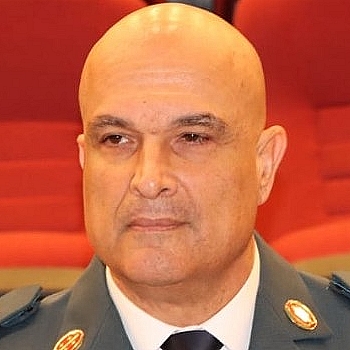
In this post, Brigadier General Ziad Rizkallah of the Lebanese Army traces how Lebanon’s lived experience with contamination, clearance, and community recovery informed its choice to formalize long-standing practice into legal commitment. He underscores that drawing limits in conflict is neither theoretical nor deferred; it is grounded in operational reality, where the effects of certain weapons cannot be contained in time, space, or intent.
On 1 May 2026, Lebanon deposited its instrument of accession to the Anti-Personnel Mine Ban Convention, paving its way to becoming the 162nd State Party to the Convention. This step does not mark a shift in direction, but rather the formal recognition of a path already taken.
For years, the Lebanese Armed Forces, through the national mine action programme coordinated by the Lebanon Mine Action Centre, have worked to address contamination, protect civilians, and restore access to land. Accession to the Convention places this experience and effort within a clear legal framework, reinforcing a commitment shaped not by rhetoric, but by direct and sustained engagement with the lived experience of anti-personnel mines.
Conflict as a reminder, not a reason to delay
In Lebanon, the security situation remains complex, with ongoing hostilities continuing to affect civilians and infrastructure across parts of the country. Against this backdrop, the decision to join the Anti-Personnel Mine Ban Convention did not wait for conditions to improve. It was taken deliberately, at a time when conflict remains a daily reality.
Across various parts of Lebanon, mine-related insecurity is not a theoretical concept, but something experienced directly in communities and along routes of return. In the last decade, 2,400 casualties from explosive remnants of war have been reported by the Land Mine Monitor in Lebanon. Each of these casualties represent an orphaned child, a missing spouse, a future cut short abruptly.
This situation was not seen as a reason to delay; it instead became a reason to act. Experience has shown that postponing action does not reduce the danger; it only extends it over time.
This reality has been confirmed through recovery efforts in Lebanon during various ceasefire periods on the ground. Anti-personnel mines cannot realistically be controlled or confined to military use. They leave little room for distinction or precaution in practice, and anyone who comes into contact with them risks becoming a victim. Indiscriminate weapons that continue to kill beyond the immediate phase of conflict cannot be justified.
When hostilities pause, other dangers begin
The impact of anti-personnel mines does not end when the fighting ends; it often becomes more apparent afterward. Their effects cannot be limited in time; if anything, time only makes them more unstable, with changing seasons causing the degradation of the casing and the explosives within.
Lebanon’s long experience with anti-personnel mines has played a central role in shaping its current position. In southern agricultural zones, where clearance teams have had to intervene following past periods of escalation, many communities depend directly on land for their livelihoods, land where mine contamination disrupts basic patterns of life. In many cases, the impact becomes clear when people try to return or resume normal activities: farmers hesitate to access their fields, certain roads are avoided, and displaced families delay their return.
This is why mine action in Lebanon has been closely linked not only to safety, but also to restoring livelihoods and enabling communities to function again.
What accession makes possible
Based on this experience, accession to the Anti-Personnel Mine Ban Convention translates to practical outcomes: first, reducing a persistent and often invisible threat to civilians; second, enabling land to be used safely again, directly supporting economic activity; and third, facilitating the return and stability of affected populations.
This effort goes beyond removing hazards, which can itself be a formidable task. For instance, it took forty years to clear the Falkland Islands minefields following the end of the conflict there. Affected populations also require long-term support, including treatment, rehabilitation, and reintegration. In Lebanon, this long road ahead means combining clearance with awareness activities and community engagement, recognizing that risk does not disappear immediately upon ceasefire.
Embedding these efforts within a clear legal framework helps structure priorities and ensures that cooperation with international partners is more consistent and sustained, rather than reactive.
A clear message: civilian protection is not conditional
The message Lebanon conveys through this decision is direct: protecting civilians is not conditional. It becomes most relevant precisely when conditions are difficult. Operating in a complex security environment, Lebanon has chosen to define limits on what it considers acceptable, even under pressure. This choice reflects practical experience, not abstract positioning.
By joining the Anti-Personnel Mine Ban Convention, Lebanon also signals that commitment to international humanitarian law is not something to postpone until after conflict; its relevance is tested during it. Taking this step under pressure gives that commitment practical weight, not just formal value.
This is also a matter of responsibility. Lebanon does not present itself as an ideal case, but as a country that has dealt with the consequences of this weapon and chosen to respond through a legal framework. Protecting civilians does not end with refraining from certain means; it also requires addressing their effects and supporting those impacted.
From experience to norm: what hesitant states should see
Lebanon’s decision offers practical lessons for states that remain hesitant. The first is that anti-personnel mines cannot be effectively controlled. Even when used for military purposes, their effects do not remain confined to that context; they carry over into periods of de-escalation, where their presence continues to shape how land can be accessed and used.
Second, security-based justifications weaken when longer-term consequences come into view. Measures intended as defensive can evolve into enduring constraints: land use becomes limited, mobility more uncertain, and the pace of return slows. These are not abstract concerns, but patterns documented through recovery efforts on the ground.
In Lebanon’s case, accession builds on years of structured work in mine clearance and coordination with international partners. The decision placed these efforts within a formal framework, showing how commitment can develop progressively, grounded in operational experience.
At this stage, the decision carries clear significance. In a complex environment, choosing to set limits sends an unequivocal signal that certain methods are no longer acceptable, regardless of context.
Beyond ratification: building sustained cooperation
Implementing Lebanon’s obligations requires cooperation. The situation on the ground remains complex and evolving. While Lebanon has developed practical capacity in mine action, sustained progress depends on long-term support, not short-term initiatives.
The starting point is identifying where risks remain. Survey and verification are essential, as all subsequent steps depend on reliable data. In some areas, conditions make this process difficult. Technical cooperation is therefore critical to maintaining accurate and up-to-date information. Clearance operations follow. These require specialized equipment, trained personnel, and strict safety procedures, but their impact is immediate: removing hazards enables communities to return and use land safely.
Victim assistance is another priority. The consequences of injury extend well beyond the initial incident, requiring long-term medical, psychological, and social support. Risk awareness also plays a key role, especially in areas of return. Hazards are not always visible, and awareness programs help reduce exposure and prevent incidents. This has long been an integral part of Lebanon’s approach.
Lebanon’s accession to the Anti-Personnel Mine Ban Convention provides a clearer structure for cooperation, encouraging partners to support long-term programmes rather than fragmented efforts. In practical terms, what is needed is not only support, but a sustained partnership built on shared responsibility.
Lebanon is proud to have joined the community of State Parties to the Convention, reinforcing the global norm against these unacceptable weapons. It looks forward to working with other states and partners towards achieving the goal of a mine-free world.
See also
- Anders Ladekarl, Grete Herlofson, Eero Rämö, Ulrika Modéer, Why Nordic governments must uphold the global ban on anti-personnel mines, April 2, 2026
- Erik Tollefsen, Pete Evans, Do anti-personnel mines still have military utility in modern warfare?, November 26, 2025
- Josephine Dresner, From the Middle East to West Africa: responding to the humanitarian impacts of improvised anti-personnel mines, February 8, 2024