



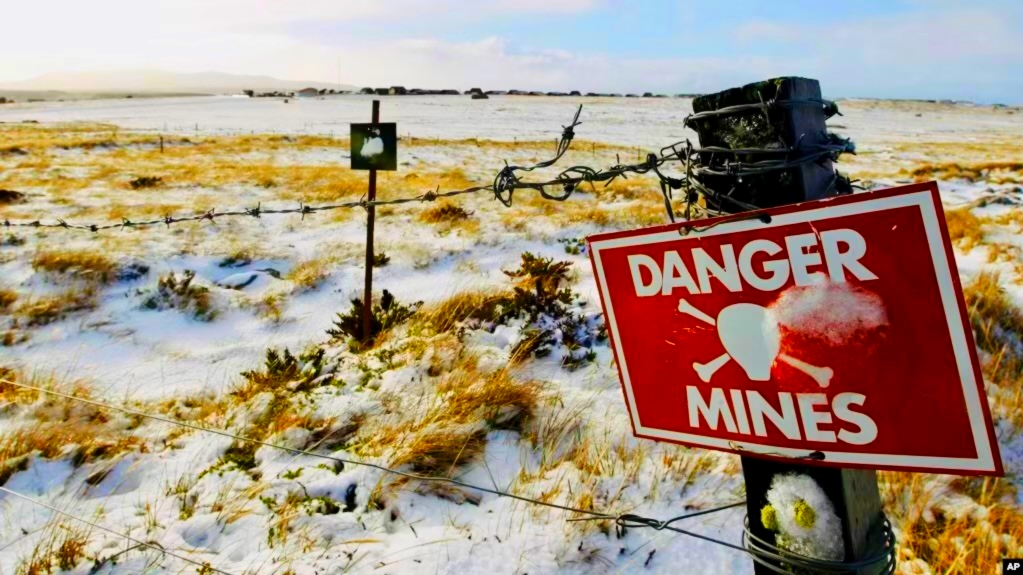
As security concerns intensify across Europe following the escalation of the international armed conflict between Russia and Ukraine in 2022, several states – including Finland, Poland, and the Baltic countries – have moved to withdraw from the Anti-Personnel Mine Ban Convention (APMBC), while similar calls have emerged in other Nordic countries. These developments reflect a growing perception that existing humanitarian disarmament commitments may constrain military effectiveness in a deteriorating security environment. Yet they also raise fundamental questions about the continued relevance of these commitments at a time when they are most needed.
In this post, the Secretaries-General of the Danish, Finnish, Norwegian and Swedish Red Cross Societies argue that withdrawing from the APMBC would not enhance security but risk weakening civilian protection and eroding long-standing humanitarian norms. Drawing on legal, operational and humanitarian considerations, they show that anti-personnel mines remain inherently indiscriminate and of limited military utility, and that their prohibition is fully compatible with modern military cooperation frameworks. They call on the remaining Nordic governments to remain committed to the Convention even – and especially – in times of heightened insecurity.
Europe’s security landscape has changed profoundly since 24 February 2022, when the international armed conflict between Russia and Ukraine escalated.
Against this backdrop of deteriorating security, Finland, Poland, and the Baltic states of Estonia, Latvia and Lithuania announced in 2025 their decisions to withdraw from the Anti‑Personnel Mine Ban Convention (APMBC), also known as the “Ottawa Convention”. More recently, parliamentarians in Denmark, Norway and Sweden have also begun calling for withdrawal, questioning the continued relevance of the treaty.
The security concerns in our region are real and must be taken seriously. We need to see the world as it is, not as we might wish it to be. Yet it is difficult to see how withdrawing from the APMBC, one of the most impactful humanitarian disarmament conventions ever negotiated, would enhance security in the Nordic region, Europe, or globally. On the contrary, it would risk weakening humanitarian protections at a time when they are needed most.
In December last year, opposing parties in the Danish Parliament proposed to withdraw from the Convention, alleging that it was “naïve” to uphold a ban on anti-personnel landmines in the current European security context. The Foreign Minister, Lars Løkke Rasmussen, took a different view: “There is nothing naïve about wanting to promote an international order where rules of war apply”.
This position is reflected in public opinion in Denmark. A recent survey conducted by the Danish Red Cross shows that 70 per cent of Danes believe the use of anti-personnel landmines should be prohibited. Similar studies in Sweden and Norway indicate that most respondents reject the idea that “any means” are acceptable in war and instead believe the protection of civilians must remain paramount.
While Nordic citizens appear clear in their conviction that even wars have limits, political developments in the region suggest that this consensus cannot be taken for granted. The decision by Finland to withdraw from the APMBC, for example, serves as a warning. The debate there showed just how quickly long‑standing humanitarian commitments can come under pressure when security concerns dominate political discourse without sufficient consideration of humanitarian concerns.
The humanitarian consequences of anti-personnel mines and the global success of the APMBC
The APMBC was not a product of peacetime comfort, but the result of an evidence-based determination that anti-personnel mines cannot be reconciled with core humanitarian principles: the prohibition of superfluous injury and unnecessary suffering, and the obligation to distinguish between civilians and combatants. The cost to humanity is simply too high.
These foundations remain as valid today as when the Convention was adopted. There is no convincing evidence that either the military utility or the humanitarian consequences of anti-personnel mines have changed.
Anti‑personnel mines remain inherently indiscriminate. They are victim‑activated and detonate regardless of who triggers them – combatants or civilians alike. In 2024, civilians – many of them children – accounted for 90 per cent of recorded landmine and explosive remnants of war (ERW) casualties. Their effects persist for decades, preventing safe returns, contaminating farmland and roads, and delaying economic recovery. These realities have not changed. They are the very reasons states agreed to prohibit anti‑personnel mines in the first place: the enduring humanitarian consequences continue to far outweigh any claimed military value.
This was acknowledged by Finland in its government proposal on withdrawal from the Convention, which stated that “the military significance and principles of use of anti‑personnel landmines as part of the defence system would today be largely the same as before joining the Ottawa Treaty.” Notably, the proposal did not suggest that the humanitarian consequences of these weapons had changed. On the contrary, it recognized the Convention’s significant humanitarian benefits and warned that Finland’s withdrawal could undermine its implementation and its universality. The subsequent debates in other Nordic states on possible withdrawals are an unfortunate consequence of the withdrawals by the five states.
Yet even as some states in Europe reassess their positions – often at a safe distance from large-scale mine contamination – countries littered with these explosive remnants can testify that any perceived military advantage is far outweighed by their profound humanitarian and societal costs.
Lebanon offers a powerful example. After decades of mine and cluster munition contamination that hindered reconstruction, agriculture, and safe movement, the country has seen firsthand how these weapons prolong instability long after conflict ends. Its decision to accede to the Convention this year reflects both a commitment to protecting civilians and a recognition that sustainable security cannot be built on weapons that endanger future generations.
Interoperability and the APMBC
In discussions about the APMBC in the Nordic region, interoperability – the ability of armed forces from different states to operate together effectively while managing differences in their respective legal obligations and interpretations – is often raised by those questioning continued adherence to the treaty. Their concern is that participating in multinational operations with partners that have different legal obligations and interpretations, including states not party to the APMBC, could hinder effective military cooperation.
A closer look at interoperability in international law and practice, however, shows that these challenges are neither unique nor especially difficult to manage. Multinational operations frequently involve partners with varying legal obligations and interpretations of shared duties. This can make the practical application of the law more complex, but it does not prevent joint operations. Instead, the challenge of legal interoperability can be addressed by clear methods that allow coordinated action without undermining any state’s legal responsibilities.
The same principles apply under the APMBC. When operations involve both States Parties and non‑parties, States Parties must ensure that their participation does not amount to assistance, encouragement or inducement of prohibited acts. Joint operations typically rely on advance planning, clear rules of engagement and procedural safeguards that minimize the risk of conduct incompatible with applicable treaty obligations. A further example of how national obligations are protected within coalitions is the use of “red card holders”, who ensure that national legal and political mandates are respected before national assets may engage a coalition‑assigned target. This mechanism is one of the various ways illustrating how differing obligations can be managed in practice.
Effective legal interoperability is well established in multinational operations and practical solutions routinely found, confirming that differing treaty commitments do not preclude operational cooperation. The North Atlantic Treaty Organization (NATO) practice reinforces this conclusion. For decades, NATO has achieved high levels of interoperability through shared procedures, training and communications rather than uniform legal obligations. Even after the withdrawal from the APMBC of a few allies, the majority of NATO member states remain parties to the APMBC, including the United Kingdom, Germany and Canada. Their continued engagement demonstrates that full NATO participation and close regional defence cooperation are entirely compatible with the prohibition on anti‑personnel mines.
Military utility: an outdated weapon in modern warfare
Questions about the military utility of victim-activated anti-personnel mines are not new. Notably, military leadership in both Estonia and Latvia publicly stated – shortly before their withdrawal from the APMBC – that these weapons were not militarily necessary.
If military commanders on the front line of NATO’s eastern flank do not see the need to use anti-personnel mines, the case for their use in the far north is even weaker. Harsh northern climates, including long winters with deep snow and ice, further limit the effectiveness of anti-personnel mines.
“Smart mines” are sometimes presented as a modern alternative, but they are not new. Developed in the 1960s, they were well understood when the APMBC was negotiated and were deliberately included in its prohibition because of their high failure rates and the risk that, if they do not reliably self‑neutralize, they effectively become conventional landmines over time.
Although technology has advanced since then, no new “smart mine” systems or related anti-personnel mine technologies have emerged since the 1990s that would change this assessment. Crucially, there is no field evidence showing that new technologies have succeeded in reducing the unacceptable humanitarian consequences that prompted states to adopt a categorical ban on anti‑personnel mines in the first place.
Upholding humanity in conflict
Even as the security situation in our region becomes increasingly volatile, we call on all remaining Nordic governments to remain steadfast in their commitment to the Anti-Personnel Mine Ban Convention.
As ICRC President Mirjana Spoljaric has said, “international humanitarian law is not made for the hopeful days of peacetime. It is made for humanity’s darkest days.” The decisions taken today will shape the safety of civilians and the integrity of humanitarian norms for decades to come. This is precisely the moment when such norms must be upheld, not set aside.
See also
- Erik Tollefsen, Pete Evans, Do anti-personnel mines still have military utility in modern warfare?, November 26, 2025
- Cordula Droege, Maya Brehm, Anti-personnel mines: the false promise of security through exceptionalism in war, March 13, 2025
- Ambassador Hans Brattskar, 50 steps to a mine-free world by 2025, December 19, 2019