
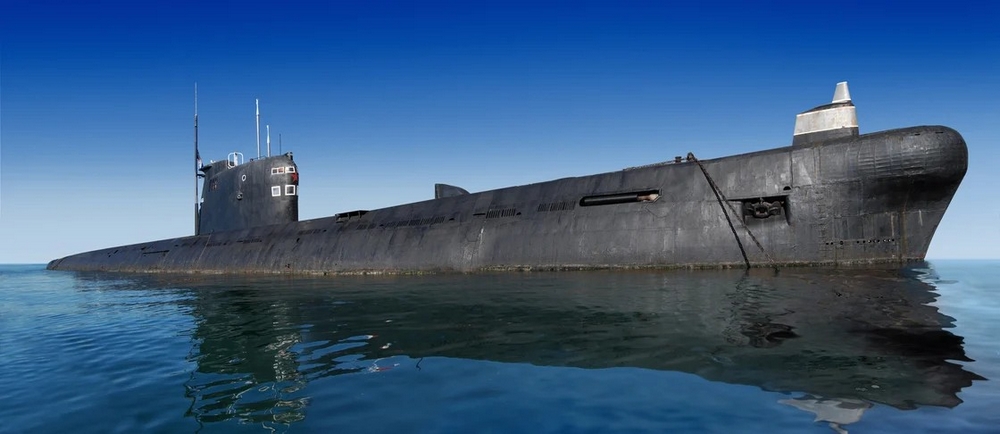
Naval warfare has undergone dramatic transformation, expanding across multiple domains and exposing civilian seafarers, infrastructure, and global supply chains to new and evolving risks. As modern maritime operations become faster, more complex, and more interconnected, long-standing legal frameworks face growing pressure to keep pace.
In this post, ICRC Legal Adviser Abby Zeith examines the changing character of naval warfare and questions whether the maritime domain should still be treated as exceptional. She explores how technological, operational, and geopolitical shifts intersect with existing international humanitarian law (IHL), and why renewed clarity from states is essential to protect civilian shipping, seafarers, and populations ashore.
Since the 19th century, naval warfare has been transformed. Back then, battles were fought on the surface – dive beneath the waves, and almost certain death awaited. Then came sea mines and submarines, opening a hidden battlefield below the water. With aviation in World War I, the fight became three-dimensional: on the sea, above it, and beneath it.
Today, naval combat reaches far beyond the waves. Operations extend into space, cyberspace, and the electromagnetic spectrum. Navies can strike across vast distances with stealth and long-range weapons, operating in congested littorals where sea, air, land, cyber, and space converge. The threats are real and varied: unmanned maritime systems, aerial drones, precision missiles, swarming fast-attack craft, seabed warfare . . . and still, the danger of naval mines.
Beneath the waves lies a hidden backbone of our world: the submarine cables and pipelines that carry the lifeblood of modern society. Yet, in both legal and practical terms, dangerously exposed. Naval warfare today is faster, more complex, and far more dangerous, and it is multi-domain by design.
The ocean as a shared global commons
The waters in which navies operate are far from empty. They are busy, crowded, alive with activity. Every day, countless actors traverse these seas, and most are neutral, completely unconnected to the fight.
The oceans are a shared global commons. Even in war, they do not cease to be shared – by belligerents and neutrals alike. And today, more than ever, its importance to all of us cannot be overstated. Conflict at sea touches far more than the belligerents. Its impact is felt by states and other actors not participating in the conflict. It affects trade, food, energy, communications, migration, leisure – even the air we breathe.
Modern maritime operations in armed conflict are highly complex. Commanding dispersed forces across vast oceans is a formidable challenge. Distance reduces situational awareness, often forcing commanders to make critical decisions with incomplete information.
Naval forces rely on deception and concealment. In crowded waters, where commercial, fishing, and military vessels operate amid disputed boundaries, the risk of mistaking civilians for military targets is high. Naval mines make matters worse, raising serious questions about compliance with rules governing their use, including the prohibition of indiscriminate and disproportionate attacks and respect for the rights of neutral states – that is, any state not party to the conflict – and merchant and other civilian vessels.
At sea, medical support is often limited, and rescuing, evacuating, and caring for the wounded, sick, shipwrecked, deceased, or detained is extremely difficult. Civilians fleeing conflict by sea face perilous journeys, often in overloaded vessels, from ports or beaches that may themselves be military zones. This creates major challenges for search and rescue operations, whether by parties to the conflict or by neutral states (important issues to be explored during our third State Consultation and Expert Discussion for the Global IHL Initiative Naval Workstream this week).
Warfare at sea does not stop at the shoreline; it has profound consequences for civilians on land, as my colleagues have recently described. Keeping sea lines of communication open is vital for food, essential goods, and trade. Blockades, exclusion zones, or other sea denial operations can trigger severe humanitarian and economic consequences.
The evolution of merchant shipping
Few sectors are as exposed to global conflict as civilian shipping. For centuries, merchant vessels have borne the brunt of naval warfare, and civilian crews have often faced the highest risks.
By “merchant vessel,” I mean any ship engaged in commercial or private service, excluding warships, auxiliaries, or other state vessels such as customs or police vessels. In practice, this category includes container ships, bulk carriers, tankers, passenger ships, and ferries.
Merchant shipping today looks nothing like it did at the end of the last world war. Some 80% of world trade now moves by sea. Global trade is now faster, deeply interconnected, and essential to everyday life in ways the traditional law of naval warfare simply never imagined.
At the start of 2025, the global merchant fleet included approximately 112,500 vessels of at least 100 gross tons – both cargo and non-cargo – registered across more than 150 nations. Some two million seafarers operated these ships, with fishing fleets contributing several million more. Ownership, crews, and cargo are increasingly multinational, often disconnected from any single flag state.
At the heart of this are ordinary seafarers, the people who keep the world moving yet remain largely invisible. Every missile, drone, naval mine, or risky cargo voyage puts their lives at risk. Frontlines now cut through shipping routes and ports, leaving crews to endure longer voyages, higher dangers, and the constant strain of navigating war zones, all to sustain the supply chains civilians on land depend upon.
Here lies the dilemma: merchant shipping is more vital – and more vulnerable – than ever. But history shows that, especially in large-scale conflicts, merchant vessels have often been used to support military operations, primarily for transport and logistics, and at times even in direct participation in hostilities, but also for the conduct of search and rescue. This reality is unlikely to change.
So the key question is this: how do we protect merchant vessels and civilian seafarers – whether from belligerent or neutral states – and the people who depend on them, from the harsh realities of modern naval warfare?
From tradition to transformation: adapting the law of naval warfare for the modern era
The law of naval warfare is not simply the law of land warfare with water poured on top. It has long been treated as distinct, having evolved alongside prize law and the rules of maritime neutrality. It is shaped by the unique realities of the sea, where much of the fighting takes place in international waters, beyond the sovereignty of any single state.
From the 16th century through World War II, great powers fought wars driven by imperial rivalries. Naval battles were often dominated by commerce-raiding campaigns and blockades – strategies designed to choke trade, deny contraband, and weaken the enemy’s ability to fight, all while inflicting immense suffering on civilians. These conflicts have profoundly shaped our understanding of naval warfare and the legal norms that developed to govern it today.
Today, the law of naval warfare is an intricate patchwork of treaty and customary law, much of which is rooted in developments from the late 19th and early 20th centuries.[i] Despite a long list of legal instruments, no single comprehensive treaty governs naval warfare. The rules have always been debated including among states, and many treaties were ratified by only a small number of countries, in part because of the colonial structures that shaped international participation at the time these treaties were first adopted.
In fact, the last, and only, universally ratified treaty that specifically addresses naval conflict is the Second Geneva Convention adopted in 1949, focused on the protection of wounded, sick, and shipwrecked members of armed forces at sea.
Consider how much the legal landscape has shifted in the more than 75 years since the Geneva Conventions. Even more has changed since the 1936 Procès-Verbal, the last treaty devoted solely to naval hostilities. These developments are not merely historical; they raise urgent and fundamental legal questions about the conduct of warfare at sea.
The impact of the 1977 First Additional Protocol on the traditional law of naval warfare cannot be overstated. Among its many achievements, it codified key prohibitions and limits on the means and methods of warfare, even at sea (Part III), and extended crucial protections to civilians in peril at sea. It also established the framework for the conduct of hostilities more generally (Part IV), modernized rules prohibiting the starvation of civilians, and strengthened obligations of humanitarian access, placing important limits on methods of warfare such as blockades and contraband control.
Article 49 of Additional Protocol I may limit how certain treaty rules stemming from the principles of distinction, proportionality, and precautions apply in air and sea warfare that does not affect the civilian population, civilians and civilian objects on land. Its scope was debated at the time of adoption and remains debated today. In practice, however, many states – including those not parties to the API – recognize that key treaty provisions on the conduct of hostilities have shaped customary international law applicable to all states, across all domains: land, air, sea, outer space, and even cyberspace. Though states appear to have adopted varying approaches.
A key question that would benefit from further clarification by states is this: how should the fundamental principles and rules of distinction, proportionality, and precautions be interpreted and applied at sea – especially to merchant ships, their cargo, and the crew and passengers on board – in a world transformed by modern shipping?
Some scholars argue that these rules apply less strictly at sea, pointing to the maritime domain’s so-called “exceptional nature.” They suggest that the standards are more lenient than on land, due to the realities of operating ships, submarines, and aircraft, and the lower risk of harming civilians. In their view, this flexibility expands the range of targets that may be lawfully attacked. The ICRC does not share this view. Moreover, interventions by several states during the Second State Consultation on Naval Warfare as part of the Global IHL Initiative indicate that states do not share this view either.
Prize law, economic warfare, and the limits of tradition
Economic warfare was once central to naval conflict. Prize law underpinned the rules for blockade and for visit and search. Belligerent warships had the so-called “right” to capture civilian ships of enemy belligerent states. Neutral vessels could be seized for cause – for carrying contraband, running blockades or unneutral service such as “direct participation in hostilities”[ii]– and condemned in prize courts and kept by their captor. In exceptional cases, destruction of that vessel at sea was allowed, though it had to be justified afterwards.
If a merchant vessel persistently refused to stop or actively resisted the right of visit and search, it could lawfully be sunk, though the primary focus remained on capture rather than destruction, with force to be applied only in gradual stages (e.g. warning shots, a “charge of powder,” and, if necessary, finally a shot fired across the bow).
This all raises a larger question: does the traditional law of prize still make sense today? Some say it does not. Born of imperial rivalry, it is increasingly regarded as an anachronism. Its relevance, practicality, and even its legality are all being questioned in light of more recent developments.
And yet, despite its age and infrequent use in recent decades, several states still consider prize law to be “good law” today, and it still appears in their military and legal doctrines. But even if economic warfare at sea returned on the scale of the past, future naval campaigns would look very different. The sheer scale and configuration of modern container ships would seem to make searches for contraband practically impossible especially once vessels are at sea. Long-range weapons, stealth technology, and uncrewed systems change the game entirely. The interpretation and application of treaty and customary rules crafted for another age must now be carefully clarified and adapted to the realities of modern warfare in the maritime domain.
The maritime domain: is it so exceptional?
We should resist the temptation to always treat the maritime domain as “exceptional.” Naval battles in the age of empires – focused on ships, platforms, belligerent rights, or the economic defeat of an enemy – cannot justify ignoring humanitarian imperatives, operational realities today, or decades of legal evolution.
Civilians, non-combatants, and civilian objects deserve equal protection, no matter the battlefield. The effects of naval warfare do not stop at the water’s edge; they deeply affect states and civilians not participating in the conflict.
Yes, traditional law of naval warfare still matters. We must understand its origins: it has history, it has weight, and it has shaped the normative framework we inherited. But the truth is this: it emerged in a particular historical context and reflects the priorities and power structures of its time. It was written for a world with fewer recognized states, fewer actors, and far simpler battlefields. That world is gone.
Traditional law cannot, on its own, decide our future. We must look sideways to land, outward to cyber, upward to the skies, and further still, into space. Only by seeing how the rules of hostilities have evolved across all domains can we apply the law consistently, clearly, and pragmatically today.
The oceans are a global commons. Vital. Vulnerable. Modern naval strategy, tactics, and technology have transformed. Traditional law of naval warfare has already been affected by contemporary developments in the rules governing the conduct of hostilities. In any event, today the law of naval warfare no longer stands alone; it intersects with the UN Charter, the law of the sea, air law, human rights, environmental law, international criminal law and more.
We urgently need greater clarity from states on how these rules are to be interpreted and applied when waging warfare in the maritime domain. The time to address this is now. It is therefore imperative that all states take the opportunity to express their views on these critical questions, including through their active engagement in the Global IHL Initiative Naval Warfare Workstream.
Meanwhile, experts are continuing their work on the ongoing update of the 1994 San Remo Manual on International Law Applicable to Armed Conflicts at Sea, a project in which ICRC is actively involved alongside the International Institute of Humanitarian Law and the Norwegian Red Cross.
With political will, we can protect civilian shipping. We can safeguard seafarers and other civilians at sea. We can protect civilian maritime infrastructure. We can secure populations ashore. We can deepen our collective understanding of how international law applicable to armed conflict at sea is to be interpreted and applied to contemporary warfare. How we act today will define the law of naval warfare – and the lives it protects at sea and ashore – for generations to come.
Editor’s note: This post is adapted from a speech given at the Second State Consultation on Naval Warfare as part of the Global Initiative to Galvanize Political Commitment to International Humanitarian Law (Global IHL Initiative).
Footnotes
[i] The relevant treaties included: 1856 Paris Declaration Respecting Maritime Law; 1899 Hague Convention III for the Adaptation to Maritime Warfare of the Principles of the Geneva Convention of 22 August 1864; 1907 Hague Convention VII Relating to the Conversion of Merchant Ships into Warships; 1907 Hague Convention VIII Relative to the Laying of Automatic Submarine Contact Mines; 1907 Hague Convention IX Concerning the Bombardment by Naval Forces in Time of War; 1907 Hague Convention XI Relative to Certain Restrictions with Regard to the Exercise of the Right of Capture in Naval War; 1907 Hague Convention XIII Concerning the Rights and Duties of Neutral Powers in Naval War. 1907 Hague Convention IX Concerning the Bombardment by Naval Forces in Time of War;[i] 1907 Hague Convention XI Relative to Certain Restrictions with Regard to the Exercise of the Right of Capture in Naval War; 1907 Hague Convention XIII Concerning the Rights and Duties of Neutral Powers in Naval War; 1928 Convention on Maritime Neutrality (Havana Convention);[i] the 1930 London Treaty, although no longer in force apart from the 1936 Procès-verbal Relating to the Rules of Submarine Warfare Set Forth in Part IV of the Treaty of London of 22 April 1930; and the 1949 Geneva Convention II for the Amelioration of the Condition of Wounded, Sick and Shipwrecked Members of Armed Forces at Sea. Although the 1909 London Declaration on the Laws of Naval War[i] was signed by the mainly European countries that negotiated it, no State ever ratified it, so it never entered into force. Despite this, the London Declaration is said to approximate the customary law of naval warfare as at that date and is therefore influential.
[ii] In the context of the principle of distinction under the rules governing the conduct of hostilities, the concept of “direct part in hostilities” is more commonly used to refer to people rather than objects. However, similar terminology is often applied to vessels in the context of naval warfare, as illustrated, for example, in Article 46 of the 1909 London Declaration concerning the Laws of Naval War; and Article 60 of the 1913 Oxford Manual on the Laws of Naval Warfare Governing the Relations Between Belligerents.
See also
- André Smit and Kelisiana Thynne, The humanity compass: navigating the protection of civilians in naval warfare, October 28, 2025
- Prashant Kahlon, War on the coastline: mitigating civilian harm in the littorals, May 17, 2023
- Sean Fahey, Combating ‘cyber fatigue’ in the maritime domain, December 7, 2017