

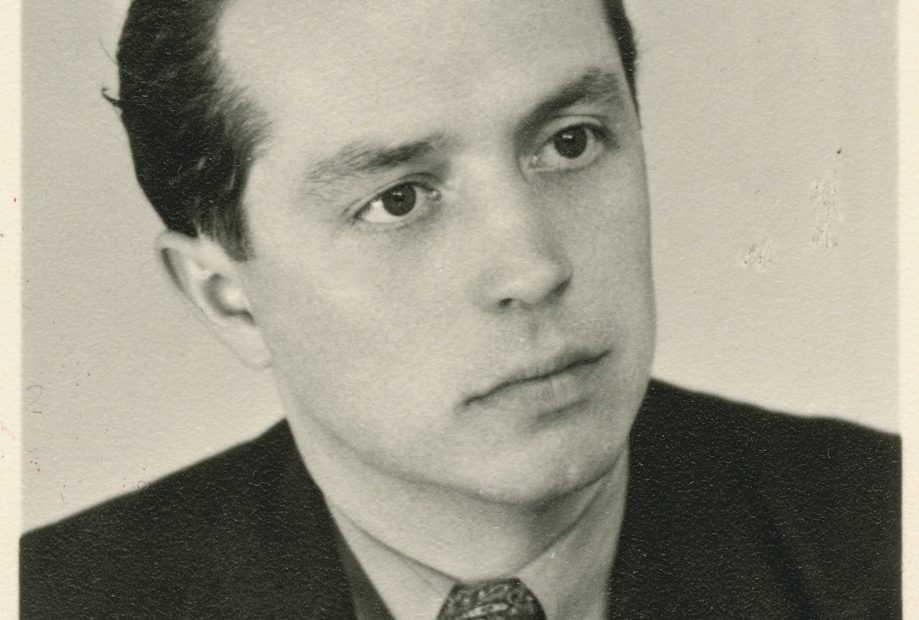
What little we know of the visit by International Committee of the Red Cross (ICRC) delegate Maurice Rossel to Theresienstadt (in the German protectorate of Bohemia and Moravia) on 23 June 1944 comes from Rossel himself in a 1979 interview with French director Claude Lanzmann. The interview was initially supposed to be included in Lanzmann’s documentary, Shoah, but ended up being released separately as Un vivant qui passe in 1997. That same year, a book containing a transcript of the interview was published under the same title, but with the addition of the subtitle “Auschwitz 1943–Theresienstadt 1944”.
Lanzmann’s film was presented as historical testimony, but it would be more accurate to describe it as a personal account based on memories that are sometimes inaccurate. Both Lanzmann and Rossel make many chronological and factual errors. The way that Lanzmann staged the scene and his manner of addressing Rossel made the conversation seem more like a trial than an interview, with the film’s viewers playing the role of Rossel’s jury. Rossel himself does not always come across as a very sympathetic character – he dwells on past grudges, resorts to stereotypes and sometimes adopts a condescending attitude. However, it is important to remember the circumstances surrounding that visit to Theresienstadt and how Rossel ended up being sent there in the first place, as it stands out as an anomaly in the ICRC’s history. To uncover these facts, let us turn to the archives – a far more reliable source than Rossel’s fallible memory.
Twenty-two months of negotiation
In the interview, Rossel claims to have joined the ICRC in 1942, but he actually joined in February 1944. However, 1942 is still an important year because it was then that the ICRC first began to receive information on Theresienstadt and attempt to organize a visit. In August 1942, Roland Marti, the head of the ICRC delegation in Germany, began passing on information to the headquarters in Geneva on Theresienstadt, a fortress town that was being used to house deported Jews. Marti suspected that it was a concentration camp, but the ICRC was not allowed to enter the town and could not even arrange for food or mail to be sent. A month later, the ICRC was granted permission from German authorities to send medication and personal packages to Theresienstadt. Marti submitted a request for the ICRC to access the town from September 1942 so that it could ensure that those items were received by the people they were intended for, but he was categorically turned down.
The situation only changed in June 1943 when the German Red Cross visited Theresienstadt. While it felt that conditions in the town were acceptable, it recommended that the ICRC carry out a second inspection. Initially, the German Red Cross wanted the ICRC to send Carl-Jakob Burckhardt, a member of the ICRC who worked closely with then-president Max Huber and was highly regarded on the international scene. Burckhardt turned down the invitation and asserted that the visit should be carried out by someone from the ICRC delegation in Germany. Negotiations continued. Between the fall of 1943 and the summer of 1944, the visit to Theresienstadt was pushed off five times by the Nazi authorities. During that period, they made considerable efforts to improve the ghetto’s appearance (Verschönerungaktion). No doubt they were already preparing for the ICRC’s visit. On 19 June 1944, after 22 months of negotiations, the German government finally agreed to allow an ICRC delegate to visit the town. Four days later, Maurice Rossel arrived in Theresienstadt.
An inexperienced delegate
Rossel was a doctor. He first offered his services to the ICRC in November 1943. He was hired a month later but didn’t actually begin working for the ICRC until February 1944. After undergoing training and receiving authorization to work in Germany, he left Geneva for Berlin on 11 April 1944. He arrived one day later. Before going to Theresienstadt, Rossel main task was to visit prisoner-of-war camps for captured allied soldiers – this was the most common task for ICRC representatives in Germany. As a new delegate, Rossel never inspected the camps alone. He was always accompanied by a more experienced delegate, except when he visited three military hospitals. Prior to 23 June 1944, Rossel never had any contact with the civilians imprisoned by the Nazis and he only had three months of practical experience as an ICRC delegate. Nevertheless, he was tasked with conducting the visit to Theresienstadt because his more experienced colleagues were all away on other missions. At the time, Marti – who had led the negotiations with German authorities – was on holiday back home in Switzerland.
The actual visit took place on 23 June 1944. Rossel was accompanied by Nazi officials and closely monitored the entire time. He could not move freely around the ghetto or speak to its inhabitants, other than the Jewish elder (“Judenältester”), Paul Eppstein, who gave him a welcome speech.
Upon his return to Berlin, Rossel wrote up his report.

First page of Maurice Rossel’s report on his visit to Theresienstadt, ICRC Archives, reference No. B G 59/12- 368.02.
The report describes each step of the inspection, breaking it down into different categories: housing, medical care, food, etc. Notably, Rossel used the same procedure he had been taught when visiting prisoner-of-war camps and drew up his report using the same standards. Similar to reports on prisoner-of-war-camps, much of it is a description of the general conditions in the town based on what was shown to him. It is not personal testimony. Since the conditions appeared to be acceptable to Rossel, he indicated so in his report. Several decades later, in his interview with Lanzmann, Rossel refused to retract the statements he had made in his report, to the incredulity of the director, who felt that the report had been written with “rose-tinted glasses” and that Rossel had been duped by the show put on by the German authorities.
Undoubtedly guilty
Lanzmann’s chief accusation against Rossel was that he was blind to the reality of the situation. The ICRC delegate was one of the rare observers who was allowed to enter a Nazi death factory – could he truly have been unaware of the true intentions of Hitler’s regime? Why did he not denounce the terrible crimes committed against Jews, including at Theresienstadt? Lanzmann believed that Rossel had no excuse. After all, Rossel himself claimed to have been in Germany since 1942, two full years before his visit to Theresienstadt, giving him plenty of time to observe the attitude of German authorities towards the Jewish population. Lanzmann also falsely claimed that Rossel had visited Auschwitz (without providing any specific details) in 1943, well before he went to Theresienstadt. Rossel did indeed visit the Auschwitz I concentration camp (and not Auschwitz-Birkenau, as Lanzmann insinuates) at the end of September 1944 to see if he could arrange for food to be distributed by the ICRC. But Rossel never entered the camp or spoke to the detainees. Whether or not this was simply an error on Lanzmann’s part[1], his claim was used as evidence of Rossel’s guilt. If Rossel was incapable of denouncing Auschwitz, the very epicentre of evil, surely he must have deliberately turned a blind eye to Theresienstadt. Perhaps his silence even made him complicit in Nazi crimes.
What did he really see?
Was Rossel aware that what was shown to him during his visit to Theresienstadt did not reflect the reality in the camp? Could he see beyond the charade? There are no easy answers.
The ICRC must have known that the visit would be staged given how long negotiations had dragged on for. And it seems unlikely that Rossel would have fallen for the Verschönerungaktion carried out by the Nazis in Theresienstadt, as he had already inspected prisoner-of-war camps with the ICRC. Since all ICRC visits were announced ahead of time, camp authorities had time to improve conditions in the camps. This made the private interviews with prisoners of war all the more important – normally, these interviews were non-negotiable and provided the ICRC with more accurate, detailed information on the day-to-day life of detainees. But in Theresienstadt, Rossel was not allowed to talk privately with the people living there.
There are also indications in Rossel’s report that he knew he was being duped. When he arrived in Theresienstadt, the scene he witnessed was totally incongruous with reports on how the Nazis and their allies were treating the Jewish population. Rossel knew that living conditions had deteriorated in 1944 because of the Allied blockade of Germany – he saw evidence of this during his visits to prisoner-of-war camps. But in Theresienstadt, the people he saw were not malnourished or suffering. On the contrary, they were well fed and even seemed to be happy. Rossel observed that some food supplies in the camp could not even be found in Prague, implying that the detainees were living in better conditions than the other inhabitants in the region. While Rossel must have been highly suspicious of what he was shown, he could not openly raise them in a fact-based report. Instead, his skepticism comes across through rhetorical techniques. Multiple times in the report, he expresses his astonishment at what he is shown. He also shares these sentiments with the Nazis who accompanied him with biting sarcasm. He tells them that he is surprised that the ICRC faced so many obstacles and that the visit had to be rescheduled multiple times since everything on site seems to be in order.
The fundamental question is not whether Rossel – and by extension, the ICRC – was aware of the charade that took place during the visit to Theresienstadt. There can be no doubt that he was, given his prior experience visiting prisoner-of-war camps and the subtext of his report. But what evidence is there that Rossel could see beyond what he was shown?
Theresienstadt in photos
Rossel had a camera with him during his visit of Theresienstadt. It’s not clear whether this was his own decision or if he was instructed to do so, but the ICRC strongly encouraged delegates to take photos when they visited prisoner-of-war camps to document what they witnessed if they had permission from authorities to do so. Rossel did not submit a formal request to take photos and the SS officers were not very happy to see that he had a camera with him. Nevertheless, they did not forbid him from taking photos for fear of rousing suspicion. Rossel took 38 photos during his inspection of Theresienstadt. The photos document each step of the visit. There are several photos of children – the only inhabitants he seemed to be able to approach more closely. The adults are only seen from a distance.
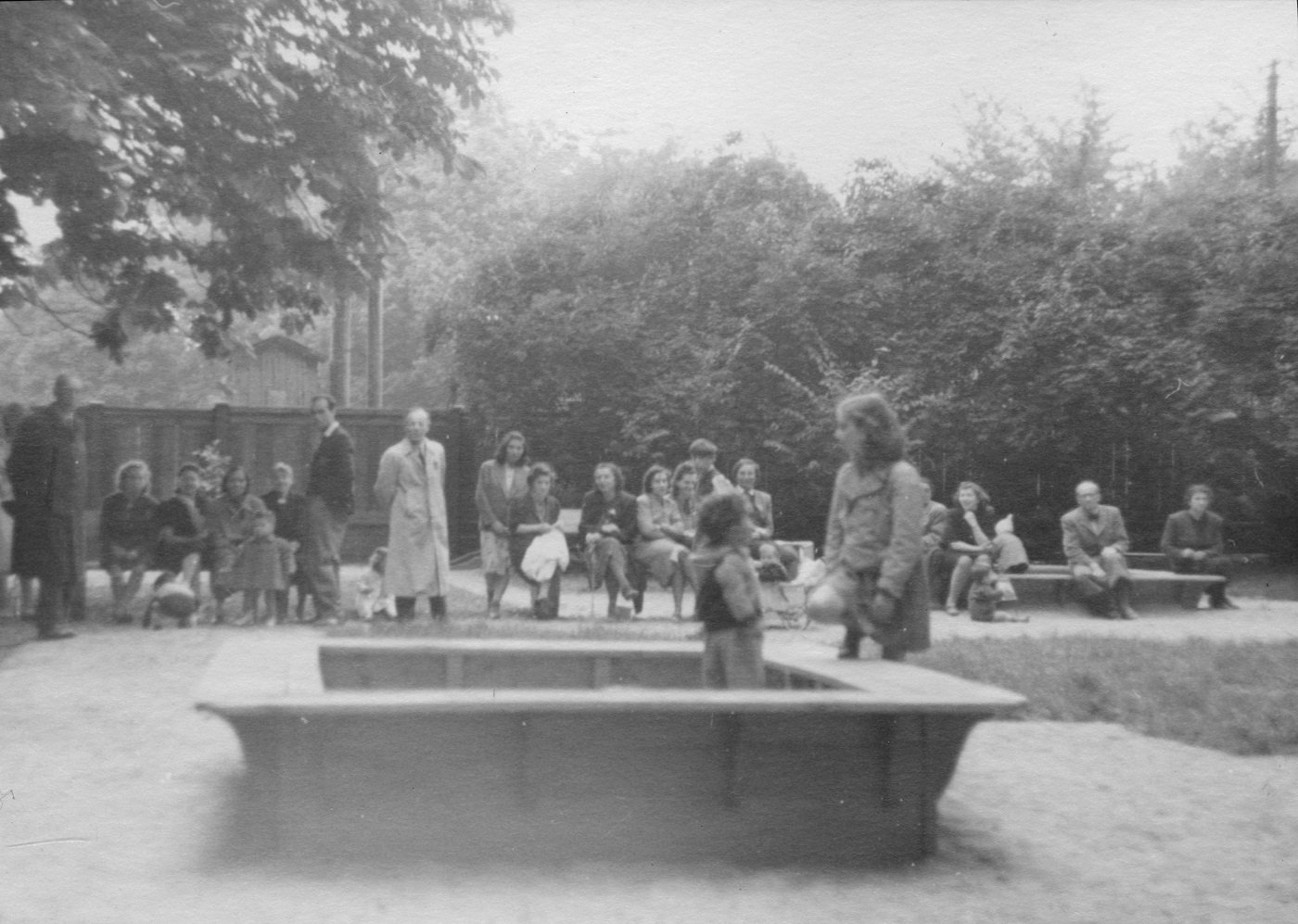
Children at Theresienstadt, 23 June 1944, ICRC Audiovisual Archives, reference No. V-P-HIST-01162-05.
Some photos appear to have been taken in secret. Rossel was invited to watch Theresienstadt’s fire brigade perform a drill. He took five photos of the drill. It seems odd that he would waste so many photos on something so unrelated to his mission.
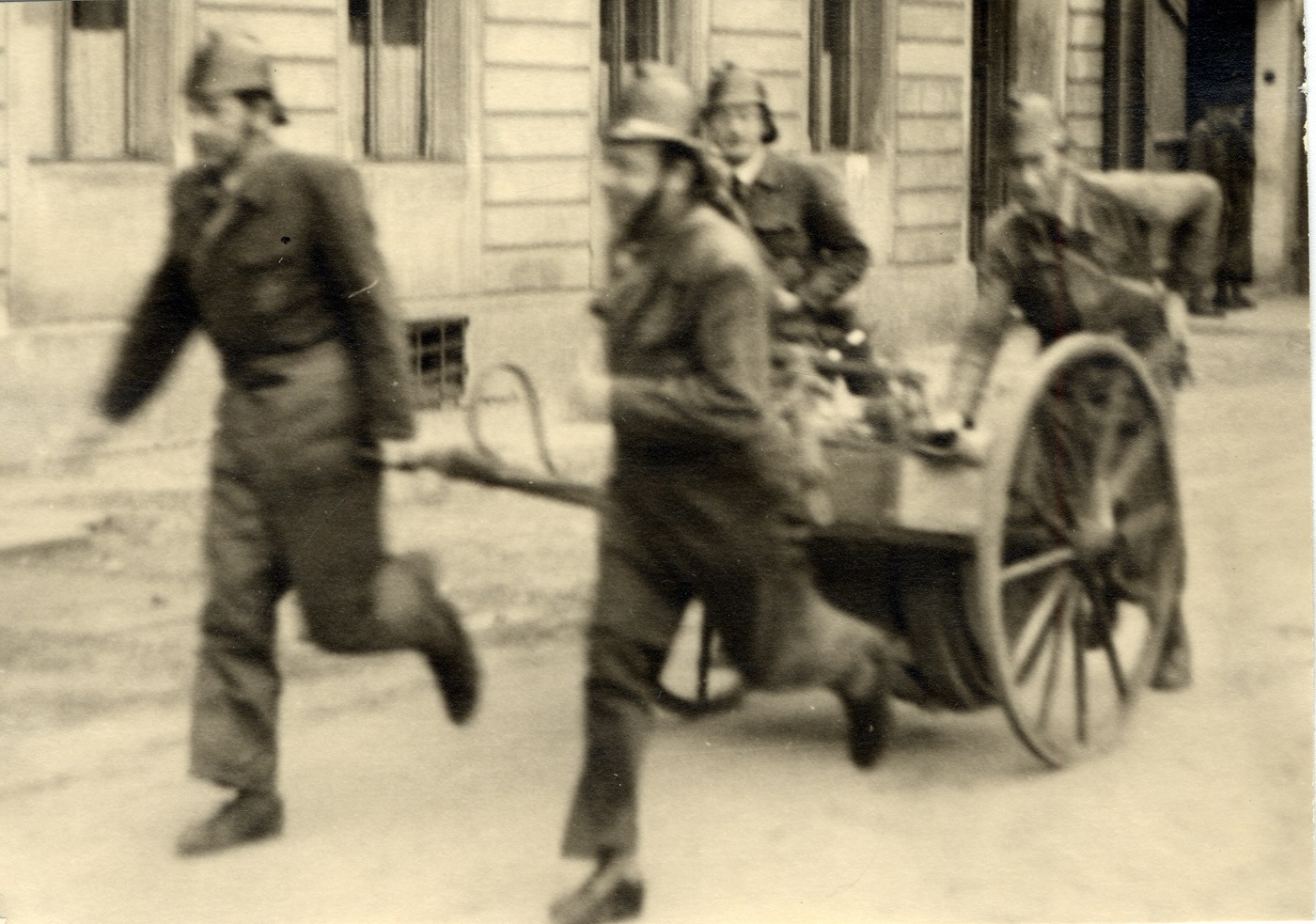
Theresienstadt’s fire brigade drill, 23 June 1944, ICRC Audiovisual Archives, reference No. V-P-HIST-01160-02.
One particular photo stands out.
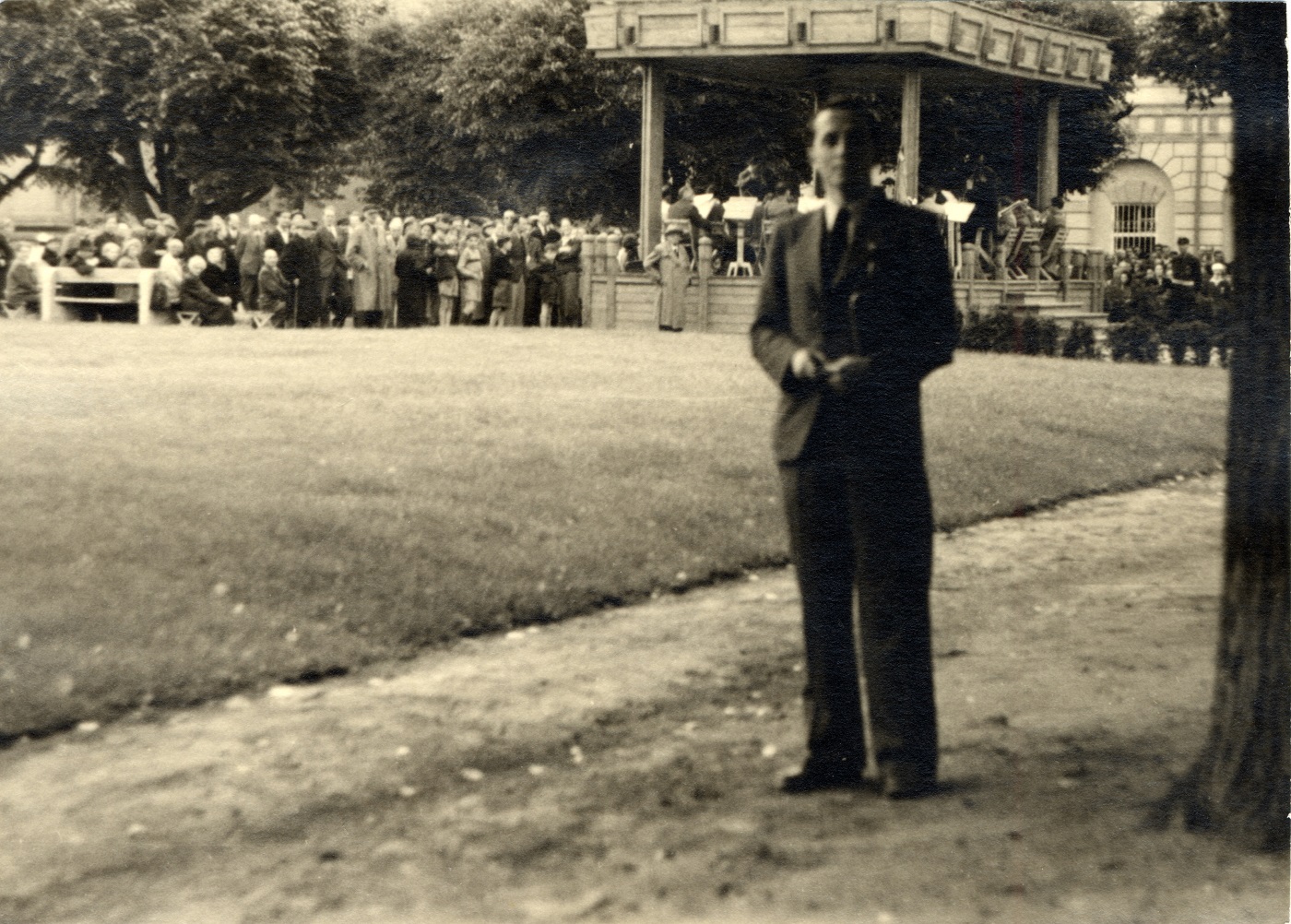
Maurice Rossel in front of the music kiosk, 23 June 1944, ICRC Audiovisual Archives, reference. No. V-P-HIST-01161-27.
In this photo, we see Rossel posing on Theresienstadt’s main square. In the background, a concert is being held in a music kiosk. If we examine the photo with a magnifying glass, we can see that many of the spectators are not paying attention to what the orchestra is playing. Instead, their faces are turned towards Rossel (or the person who is taking the photo). Rossel himself is blurry and underexposed, almost as if he were not the main subject of the photo. Instead, our attention is drawn to the crowd behind him. If the music kiosk was supposed to represent life in Theresienstadt, why did some members of the audience turn away from it? Could it be interpreted as an act of resistance? A gesture to show us that it was all a farce? Was taking so many images of the volunteer firefighters and photographing himself in front of this spectacle Rossel’s way of showing us that the Nazis had not pulled the wool over his eyes?
The ideal scapegoat
One major question remains: why would the ICRC choose an inexperienced delegate like Rossel for such an important mission?
After nearly two years of negotiations, the ICRC knew that the inspection would likely be manipulated by the Nazis for propaganda purposes. The first indication was when the German Red Cross suggested that the visit be conducted by Carl-Jakob Burckhardt. Burckhardt would no doubt have been shown exactly the same thing as Rossel. If a high-ranking ICRC member who was greatly respected by the international community reported that the Jewish population was being treated well, it would have been a significant victory for Germany. The ICRC managed to avoid this trap by insisting that the inspection be carried out by someone from its German delegation, rather than sending someone from its headquarters in Geneva. Roland Marti, the head of the German delegation, was reluctant to conduct the visit himself for fear of losing all credibility in the eyes of German authorities. However, he could not turn down the request, since it came from the ICRC directly. Furthermore, there was the risk that the ICRC would be banned from visiting other concentration camps if it did not send someone to Theresienstadt. The best solution was therefore to send a low-ranking delegate. And who better than Rossel? This not only preserved the ICRC’s chances of visiting other camps for Jews and other detainees, but also protected Rossel’s superiors and colleagues. If the inspection went badly, the ICRC could argue that he was young and inexperienced – and perhaps even too naïf to see beyond the spectacle he witnessed.
But Rossel was not as naïf as he seemed. Through his photos and his report, he showed that the Theresienstadt he saw was little more than façade, thereby undermining the Nazi’s claims and validating the terrible reports on how they were treating the Jewish population.
Ultimately, what Rossel witnessed was the ICRC’s failure protect the Jewish population. His visit therefore forced the ICRC to confront its own shortcomings.
The ICRC’s reaction was simply to wipe Theresienstadt from its institutional memory. In a 1946 report on its activities in the concentration camps, Rossel’s visit is not even mentioned. This omission continued for decades. Even after that dark chapter in the ICRC’s history resurfaced with the release of Lanzmann’s documentary, the ICRC felt that it was Rossel’s fault for agreeing to the interview[2]. It even agreed with Lanzmann that Rossel should have perceived and denounced the Nazi’s deception. He therefore became the perfect scapegoat.
But was it really Rossel’s fault? Or were both Lanzmann and the ICRC simply looking for someone to blame – an ordinary person who could be any one of us – since the true culprits no longer seemed human due to the depravity of their acts? Ultimately, what Lanzmann’s film and the ICRC’s attitude reveal is our struggle to understand situations that defy our sense of humanity.
[1] In a letter to Lanzmann after the release of Un vivant qui passe, the ICRC pointed out that the visit to Auschwitz I took place after the visit to Theresienstadt.
[2] Lanzmann appears to have arrived unannounced, taking Rossel by surprise while he was having a meal with his family.
Comments