

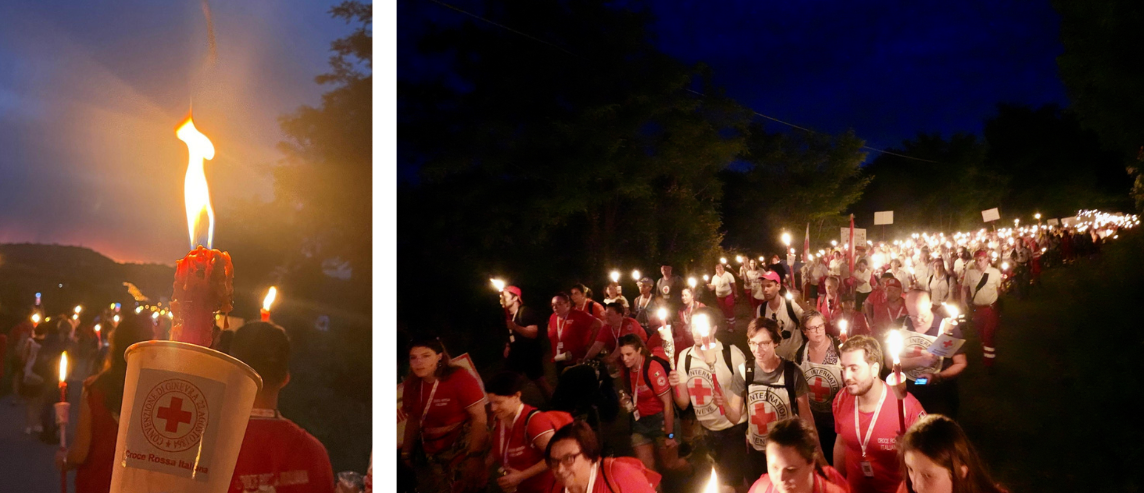
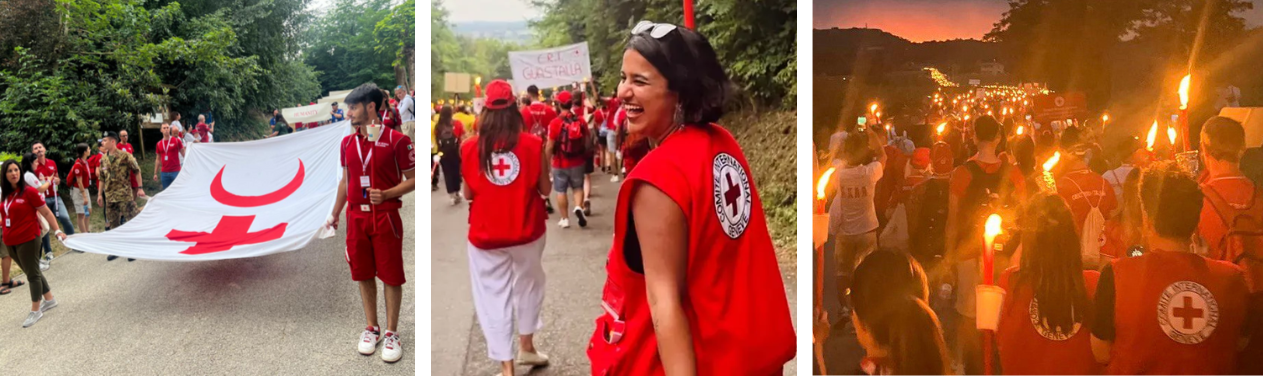
Each year, the “Fiaccolata” in Solferino commemorates the battle that gave rise to the Red Cross and Red Crescent Movement. Colleagues from ICRC Archives & Library, Communications, and Mobilization, Movement & Partnerships participated to the 2025 edition, an experience that became one of the year’s highlights. It encouraged us to compile a short research guide to the archival and library materials that illuminate Solferino and its enduring humanitarian legacy.
In Northern Italy, a river of light cut through the dark along a hillside that witnessed history. The air was electric as the crowd moved forward under pouring rain and rolling thunder. Still, the torches burned, held by hands that remembered, by humanity’s refusal to dim.
In June 2025, the anniversary year marking 60 years since the adoption of the International Red Cross and Red Crescent Movement’s Fundamental Principles, over five thousand of Movement colleagues and volunteers from all over the world (around 30 National Societies) met to participate in a weekend full of discussions and events that culminated in a torchlight procession, or “Fiaccolata”, in Italian.[1] A yearly tradition that the Italian Red Cross started in 1992 [2], it is an 8 km long commemorative march from Solferino to Castiglione delle Stiviere that retraces the path of the wounded soldiers who were evacuated from the Battle of Solferino of 24 June 1859. After a break during the pandemic, the weeklong festivities returned in 2022.[3]
The formal aspect of the weekend included a meeting of National Society leaders, consisting of two panel sessions. On the occasion of the 60th anniversary of the principles, they discussed the protection of humanity and humanitarian action, as well as protecting humanitarian workers through advocacy, dialogue, partnership and communication strategies. A key theme from the discussions concerned the way in which the Movement has evolved to face very different challenges than those witnessed by Henry Dunant 166 years ago.[4]
The weekend left participants with a sense of renewed purpose, grounded in the memory of those who suffer wars, and uplifted by so many young volunteers carrying hope into the future.
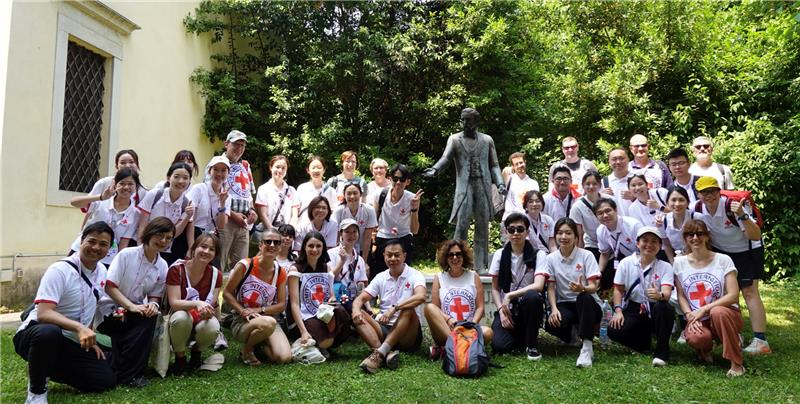
Group picture with the Hong Kong Red Cross delegation at the Henry Dunant statue in Solferino
The Battle of Solferino: history and resources
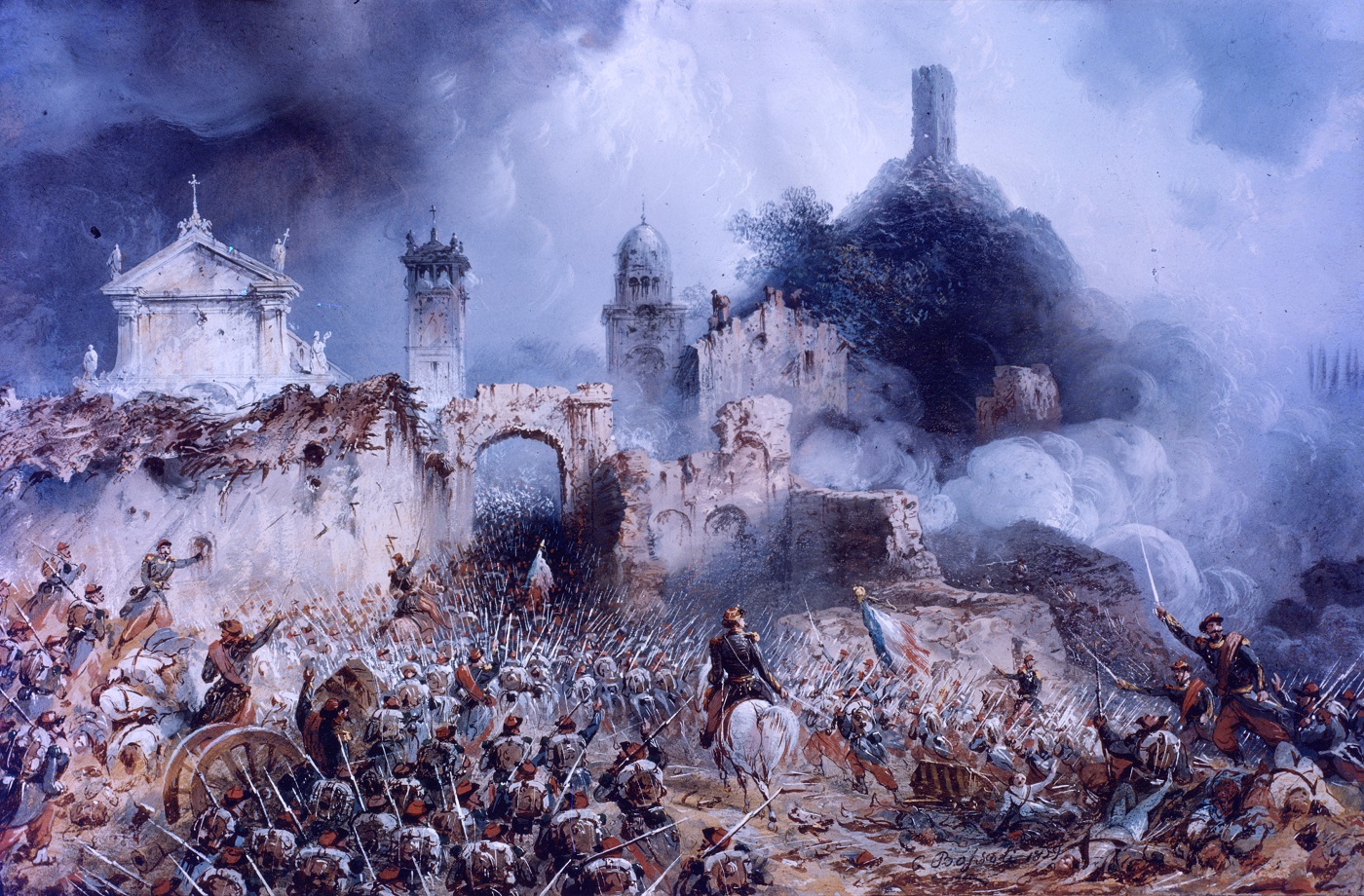
Battle of Solferino, June 1859. Tableau de Carlo Bossoli, Museo Nazionale del Risorgimento, Turin. ICRC Audiovisual Archives. V-P-HIST-00256
The Battle of Solferino took place during the Second Italian War of Independence, that preceded the unification of Italy, completed in 1871. It was fought between the French army and the Piedmont-Sardinian against the Austrian army. At that time, the Italian peninsula was still fragmented into a multitude of small states, some of which were under Austrian rule. France agreed to become involved in the conflict against Austria hoping to gain territories for its support.[5]
In his book “A Memory of Solferino”, Dunant explains that the battle was brutal, as it lasted long during the summer heat and resulted in thousands of soldiers killed or wounded. Churches and public buildings in the villages along the battle’s 16 km front were crammed with wounded and sick soldiers. Locals were trying to care for them, and Dunant joined efforts in the Duomo (main church) of the town of Castiglione delle Stiviere, which sheltered more than 500 men.
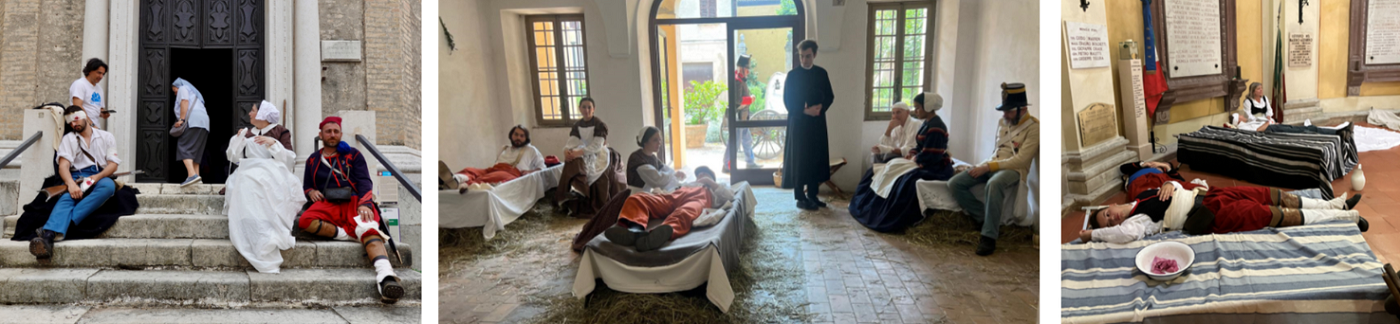
Castiglione, reenactment in the church Madonne del Rosario
Today, Castiglione hosts a Museum of the Red Cross, while in Solferino, there is a museum of the battle, with uniforms and weapons of the time, and an ossuary memorial for the thousands of victims.
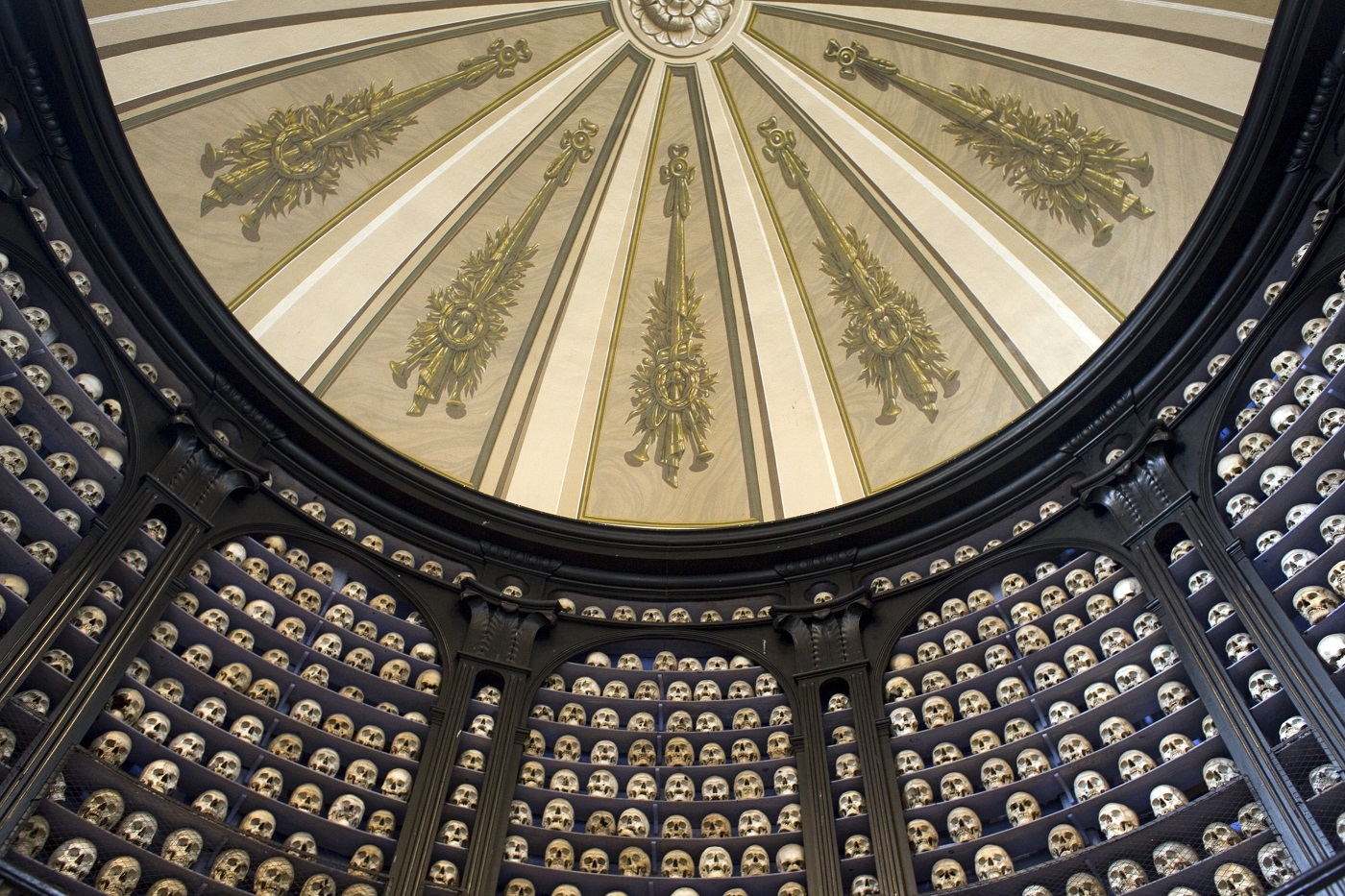
San Martino della Battaglia. The Ossario, where the bones of 6,000 fallen soldiers of the battle of Solferino are housed. ICRC Audiovisual Archives. V-P-IT-E-00053
At the time, armies lost many soldiers to infectious diseases and saw many others affected by mental health challenges. While anaesthesia had recently been discovered and tested, it was not widely practiced in wartime surgery[6], due to its novelty. Furthermore, the principles of contagion by pathogenic germs, which emerged later in the 19th century, were not yet understood. Moreover, firearms had become much more powerful and accurate.
The medical services of the French and Piedmontese armies were completely overwhelmed. The French Medical Service had proportionally more veterinarians than doctors and faced logistical issues.[7] Its equipment was unloaded late and part of it remained in warehouses. Crates of bandages were even sent back to France still sealed at the end of the campaign.[8] Moreover, the medical service’s transport vehicles could be requisitioned to carry ammunition.[9]
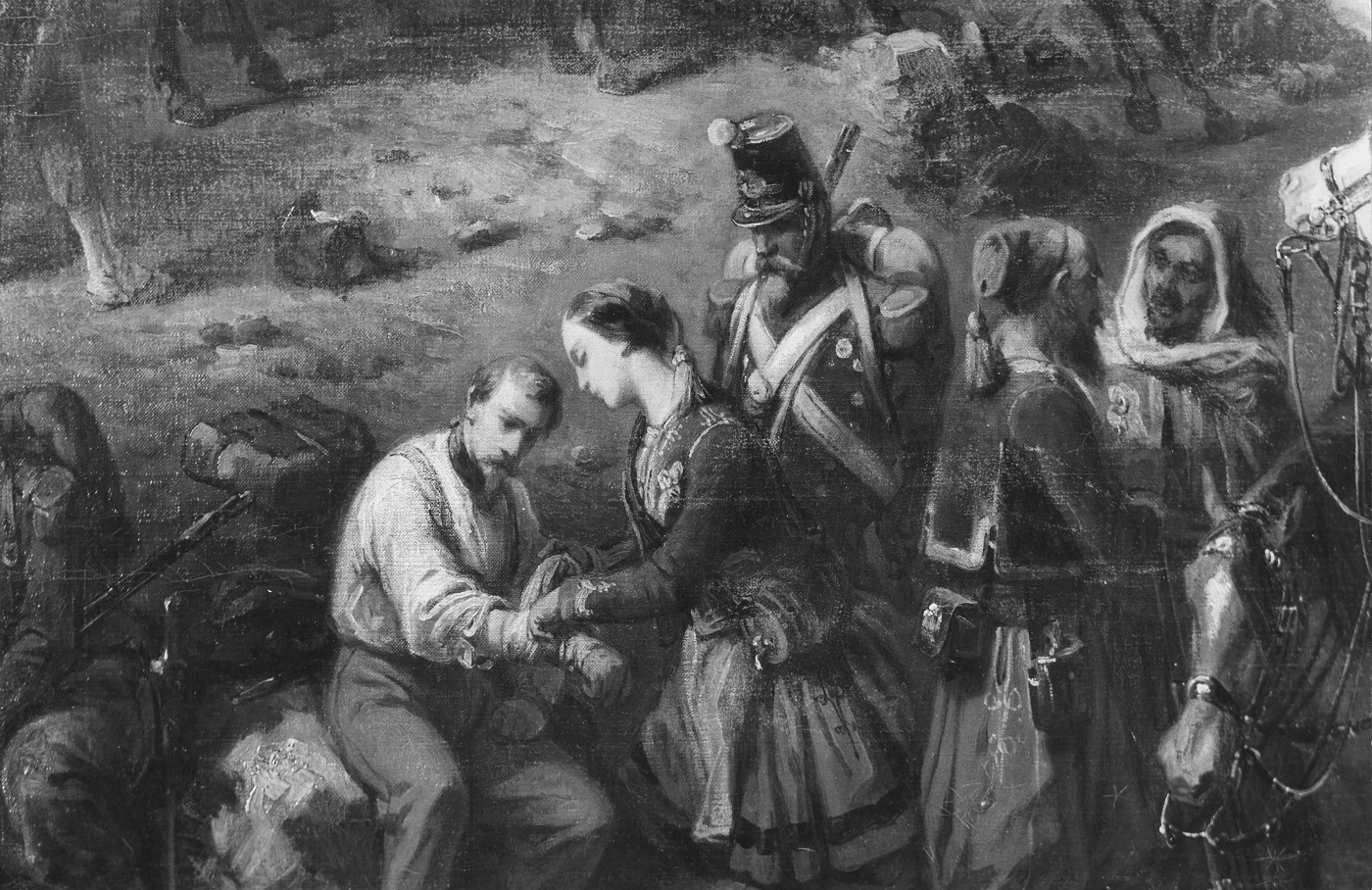
Battle of Solferino, June 1859. A wounded soldier being treated by a woman from Castiglione. ICRC Audiovisual Archives. V-P-HIST-00050-23
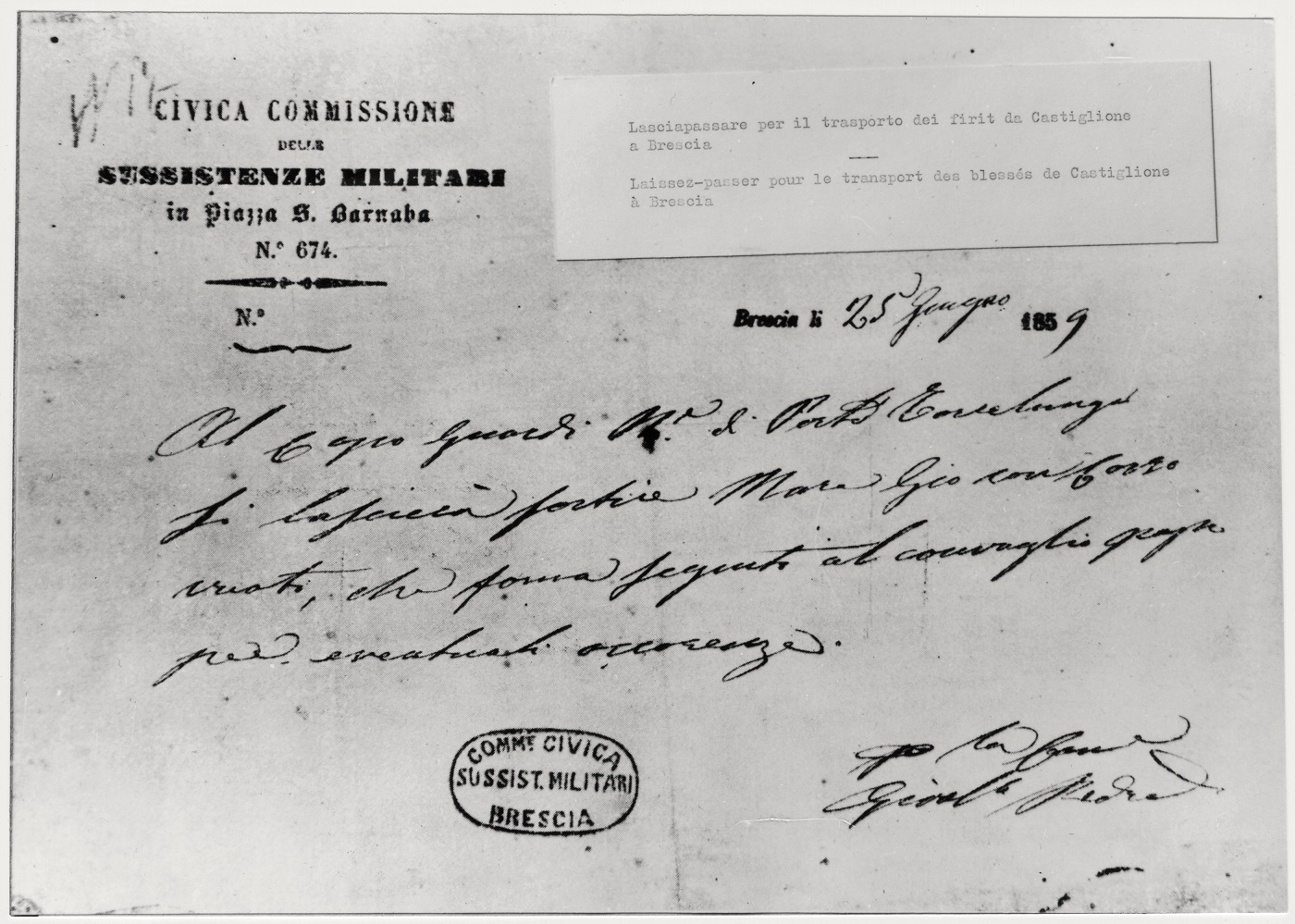
Solferino battle, June 1859. Pass for the transport of the injured from Castiglione to Brescia. ICRC Audiovisual Archives. V-P-HIST-01321-15
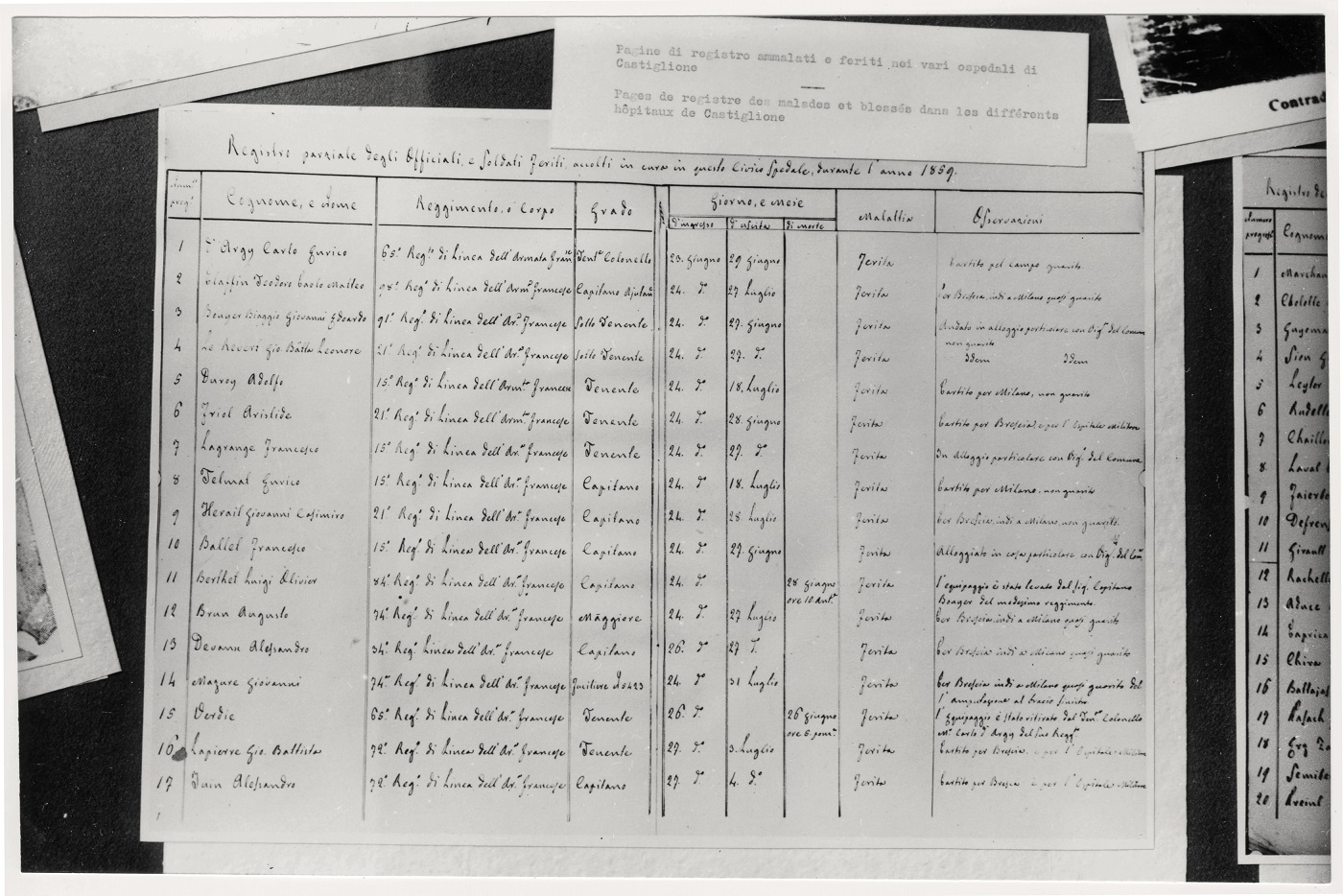
Solferino’s battle, June 1859. Register with the names of wounded soldiers in Castiglione’s hospitals. ICRC Audiovisual Archives. V-P-HIST-01321-17
Henry Dunant: library resources
A Memory of Solferino: history and resources
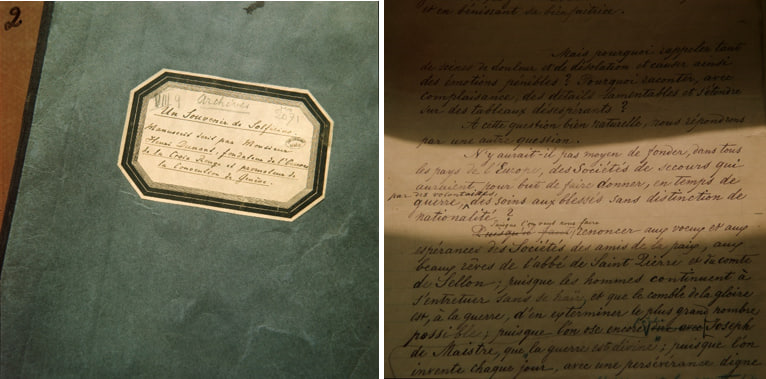
Manuscript of “A Memory of Solferino” by Henry Dunant. Extract. ICRC Audiovisual Archives .V-P-HIST-00963-05, V-P-HIST-00963-08
In “A Memory of Solferino”, Henry Dunant describes the courage of local women who tended to the wounded and sick, exemplifying the principle of impartiality by caring for French, Italian and Austrian wounded soldiers without distinction. “Tutti Fratelli” (“we are all siblings”) they repeated, expressing a humanitarian spirit that transcended national borders and identities. This experience changed Dunant’s life, and with it the course of humanitarianism’s history.
After three days, Dunant reached nearby towns to visit hospitals and meet an aide-de-camp of Napoleon III to plead for the release of the Austrian medical doctors who had been captured.
Upon returning to Geneva, Dunant began recording his experiences and reflecting on how they might inspire action. In his book, he famously asked: “But why have I told of all these scenes of pain and distress, and perhaps aroused painful emotions in my readers? Why have I lingered with seeming complacency over lamentable pictures, tracing their details with what may appear desperate fidelity? It is a natural question. Perhaps I might answer it by another: Would it not be possible, in time of peace and quiet, to form relief societies for the purpose of having care given to the wounded in wartime by zealous, devoted and thoroughly qualified volunteers?”.[10]
“A Memory of Solferino” put forward two main proposals: the recognition of the “wounded and sick”, and the creation of voluntary aid societies in every country. Beyond these, Dunant anticipated much of what would become the modern mandate of the ICRC, not only providing medical assistance, but also handling the identification of the dead, tracing the missing, and restoring family links. This was exemplified in one of the cases in the book:
“A young Corporal named Claudius Mazuet, some twenty years old, with gentle expressive features, had a bullet in the left side. There was no hope for him, and of this he was fully aware. When I had helped him to drink, he thanked me and added with tears in his eyes: ‘Oh, Sir, if you could write to my father to comfort my mother!’ I noted his parents’ address, and a moment later he had ceased to live […] The parents lived in Lyon, and this young man who had joined the army as a volunteer was their only son. The only news they received of him was that which I gave them. Like many others, his name appeared among the ‘missing’.”[11]
Read A Memory of Solferino in:
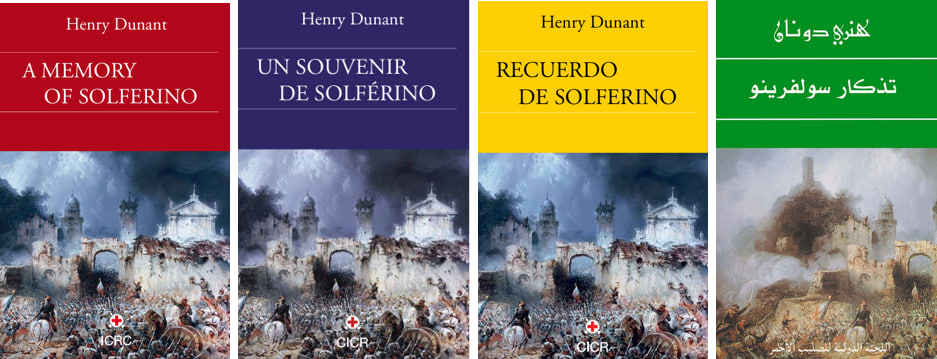
Published at his own expense, the book came out in print in Geneva in late 1862. It sparked interest of the local Genevan and European elite. “One finishes this book cursing war”, wrote the Goncourt brothers.[12] Within two years of publication, Dunant’s main proposals were agreed upon. A small committee of five influential Genevans, composed of Henry Dunant, Gustave Moynier, Louis Appia, Theodore Maunoir, and General Guillaume Henri Dufour, combined expertise spanned medicine, law, and military affairs, This “Committee of Five” convened a first conference in Geneva in 1863, followed by a diplomatic conference in 1864, which successfully formalized the concept of National Societies and adopted the Geneva Convention for the Amelioration of the Condition of the Wounded in Armies in the Field.[13]
Digitized heritage collection on the First Geneva Convention (1864)
About the publication and printing of A Memory of Solferino
Walking in Solferino today is a reminder of how closely ICRC’s work is tied to the past. Remembering history is not just symbolic, it helps us understand, respect, adapt, and develop the principles that shaped Dunant’s vision and continue to guide humanitarian action.
Along the path of the Fiaccolata, this sense of continuity is unmistakeable, especially surrounded by young volunteers who carry humanitarianism into the future. As “Tutti Fratelli” echoed throughout the event, a world only shaped by mutual aid and collective care felt within reach.
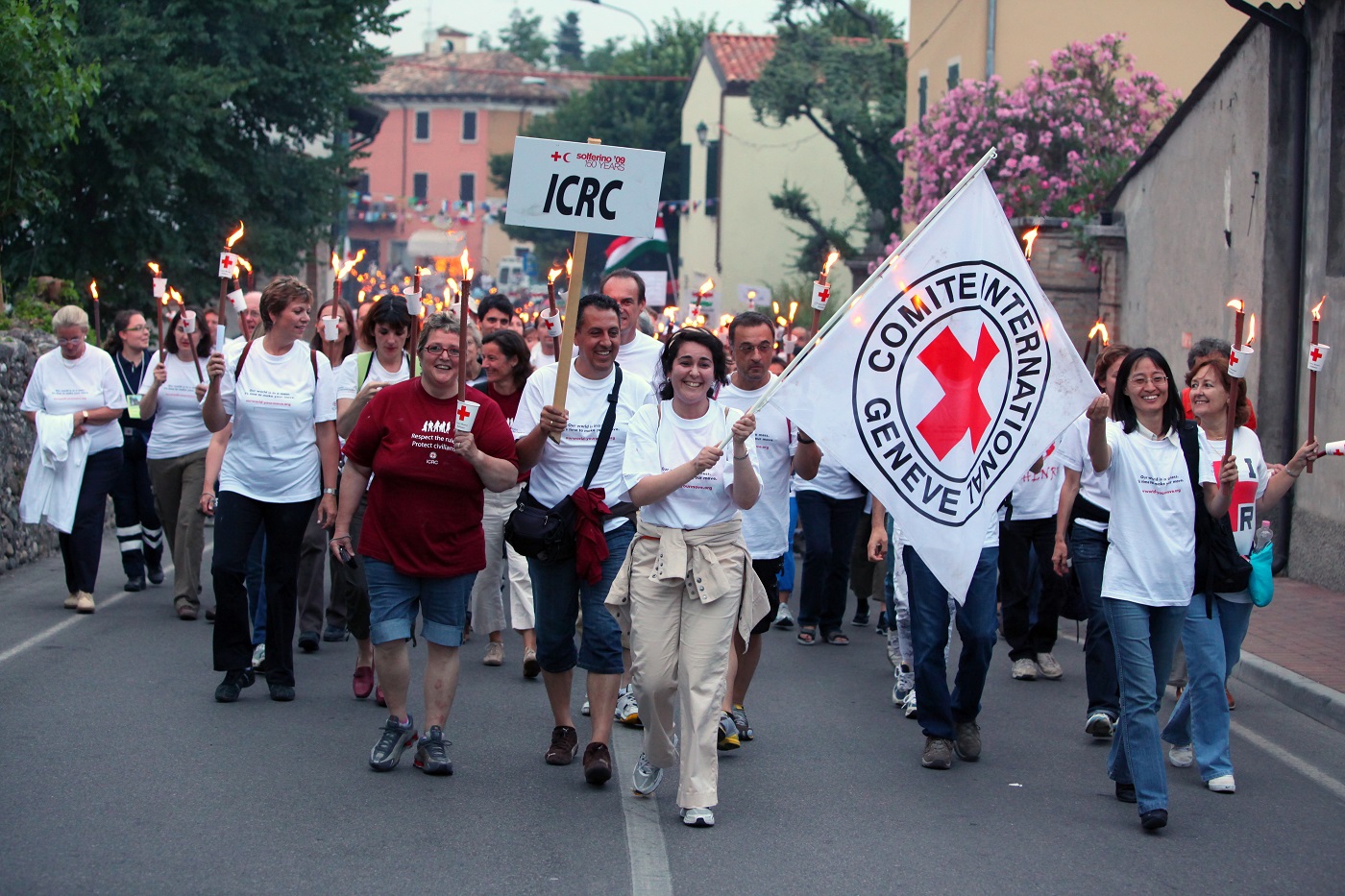
Solferino, 2009. The ICRC team joined the procession for the celebration of the 150th anniversary of the Solferino battle. ICRC Audiovisual Archives. V-P-IT-E-00066
[1] https://cri.it/lombardia/2025/06/24/solferino-24-giugno-dove-tutto-ha-avuto-inizio ; https://cri.it/2025/06/21/solferino-tavola-rotonda-sui-principi-fondamentali-essenziale-la-protezione-del-personale-umanitario/
[2] Date included in this newsletter of the Italian Red Cross Newsletter 15.04.09
[3] https://cri.it/2022/06/09/solferino-2022-dopo-due-anni-stop-ritorna-tradizionale-fiaccolata/
[4] https://cri.it/2025/06/21/solferino-tavola-rotonda-sui-principi-fondamentali-essenziale-la-protezione-del-personale-umanitario/
[5] Bugnion, François. 2012. “Birth of an Idea: The Founding of the International Committee of the Red Cross and of the International Red Cross and Red Crescent Movement: From Solferino to the Original Geneva Convention (1859–1864).” International Review of the Red Cross 94, no. 888 (December): 1299–1338. https://doi.org/10.1017/S1816383113000088
[6] Learn more about Weapon-Wounded Care in the ICRC Library’s Heritage Collection :https://blogs.icrc.org/cross-files/books-bandages-breakthroughs/
[7] Bugnion, François. The International Committee of the Red Cross and the Protection of War Victims. Geneva: International Committee of the Red Cross / Macmillan Education, 2003. https://library.icrc.org/library/search/notice?noticeNr=19041
[8] History of the International Committee of the Red Cross, Volume I: From Solferino to Tsushima. Geneva: International Committee of the Red Cross, 1963. ICRC publication. https://library.icrc.org/library/search/notice?noticeNr=695
[9] Bugnion, François. 2025. From the battle of Solferino to the Geneva Conventions of 12 August 1949. In From the battle of Solferino of 1859 to the Geneva Conventions of 1949: Challenges and future prospects of international humanitarian law (pp. 49–70). International Institute of Humanitarian Law. https://library.icrc.org/library/search/notice?noticeNr=61509
[10] Henry Dunant, A Memory of Solferino, Geneva: International Committee of the Red Cross, 1986, p. 27. https://library.icrc.org/library/search/notice?noticeNr=2142
[11] Henry Dunant, A Memory of Solferino, Geneva: International Committee of the Red Cross, 1986, p. 16. https://library.icrc.org/library/search/notice?noticeNr=2142
[12] Durand, André. “The Development of the Idea of Peace in the Thinking of Henry Dunant.” International Review of the Red Cross 26, no. 250 (1986): 16–51.
[13] Bugnion, François. 2025. From the battle of Solferino to the Geneva Conventions of 12 August 1949. In From the battle of Solferino of 1859 to the Geneva Conventions of 1949: Challenges and future prospects of international humanitarian law (pp. 49–70). International Institute of Humanitarian Law. https://library.icrc.org/library/search/notice?noticeNr=61509
Con este artículo se empieza muy bien el año 2026, aunque pareciera que hay algunos links fallidos, gracias por compartir todo este material. Aunque falta material que no está aún digitalizado en la biblioteca y sería muy útil a investigadores históricos de Movimiento.
Debieran consolidar un equipo de voluntarios que se dediquen a la investigación histórica del Movimiento y de la vida y obra de Henry Dunant, con corresponsales en cada país donde exista una Sociedad Nacional.
Saludos Cordiales