

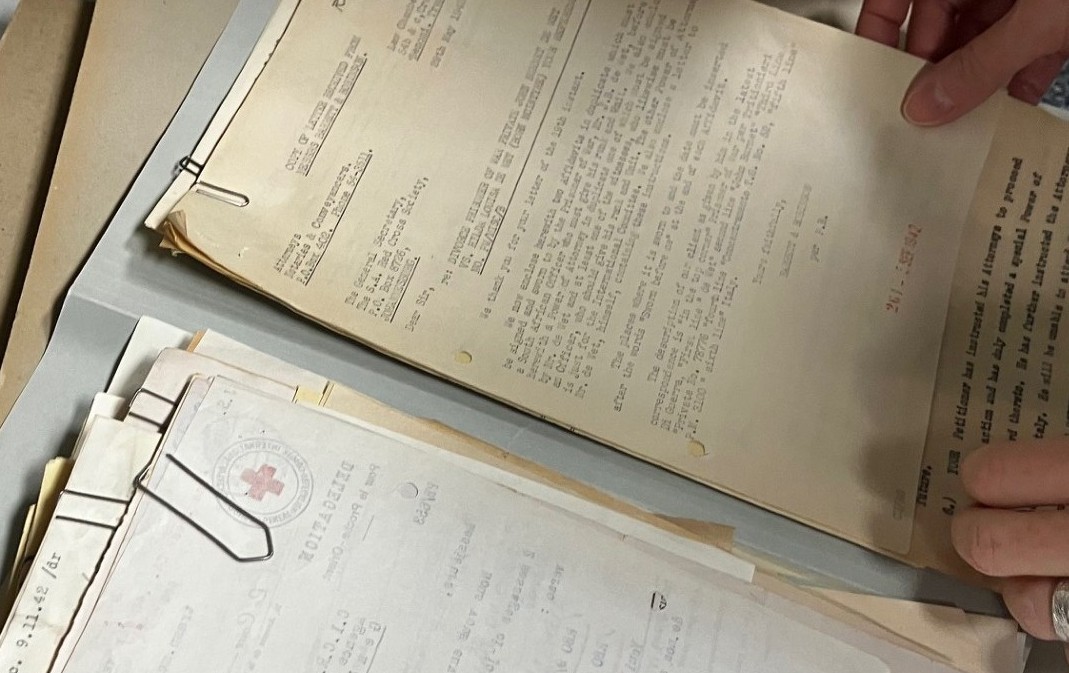
What are the ICRC’s individual archives?
The ICRC’s individual archives contain personal information on:
- Prisoners of war
- Civilian internees
- Children separated from their families
- Missing persons
- Persons visited during their detention
- Other beneficiaries of the ICRC’s protection activities in conflict zones worldwide since 1870.
These archives are also called “Tracing archives”, in reference to the various ICRC Tracing Agencies that have collected this data throughout history.
Impact of the digitisation programme (2026 and beyond)
From 2026, the ICRC’s Tracing archives will temporarily reduce the availability of some services due to an extensive digitisation program. This project aims to enable improved online access to these archives in the future. For more information on this program, please visit this link.
Despite these limitations, the following services will remain accessible:
Research and issuing of attestations of detention for ex-beneficiaries, related to collections closed to the public
Please consult the Rules governing Access to the Archives of the International Committee of the Red Cross for more details.
Access to the digitised archives of the First World War
These archives are accessible on the following public site: https://grandeguerre.icrc.org/en/
Note: Individual assistance on requests related to the First World War is discontinued until further notice.
Requests for information relating to the Second World War and other conflicts for which collections are open to the public
Whenever they can process new individual requests, the Tracing archives activate an online form on the ICRC website. For more information, consult this link.
Important notice:
- Each household is allowed to submit only one individual request.
- Requests must be submitted via the online form.
- Once the maximum number of requests is reached, which is set based on the service’s current limited capacities, the online form is disabled. It is then no longer possible to submit new requests. Please note that the request limit may be reached early in the morning.
- Requests sent by other means or submitted outside the activation period of the online form will not be accepted.
Exceptions
When the online form is not active, the Tracing archives only accept the following humanitarian research requests:
- Requests relating to administrative procedures or compensation files.
- Requests relating to the identification of biological parents: For applicants who have never known their birth parents and are seeking to identify them.
These requests must be duly justified and sent by email to: tracing.archives@icrc.org.
No requests other than these exceptions will be accepted or retained for a subsequent response.
Frequently asked questions
I cannot access the online form. What can I do?
Visit the ICRC website on the activation day and complete the form as soon as it becomes available, as the number of requests is limited.
If you are unable to access the online form because of technical problems, please contact: tracing.archives@icrc.org.
Why does it take several months to process individual requests?
The process is lengthy due to the nature of the Tracing archives:
Nominal lists form the foundation of the Tracing archives of the Second World War. These include lists of transfers between camps, records proving detention in specific camps, liberation lists, and other nominative documents such as death certificates. Each page of the list contains a logical reference (composed of letters) and a numerical reference. At the time of the Central Agency for Prisoners of War during the Second World War, each name present on a list generated an index card on which this alphanumeric code was transcribed. The index card was then classified in alphabetical order in the file corresponding to the prisoner’s nationality. By the end of the war, these files contained more than 36 million cards in total.
Each individual research requires an in-depth analysis of files, lists and physical documents spread over several sites in the canton of Geneva.
The good news is that the current digitisation programme will make it possible in the future to access all this data more quickly and easily via an online site.
What kind of information will I receive?
Once your request has been processed, you will receive:
- A PDF document entitled “Information contained in the ICRC Archives”, sent by e-mail.
- If available, a digital copy of documents specifically related to the beneficiary.
- Possibly, referrals to other organizations that may have additional information about the person you are looking for.
Conclusion
The ICRC strives to preserve its archives and make them accessible. The current digitisation programme is a significant step forward in improving access to this information. We thank you for your patience and understanding.
Comments