
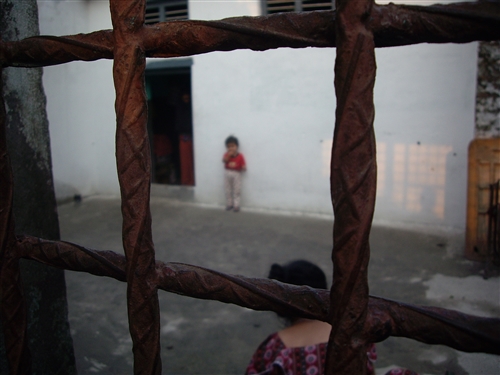
Pokhara, prison de Kaski. Le CICR s'assure que les standards vitaux minimaux des détenus soient respectés. Un enfant et sa mère détenue. Pokhara, Kaski Jail. The ICRC ensures that the minimum standards of living are met for inmates. Detained woman's child. ICRC in Prison: Behind the Bars By: Aparajita Acharya Written: May 2008 Binita in the recent past, had fallen prey to an unpleasant incident. A woman in the prison lashed out at her daughter and then unto her. "Usually the police pacifies such situations", says Binita, "but the police are not always inside the cell and by the time they get there, sometimes the damage is already done". ICRC attempted a glance into a female detainee's life in Pokhara Jail. That's when we came across Binita Thapa. Binita hadn't intended to invite trouble but when her daughter had accidentally dropped a piece of potato in the other women's plate, it had ended up that way. The police had to intervene. The other woman had to be transferred elsewhere for misconduct. Binita sustained injuries to her neck. At the time when ICRC talked to her, the doctor had told her the injuries had affected the nerves in her neck and that she was to appear at the hospital after 10 days for a follow-up. Had there been a Naike appointed (In-charge appointed from among the inmates), she feels perhaps the entire mishap could have been avoided. She had come with a 1-and-a-half year old daughter to Pokhara Jail 6 months ago. Her shallow face and big brown eyes tell stories of her sadness and hardship. Her husband once stole old copper coins from their neighbour. It was the very accusation that had them both arrested as the authorities concluded the crime must have been conducted in consensus. Binita says she had no way to prove her innocence once her husband was put behind bars in Damauli Jail. Had they paid a compensation of 3 Lakhs, their time in prison could have been shortened by half. Now she is serving her full 4-year term in prison. Binita had tried calling her parents several times in Lamjung, but they refuse to take her calls. She very rarely gets to talk to her husband in Damauli Jail on the phone. So she has stayed in touch with him through frequent exchange of letters. Her eyes sadden when she relates that no one else writes to her. Recently, she with another inmate shared the cost of a phone card between them to make calls. It cost them NRs. 200 per card and allowed them a talk time of approximately 1.5 total hours. Binita is among the 13 female detainees in Pokhara Jail. For another 3-and-a-half years, Binita knows her dreams need to be limited within the enclosure of prison. ICRC stumbled on to Binita's story while in the process of inquiring into Pokhara Jail to ensure that the minimum standards of living are met for inmates. ICRC actively intervenes and supports in prison reform across the globe. ICRC reminds and advices the authorities of states that the detainees are entitled to minimum standards of living conditions. As a part of its prison intervention in Nepal, The Water and Habitat Department of ICRC has been supporting construction reform inside Pokhara Jail since October 2007. It has been working on making the female and the male sections of the prison organized by reconstructing spacious cells, kitchen, bathrooms, toilets and also by ensuring proper water facilities reach to jail inmates. When ICRC first visited Pokhara Jail, the living conditions and facilities seemed questionable. The male section of the prison was crammed with inmates while the female section seemed too big for the less than 15 women serving their terms. Inadequate and ill facilitated Water supply seemed to be a huge problem. The smoke from the stoves filled up not just the kitchen but also the cells every time they cooked food. The toilets lacked flushing facilities and running water. The bathrooms lacked proper drainage and the inmates rather washed themselves out in the open carrying water in buckets. Now a reasonable water tank is being put in place with reliable facilities to ensure running water for the detainees. ICRC is also working to introduce biogas cooking stoves to cut down the expenses, do away with the smoke as well as to manage the bio degradable waste. The male section of the prison has been widened and a recreational space created. Cells, toilets, kitchen and bathroom have been reconstructed and rehabilitated. When questioned about how she's liked the changes, Binita says that being detained is hard enough for a person and to have to face intolerable living conditions is the last straw. Now it has given her a sense of relief to know that someone values her right to basic living conditions. 'It is a big thing for us,' she tried to get her point across, 'to be treated respectfully, you don't get that around here all that often.' Once she gets out of prison she wants to start a life afresh in Kathmandu. While she's in prison, she wants to send her child to a childcare home during the days. She's heard of a day care home for children called Jyoti Kendra nearby where the guard's son goes. Once her daughter reaches 5 years of age, Binita would still have 6 more months to serve in prison but by the rules, wouldn't be allowed to keep her daughter with her. She is concerned because she knows of no place where she could send her. She fears that she might be unable to secure a dignified future for her daughter if people start tagging her as prisoners' child. 'Who would ever want to marry a prisoner's daughter?' Her brow creases into an anxious frown as she says that… Note: The name of the detainee has been changed for confidentiality reasons