
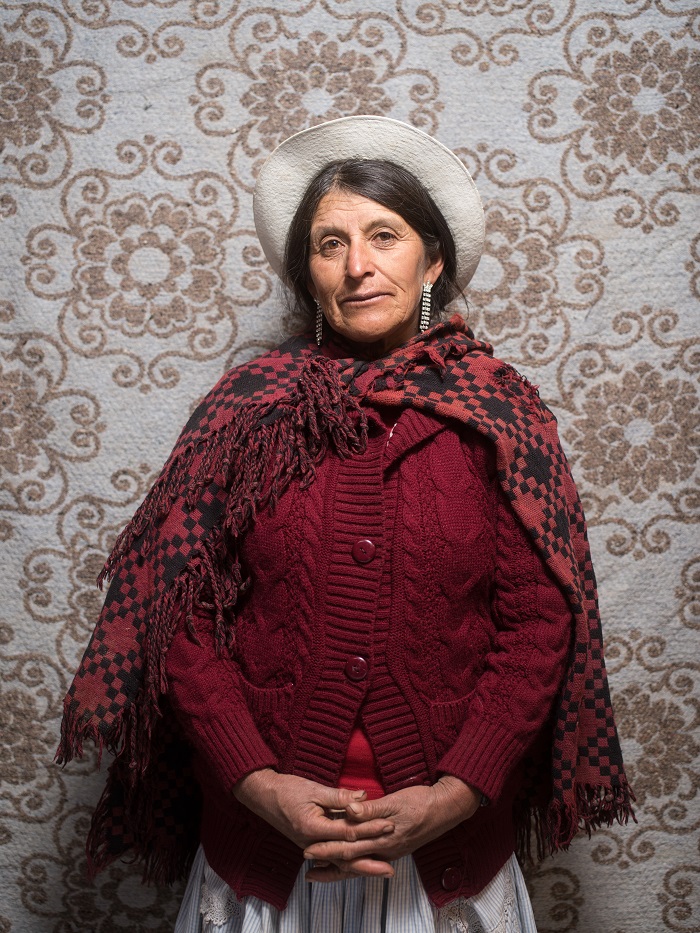
54 year old Dionisia Calderon sells fruit and farms potatoes in her home village of Morochucos, Ayacucho, Peru. She faced multiple losses during the internal conflict that brought violence and suffering to the region. Her first husband was taken by the military, never to be seen again. Her second husband was also taken by the military. They tortured him severely. He later died of the resulting injuries. The same day as they took her second husband, members of the military forces gang raped her. They left burning down her house. Some years later she was sterilized under a government program that, while not obliging women to undergo the procedure, was abused by officials needing to meet targets who told local women that it was mandatory. Refusing to silently live with the injustices inflicted upon her and her family she became a representative of women who faced abuse during the conflict, facing the military during trials that took place in her village. Typically, women suffer from war more than wage it. While the majority of women in conflict situations still tend to be categorized as “victims”, war can also shatter oppressive gender roles and enable women to take on identities such as fighters, healers, and survivors. Peru went through violent conflict in the 80s and 90s resulting in tens of thousands of deaths, approximately 15,000 people still missing, and hundreds who to this day remain detained. The conflict involved armed forces and police backed by ‘Self defence Committees’ (organized armed civilian groups) on one side, and on the other two armed groups seeking to overthrow the government. Although the conflict officially ended in 2000 one small group continues to be active in the VRAEM (Valle de los Rios Apurimac, Ene y Mataro), a remote area which is the largest producer of coca plants. In Peru, the ICRC helps people affected by the past internal conflict, in particular family members of missing people and those deprived of their freedom. It works t