
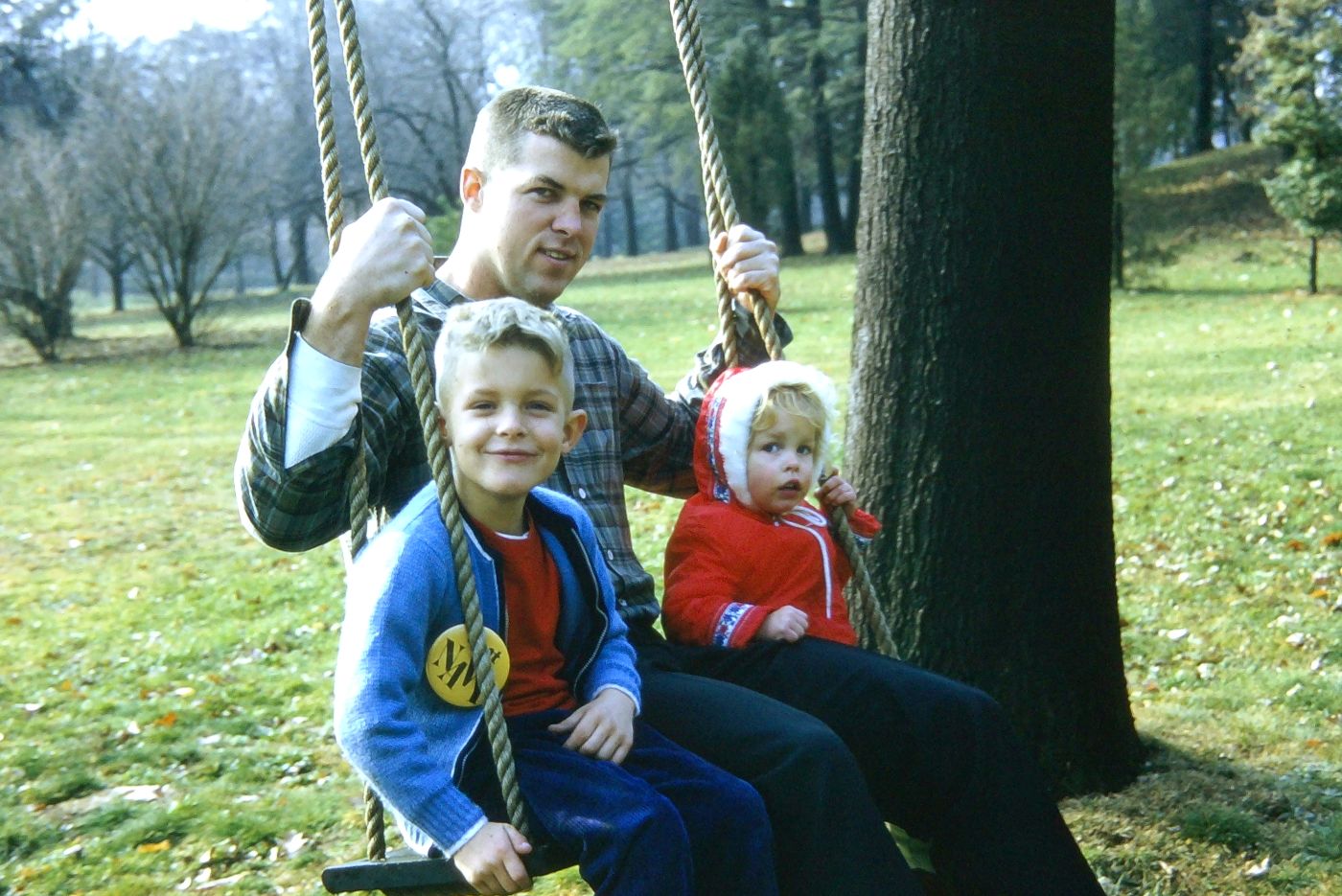
Every year, on August 30th, the ICRC marks the International Day of the Disappeared (IDOD) to honor the countless individuals who remain missing due to armed conflict, violence, disasters, or migration. It is a day not only to honor those who have disappeared but also to stand in solidarity with the families left behind, grappling with the anguish of uncertainty. For Pam Cain, the daughter of Colonel Oscar Mauterer, a U.S. Air Force pilot who went missing during the Vietnam War, this day is both deeply personal and profoundly significant.
Pam recalls her father as a man who balanced his military duties with a deep commitment to his family. “He was definitely a part of my life every day. I got to witness some of that passion with anything he took on, whether it was swimming or golf,” she says.
Pam was almost 13 years old when her father disappeared. Days turned into weeks, and weeks into months, no further news came. “It was very difficult, it was very frightening, and the hardest part was the not knowing, being so isolated, not having people to talk to,” she recalls. “Most of us feel probably that our loved ones are invincible and it’s not going to happen,” she added.
Over the years, Pam and her family clung to hope for answers about Mauterer’s fate. Then, in 2010, a breakthrough came. A credible witness came forward with information about a possible burial site, and an excavation followed, but it did not yield any findings. It was another heartbreak for Pam’s family, but it also reignited hope that they might be closer to finding him.
Through it all, Pam has remained resolute, her strength bolstered by the support of other families and veterans.
“Meeting other families through organizations like the National League of POW/MIA Families opened up a whole new world for me. We had all those highs and lows over the years, and it was the other families and the support of veteran organizations that really got me fired up”.
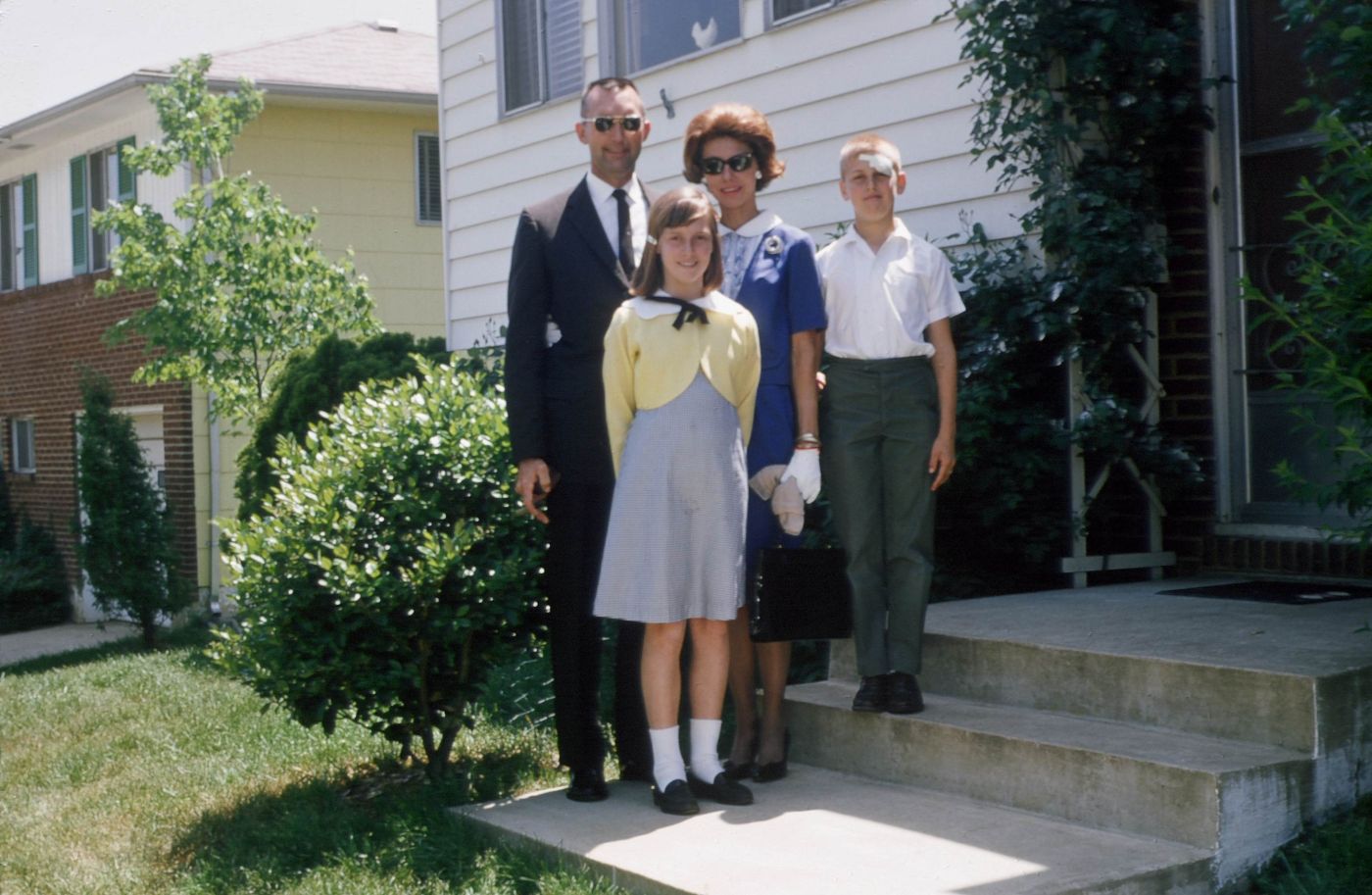
Pam Cain with her father, U.S. Air Force Col. Oscar Mauterer, her mother, Evelyn, and her brother, Randy.
Today, Pam volunteers with the National POW/MIA Memorial and Museum in Jacksonville in Florida, where she shares her father’s story and advocates for others who are still searching for their loved ones.
One person who deeply understands Pam’s journey is Colleen Shine, an advisor for Sons and Daughters in Touch (SDIT), an organization dedicated to uniting the children of U.S. servicemen who were killed or remain missing from the Vietnam War. Colleen’s father, Air Force Lieutenant Colonel Anthony C. Shine, was also missing in action, and her family endured 24 years of uncertainty before finally learning his fate. That resolution inspired Colleen to dedicate her life to helping other families.
Colleen’s advocacy work is rooted in her own experience. “I felt a sense of responsibility,” she says. “We had three generations in my family working on my father’s case. After it was resolved, I knew I still had to help others. If not me, then who?” Through SDIT, Colleen connects families, provides resources, and helps them navigate the complex process of searching for answers. She emphasizes the importance of community and collaboration. “Families are the continuity on these cases. My father’s case is an example that answers are there, they’re possible,” she explains. “Governments and agencies change, but we are the ones who keep the torch burning.”
Colleen’s work often involves late nights, detailed research, and emotional conversations with families. “The first step is to let them know they’re not alone,” she says. “We connect them with others who have walked the same path and share resources to help them move forward.” She also works closely with government agencies and international organizations, advocating for renewed efforts to account for missing persons.
Both Pam and Colleen stress the importance of keeping the issue of missing persons visible. “Many people don’t realize that there are still 80,741 U.S. service members unaccounted for. These men and women served their country, and it’s our duty to bring them home,” Pam says.
“It was truly the families who drove the effort forward,” Pam explains, reflecting on the collective determination of those searching for answers. “This issue could have faded into obscurity, just a small dot in history. But we refuse to let that happen. We want to make sure our loved ones are remembered, not just as part of the past, but as a reminder that this could happen today or tomorrow, too”.
Pam and Colleen’s stories are a testament to the resilience of families who refuse to give up. For Pam, her father’s memory is alive in her daily life. Her family found ways to honor his memory. “Christmas, Thanksgiving, any holiday, Father’s Day. We would bake cakes and pies or do something special to honor that empty seat at the table,” Pam says. She continues to advocate for answers, not just for her father but for all the missing. “My mother would go to the Air Force Casualty Office and go through photos of POWs, looking for a familiar face, since it was thought he would be brought in as a POW. I promised her before she passed that I would never give up,” Pam says. “Our loved ones deserve to come home, and their stories deserve to be told.”
For Colleen, the International Day of the Disappeared is a powerful reminder of the global nature of this issue. “It’s a day to educate, to renew our commitment, and to honor the rights of families to know the fate of their loved ones, and to have them returned,” she says. “It’s a cruelty for anyone to withhold information from a family”.
As we mark this year’s International Day of the Disappeared, let us honor the missing and support the families who carry the weight of their absence. Their courage and determination inspire us to keep searching for answers and to never forget the empty seats at their tables. For families like Pam’s, the search for truth is not just a personal mission, it is a call to the world to remember, to care, and to act.
“It doesn’t matter if your loved one is a soldier or a civilian, or if they have been missing for a week, a month, a year or 60 years, it is their families’ right to search and come to know their fate and whereabouts,” said Fabrizzio Carboni, head of the ICRC’s Delegation to the U.S. and Canada. “This is a fundamental act of humanity: it helps bring certainty and answers to families living in the agony of the unknown.”
As the world’s largest humanitarian network, the Red Cross and Red Crescent movement has been helping to reconnect separated families for more than 150 years. In the United States, family members who have lost contact with their loved ones as a result of armed conflict, international disasters, migration and other emergencies and crises can initiate a search through the Restoring Family Links services of the American Red Cross. To learn more about this free and confidential humanitarian service and how to begin a search, visit: redcross.org/familylinks