Since the outbreak of the conflict in 2023, the ICRC has been on the ground in some of the hardest hit areas of Sudan. We’ve ramped up our response to growing needs for safe and clean drinking water, access to health care services, and other basic needs. You can read more about those we assisted in 2025 below:
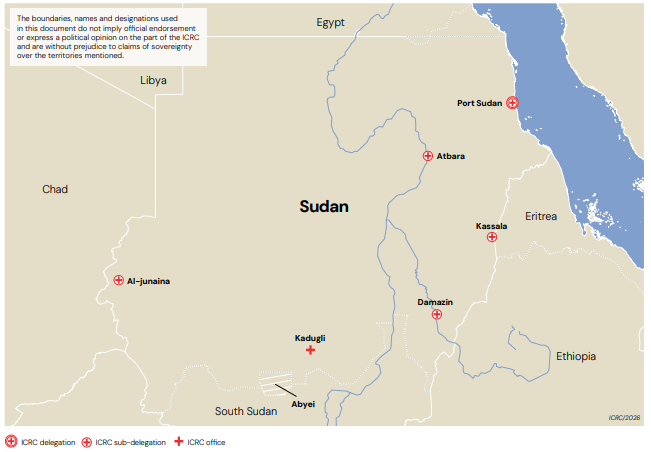
*We had to temporarily suspend operations at our office in Kadugli
By the Numbers:
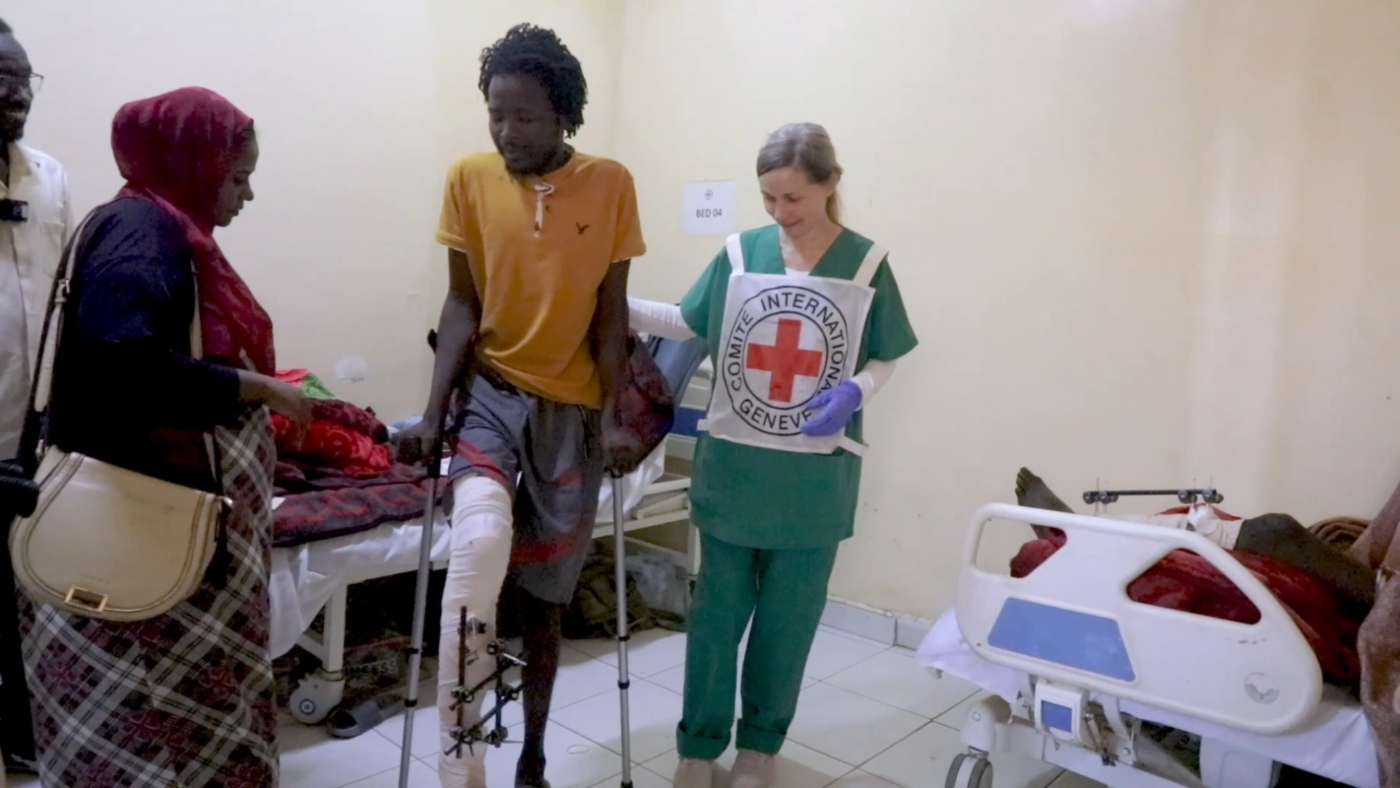
ICRC Medical Staff helping patient at Atbara Hospital, 200 miles northeast of Khartoum. Photo Credit: Ahmed Omer/ICRC
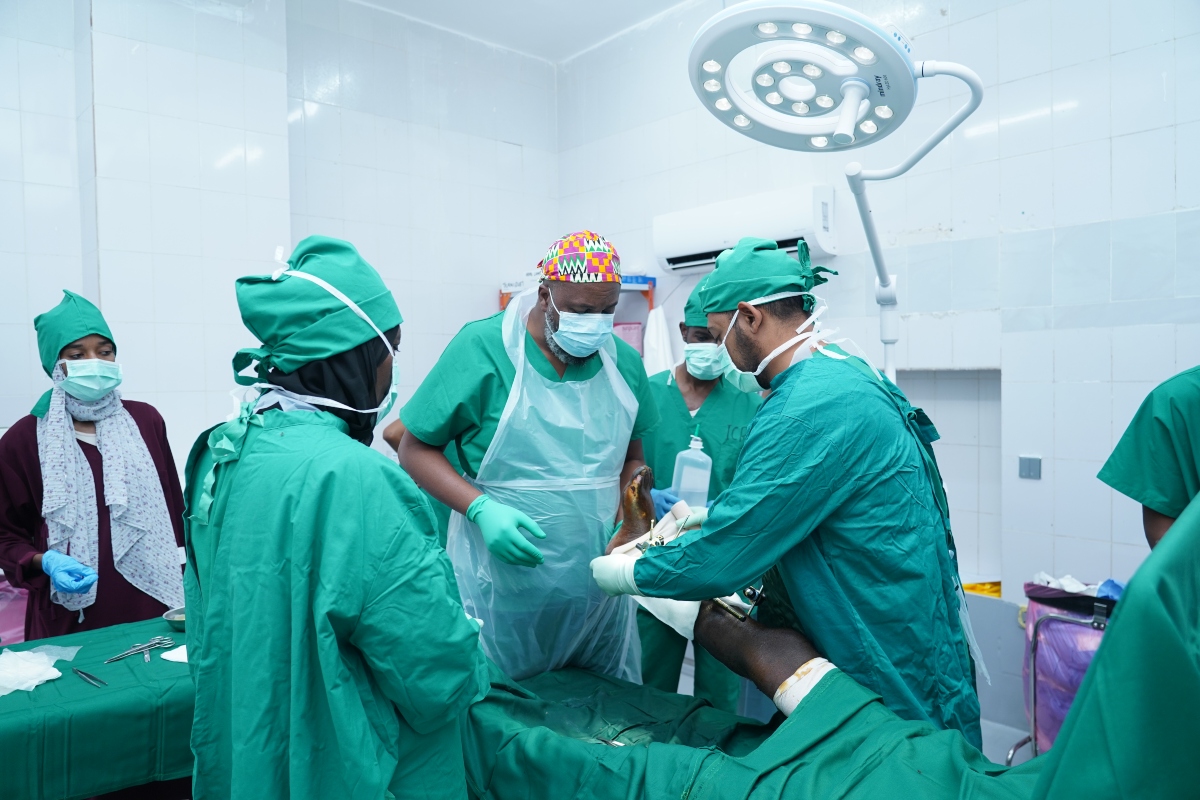
- Around 300,000 people admitted for wound treatment or surgical operations to the 7 hospitals where we provide technical, human resources, and financial support. We also deployed a mobile surgical team to Atbara Teaching Hospital, about 200 miles northeast of Khartoum.
- More than 4 million people in Khartoum and 1.4 million living in urban areas around the capital have access clean and safe drinking water to mitigate the spread of diseases because of our work with local authorities.
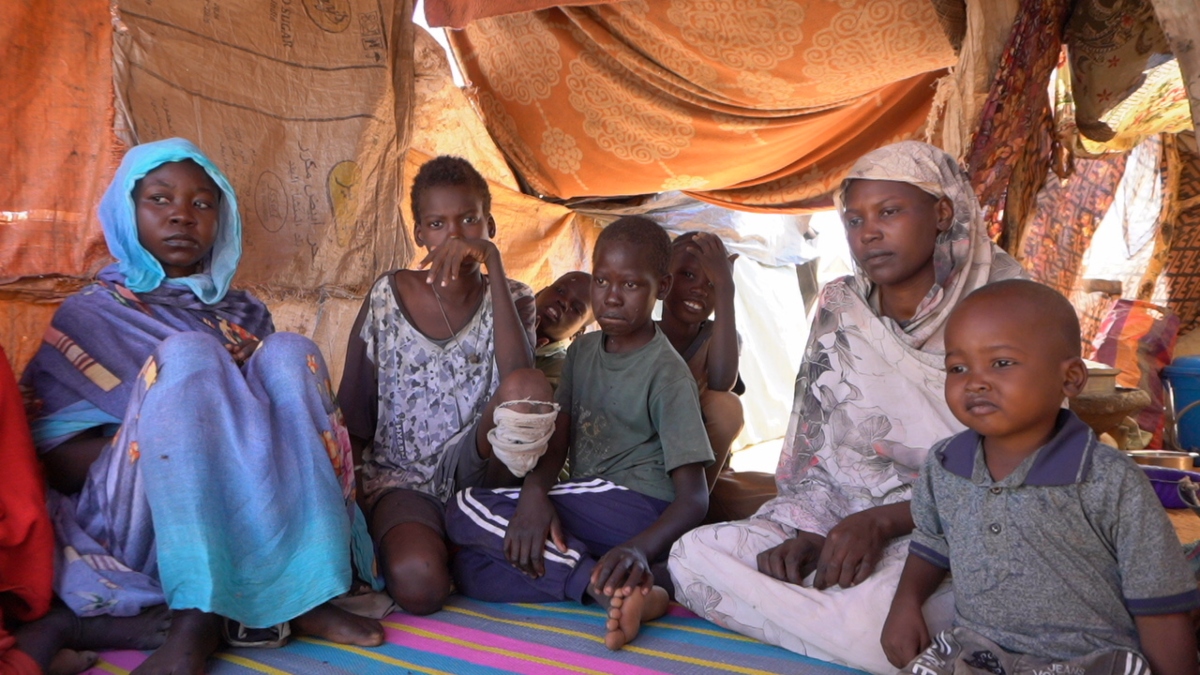
Displaced family in Tawila, western Sudan. Photo Credit: Mohammed Jamal/ICRC
- Around 100,000 farmers received cash grants for seeds and tools, and support to vaccinate livestock so farming families can start over again and protect their only source of income.
- Almost 50,000 people received emergency essential household items like food, cooking equipment, and bedding after the war tore them from their homes and land. And around another 425,000 people cash assistance for basic needs like food, health, and transport.
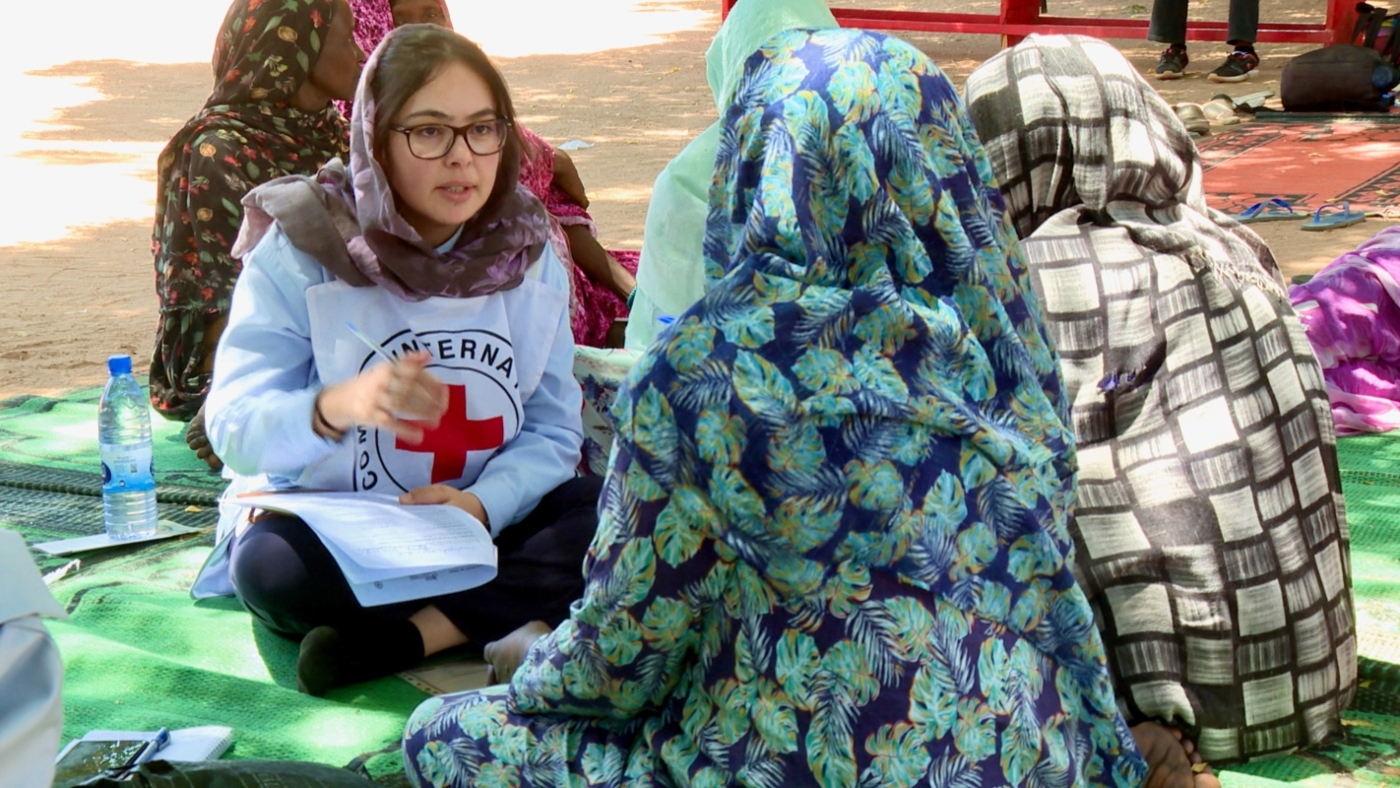
An ICRC delegate speaks with a family of Sudanese refugees searching for a missing loved one. Photo Credit: Abakar Oumar Cherif/ICRC
- More than 1,100 people reported a missing loved one in Sudan and more than 2,200 from abroad in 2025. At least 840 missing people were positively located in Sudan or abroad. With major support from the Sudanese Red Crescent Society, we worked to help more than 62,000 families establish or maintain contact amid ongoing violence.
- Since the conflict in Sudan began in April 2023, we have facilitated the transfer of over 650 detainees.
Calls to Action:
- The ICRC reminds parties and states with influence on this conflict that adhering to their obligations under international humanitarian law is a critical step toward building peace. Civilians in Sudan continue to bear the brunt of the conflict through direct attacks, displacement, and destruction of infrastructure. We stress that restoring respect for the law is the most immediate and concrete step to reduce suffering and halt hostilities long term.
- Protecting spaces like healthcare facilities, water and sanitation systems, schools, shelters, and food distribution points is crucial to prevent further suffering, maintain trust between the community and humanitarian workers, and uphold the principles that civilians and humanitarian operations must never be the target of attack. Safe humanitarian spaces and access for humanitarian workers is critical to enable long-term recovery and stability.
- The ICRC offers to facilitate the safe release and transfer of detainees, conduct regular visits to places of detention, and provide continuous support to families. All individuals deprived of their liberties must be treated humanely with access to food, water, medical care, and family contact.
Read more stories from on the ground:
Sudan: Families fleeing Al-Fasher recount harrowing violence as dire needs rise
Sudan: Reaching people in dire need as crisis deepens
ICRC voices: Dispatch from Darfur | International Committee of the Red Cross
WATCH: Reconnecting families in Tawila—a mother’s call to her son
WATCH: 80% of the population of Khartoum now has clean drinking water