

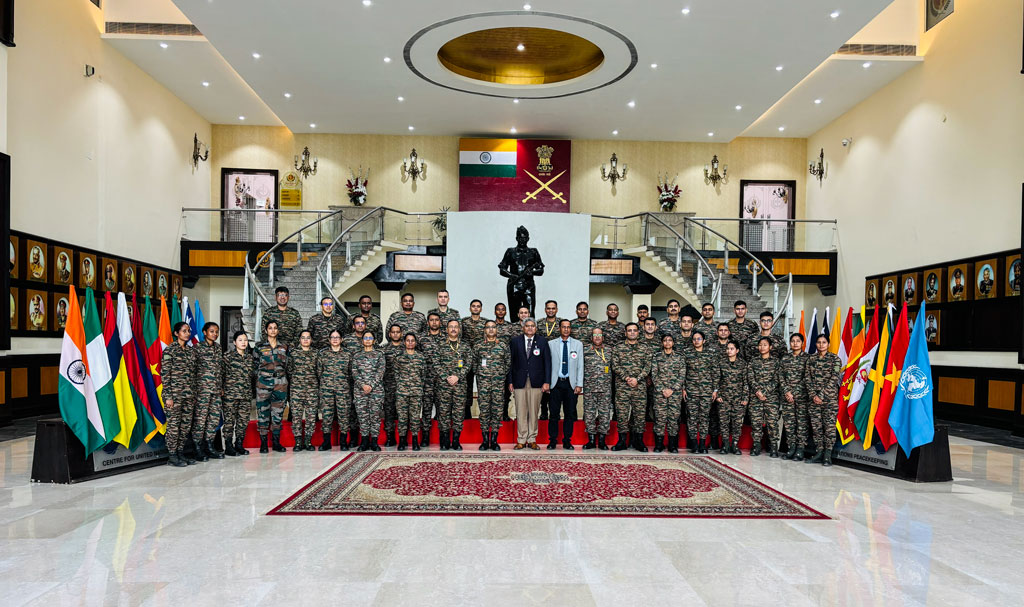
Conflicts around the world continue to pose significant challenges to global peace and security, placing peacekeepers in complex environments where respect for international humanitarian law (IHL) is essential. For the ICRC, engagement with peacekeepers is part of its broader dialogue with arms carriers and its mandate to promote knowledge of and respect for IHL and humanitarian principles. This is particularly important when working with highly trained officers and soldiers who are deployed to areas affected by armed conflict or tensions, and who may later return to their forces and institutions with operational experience.
Against this background, the ICRC New Delhi Regional Delegation partnered with the Centre for United Nations Peacekeeping (CUNPK) to conduct three sessions for Indian Army personnel with the objective of preparing future peacekeepers for the legal and humanitarian dimensions of contemporary operations.
Established by the Indian Army in New Delhi, CUNPK serves as India’s premier institution for tactical peacekeeping training. Each year, it trains over 12,000 personnel, including contingents, military observers, staff officers, and police personnel from India as well as friendly foreign nations. Additionally, CUNPK deploys Mobile Training Teams (MTTs) to partner countries to enhance their peacekeeping capabilities.
The first two sessions were held on 29–30 January and 16–17 April at the Manekshaw Centre in Delhi Cantonment. The January session saw the participation of 44 officers, ranging from Captains to Colonels, while the April session included 35 officers, five other ranks, and five female soldiers, including medical officers.
The training sessions aimed to provide participants with a comprehensive understanding of International Humanitarian Law (IHL), a fundamental pillar of ethical and effective peacekeeping. Also referred to as the law of armed conflict, IHL sets forth rules designed to protect individuals not participating in hostilities and to govern the conduct of warfare, including the means and methods employed.
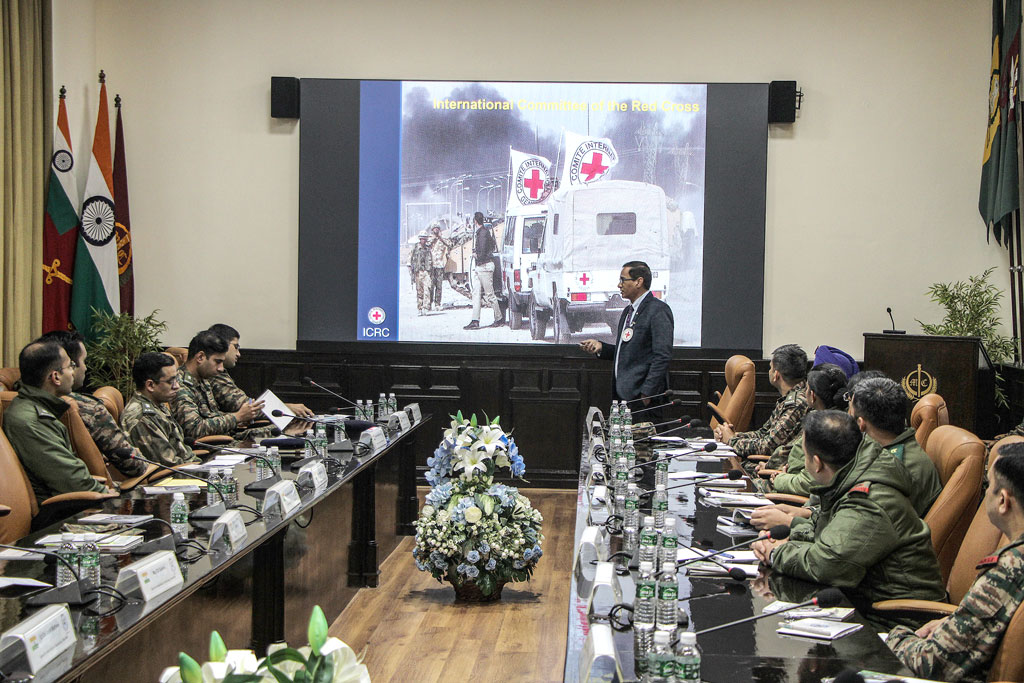
An ICRC session in progress for Indian Army peacekeepers at CUNPK, New Delhi, April 2026
A notable highlight of the April session was the inclusion of five female soldiers, who will serve as part of the Female Engagement Team (FET) in the United Nations Interim Security Force for Abyei (UNISFA). Female peacekeepers play a critical role in fostering trust and communication with local communities, particularly with women and children in conflict zones. Their presence enhances the effectiveness of peacekeeping missions by addressing gender-specific issues and promoting inclusivity.
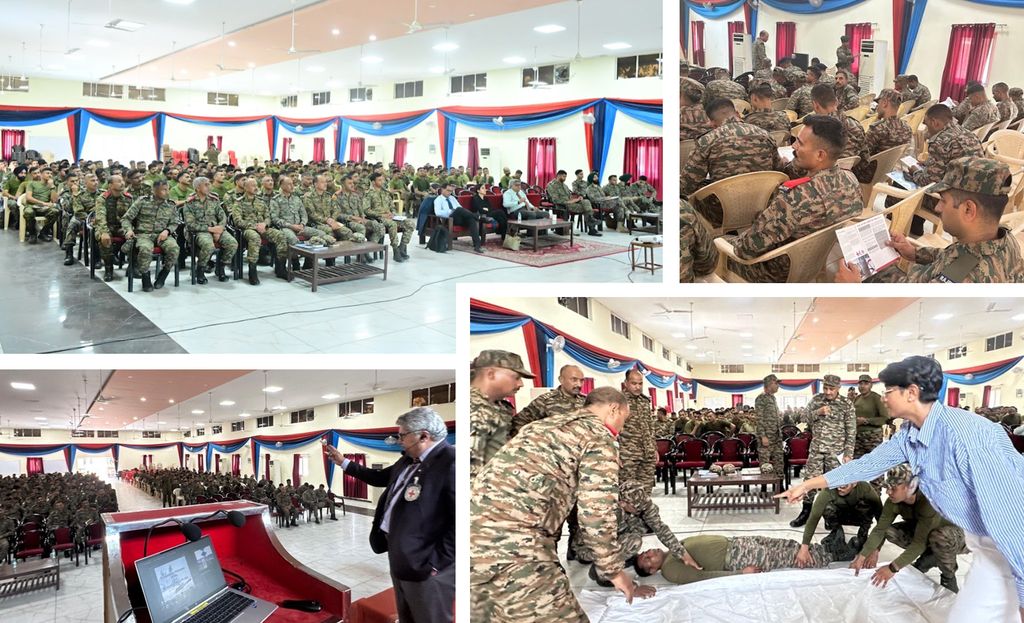
Scenario-based peacekeeping training in progress at CUNPK, New Delhi, June 2026
The third session, held on 3–4 June 2026 at the Cariappa Parade Ground in Delhi Military Cantonment, specifically targeted an Indian Army Infantry Battalion comprising 436 personnel preparing for deployment with the United Nations Interim Force in Lebanon (UNIFIL). The training focused on key topics, including the Red Cross Movement, International Humanitarian Law (IHL) in Peacekeeping Operations, the Protection of Civilians, Sexual Violence in Conflict, and the Dignified Management of the Deceased. The session was attended by 16 male and one female officer (ranks ranging from Captain to Colonel), 41 Junior Commissioned Officers, and 375 male and three female soldiers.
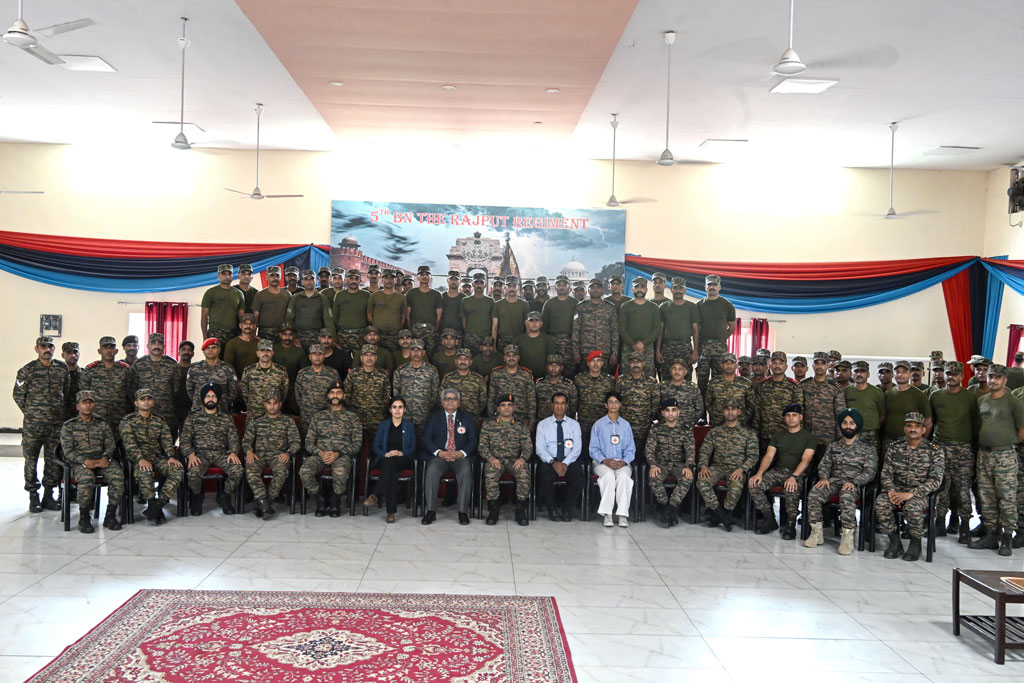
ICRC representatives and Indian peacekeepers of INDBATT during a group photograph at Cariappa Parade Ground, New Delhi, June 2026
The sessions thus brought together Indian Army personnel who are set to serve in key roles – Contingent Officers, Staff Officers, Military Observers, and members of Female Engagement Teams (FETs) – across various UN peacekeeping missions which include:
- United Nations Mission in South Sudan (UNMISS)
- United Nations Interim Force in Lebanon (UNIFIL)
- United Nations Organization Stabilization Mission in the Democratic Republic of Congo (MONUSCO)
- United Nations Disengagement Observation Force (UNDOF)
- United Nations Multidimensional Integrated Stabilization Mission in the Central African Republic (MINUSCA)
- United Nations Interim Security Force for Abyei (UNISFA)
During all three sessions, participants were also introduced to the Global Initiative to Galvanize Political Commitment to IHL and its associated workstreams. The discussions emphasized the importance of protection-centric dialogue with arms carriers to ensure compliance with IHL principles during peacekeeping operations.
The Geneva Conventions require States, “in time of peace as in time of war, to disseminate the text of the present Convention as widely as possible” and to include its study in military instruction. The ICRC’s collaboration with CUNPK is a practical contribution to the implementation of this obligation. By engaging with peacekeepers, the ICRC helps strengthen their understanding of IHL and its application in peacekeeping operations, while supporting dialogue on how the law can guide operational practice in complex environments. Such training helps prepare peacekeepers for the legal and humanitarian challenges they may face during their missions.