

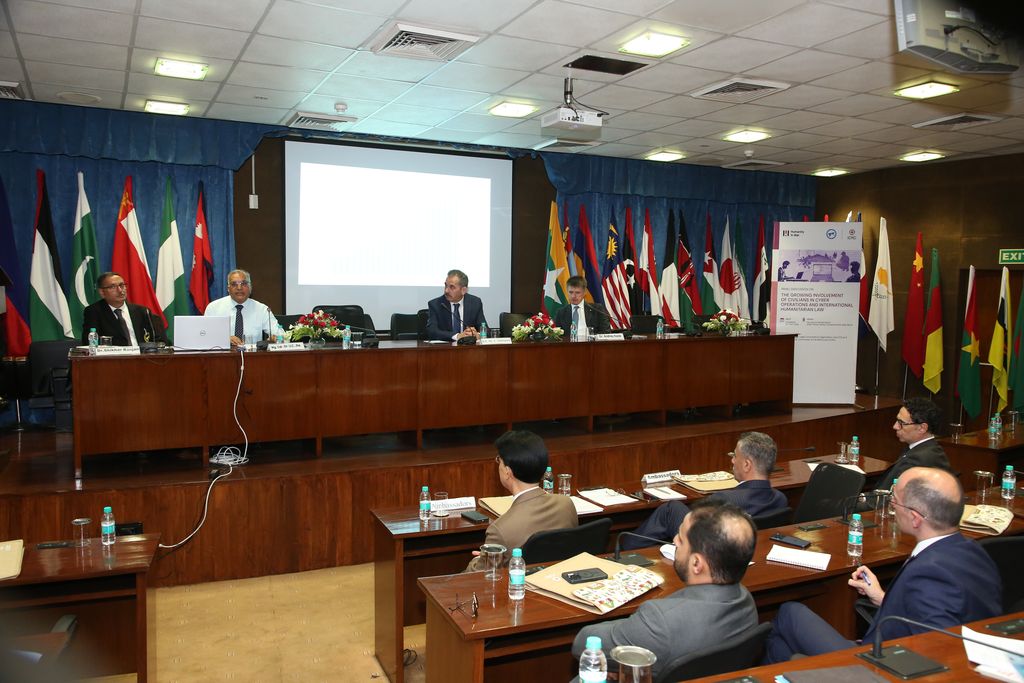
On 21st May 2026, the Asian-African Legal Consultative Organization (AALCO) and the International Committee of the Red Cross (ICRC) jointly hosted a panel discussion on the theme “The Growing Involvement of Civilians in Cyber Operations and International Humanitarian Law”. The event, held at the AALCO Secretariat in New Delhi, brought together diplomats, legal experts, military officials, and academics to deliberate on one of the issues that are being discussed under the Global Initiative to Galvanize Political Commitment to International Humanitarian (GIIHL)Law’s Workstream 6, which relates to the use of Information Communication Technologies (ICTs) in armed conflict and international humanitarian law (IHL).
The inaugural segment of the event featured remarks by His Excellency Dr. Kammalinne Pinitpuvadol, Secretary General of AALCO and Mr. Alfonso Verdu Perez, Head of the ICRC New Delhi Regional Delegation for India, Nepal, Bhutan and the Maldives.
This was followed by a presentation by Mr. Andrey Kozik, Regional Legal Advisor for South Asia at the ICRC, on the report “IHL and the Growing Involvement of Civilians in Cyber Operations and Other Digital Activities During Armed Conflict.” Co-authored by the ICRC and the Geneva Academy of International Humanitarian Law and Human Rights, published in 2025.
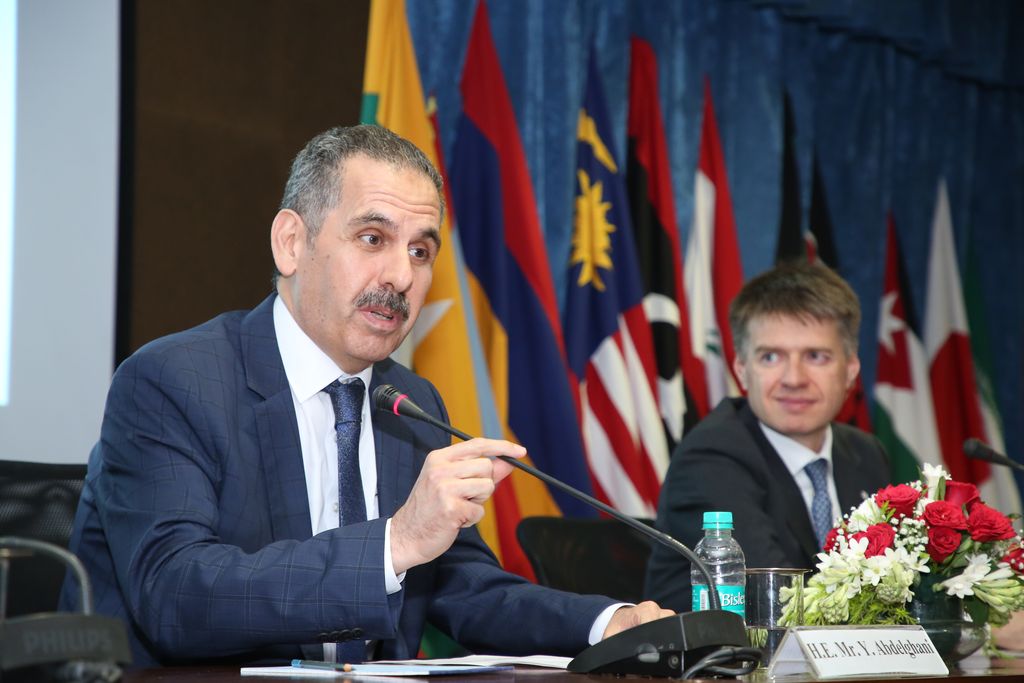
The presentation of the report was followed by a discussion among panelists that included His Excellency Yousef Abdelghani, the Ambassador of the Hashemite Kingdom of Jordan to India, Wg. Cmdr. (Dr.) UC Jha, Secretary General of the Indian Society of International Law (ISIL) and Prof. Zhixiong Huang of the Wuhan University, China.
A timely dialogue on cyber operations and IHL
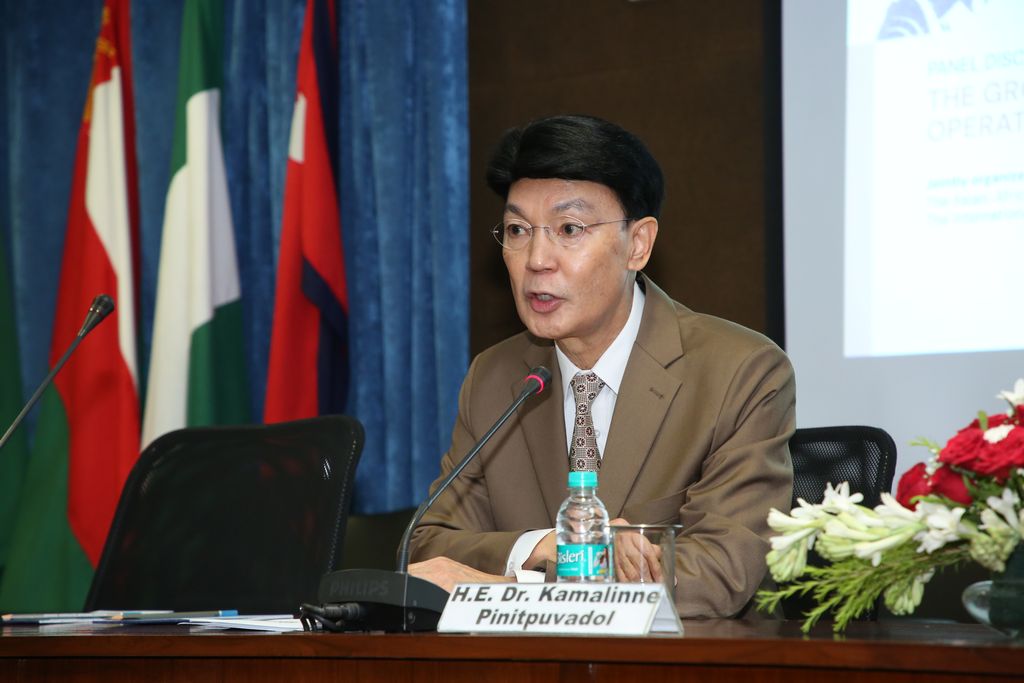
The event commenced with opening remarks from His Excellency Dr. Kammalinne Pinitpuvadol, Secretary General of AALCO, who acknowledged the partnership between AALCO and the ICRC. Noting that this year marks seventy years since AALCO’s founding, he reaffirmed AALCO’s longstanding commitment to serving as a platform for Asian and African States to engage collectively on evolving questions of international law, and provide a bridge between regional perspectives and global legal developments. He highlighted the growing importance of addressing the humanitarian consequences of cyber operations, noting that cyberspace has become a new operational domain where actions conducted far from traditional battlefields can have significant real-world impacts. H.E. Dr. Pinitpuvadol also commended the active participation of AALCO member states in the GIIHL and noted that three of the six founding member states of the GIIHL are also AALCO members, reflecting the region’s active role in shaping the global discourse on IHL.

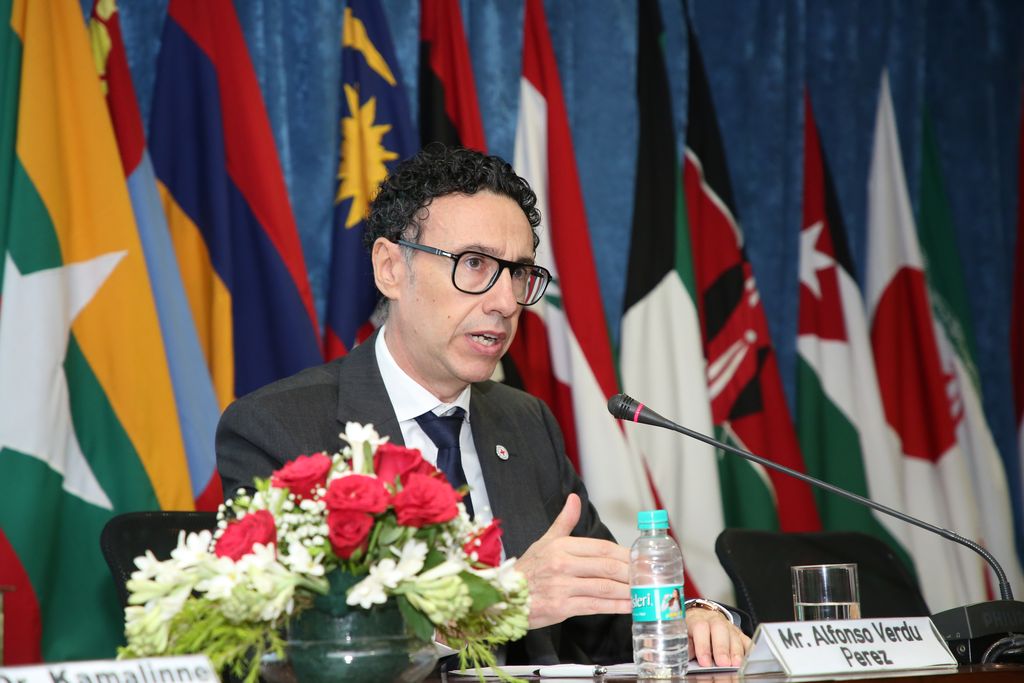
Mr. Alfonso Verdu Perez, Head of the ICRC New Delhi Regional Delegation for India, Nepal, Bhutan and the Maldives, in his welcome address, highlighted the leading roles taken on by AALCO member states in the GIIHL. He observed with appreciation that out of the 27 States co-chairing the seven workstreams of the Global Initiative, 11 are AALCO members, and that each of the seven workstreams includes at least one AALCO member State as a co-chair. Emphasizing the challenges arising from the increasingly blurred distinction between combatants and civilians in cyberspace, which creates significant risks for the protection of civilians under IHL, he quoted remarks from both the Permanent Representative of India to the UN, Ambassador Parvathaneni Harish, and the ICRC President Ms. Mirjana Spoljaric, at the same meeting during the UN Security Council Annual Open Debate on Protection of Civilians in Armed Conflict in New York:


Key findings on civilians and cyber operations
The inaugural segment of the afternoon was followed by a presentation by Mr. Andrey Kozik, Regional Legal Advisor at the ICRC, on the report “IHL and the Growing Involvement of Civilians in Cyber Operations and Other Digital Activities During Armed Conflict,” co-authored by the ICRC and the Geneva Academy of International Humanitarian Law and Human Rights, and released in November 2025. The report explores the complex legal and ethical challenges posed by the increasing involvement of civilians in cyber operations.
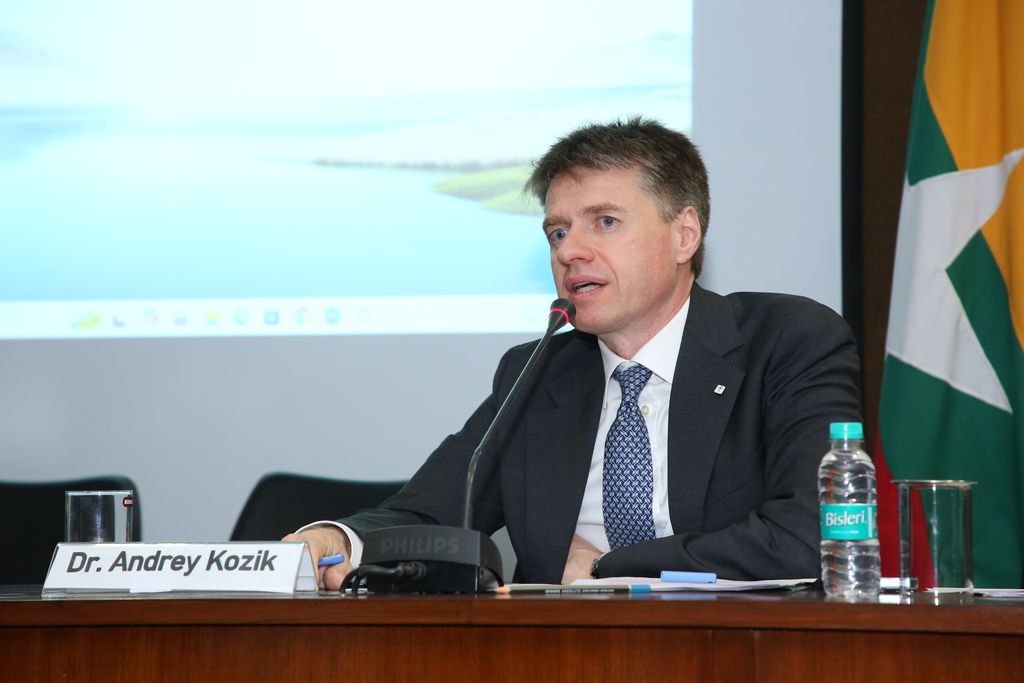
In his presentation, Mr Kozik highlighted key findings and recommendations of the report, as well as the contributions of technical and thematic experts from across the world. Notably, he emphasized the legal threshold at which civilians may be considered as directly participating in hostilities and thus losing their protections from attacks. He underlined the obligation incumbent on states to not only respect IHL but also ensure respect for IHL and highlighted the due diligence obligations regarding hacker groups and private technology companies operating within their jurisdiction. He also addressed the risks and challenges of the dual use infrastructure, which may render at risk of attack any infrastructure that is being used for both military and civilian purposes. He also approached the problem from ethical point of view sharing examples of certain hacker groups having undertaken to comply with IHL in their operations, accepting not only legal but also moral responsibility for the consequences of their actions. In conclusion, he emphasized the importance of abiding by existing IHL.
Insights from the Panel Discussion
The report presentation was followed by the panel discussion, moderated by Dr. Shikhar Ranjan, Director of Legal Affairs at AALCO.
His Excellency Yousef Abdelghani, Ambassador of the Hashemite Kingdom of Jordan to India noted with great concern, that despite the abundance of rules in international law and IHL to ensure the protection of civilians, non-compliance with these rules appears to be an increasing trend in ongoing conflicts. Emphasizing the necessity to ensure that there is no impunity for IHL violations, he explained the need to form coalitions against such non-compliance as being one of the reasons why the Kingdom of Jordan is co-hosting the High-Level Meeting to Uphold Humanity in War in Amman later this year, in partnership with the ICRC.
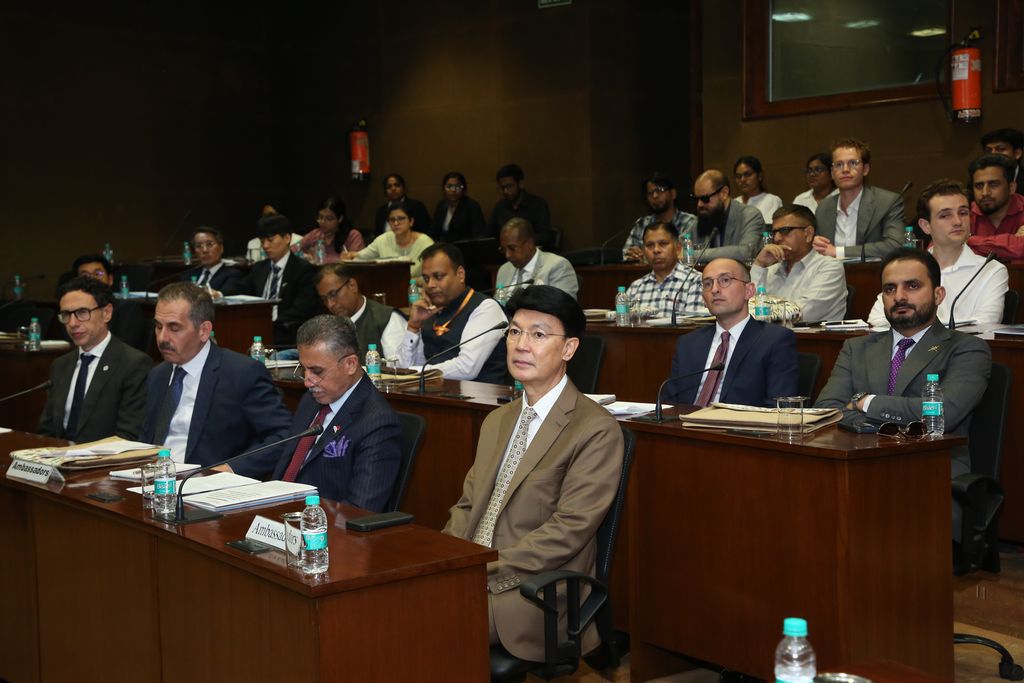
Wg. Cmdr. (Dr.) UC Jha’s remarks took the audience through the essence of IHL rules, their development over the years, and their utility in distinguishing between combatants and civilians. He dealt with the practicalities of the blurring of the distinction between combatants and civilians and delved into the challenges that arise in applying IHL principle of distinction to the concept of dual-use items as well as civilians directly participating in hostilities. He also emphasized the need for all States to develop cyber warfare doctrines and clarify how existing IHL applies on the digital battlefield, with a view to respect and ensure respect for IHL.
Prof. Zhixiong Huang focused his remarks on Chapter IV of the Report, noting that the increasing trend of private technology companies’ provision of services and infrastructure to parties to conflicts raises difficult questions for the IHL rules on targeting to grapple with. He added that the emergence of new technologies at the intersection of artificial intelligence (AI) and cyber have significantly lowered the threshold of expertise required for civilian involvement in offensive and defensive cyber operations. He observed that given these trends, it becomes even more important to clarify how IHL applies in the digital battlefield, including especially the principles of distinction, proportionality and and examine whether new rules may be required.
A call for collective action
Participants raised questions regarding, among other things, the respective roles of diplomats and lawyers in ensuring respect for international laws, the need for accountability mechanisms, ongoing UN processes discussing the interplay of international law, including IHL, and its application in cyberspace, leading to a lively exchange of views.
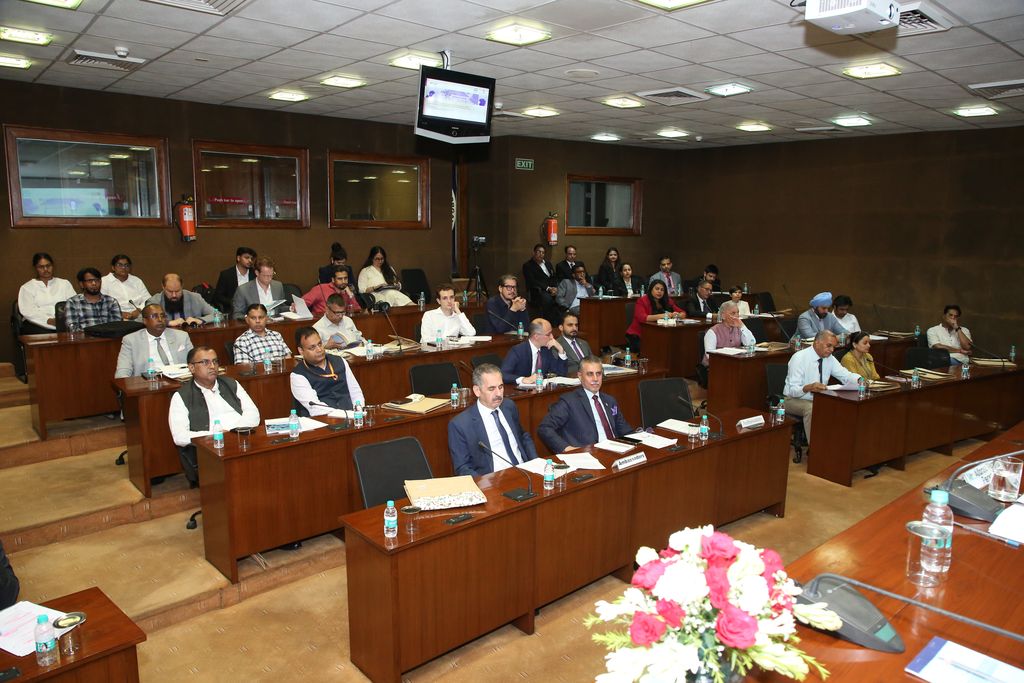
His Excellency Mr. Yousef Abdelghani concluded the discussion among panelists by calling upon all States, including all AALCO member States, to ensure robust representation at the High-Level Meeting to Uphold Humanity in War, to be hosted by Jordan in late 2026.
The vote of thanks delivered by Ms. Sakura Ozaki, Deputy Secretary General, AALCO brought the afternoon’s proceedings to a close.
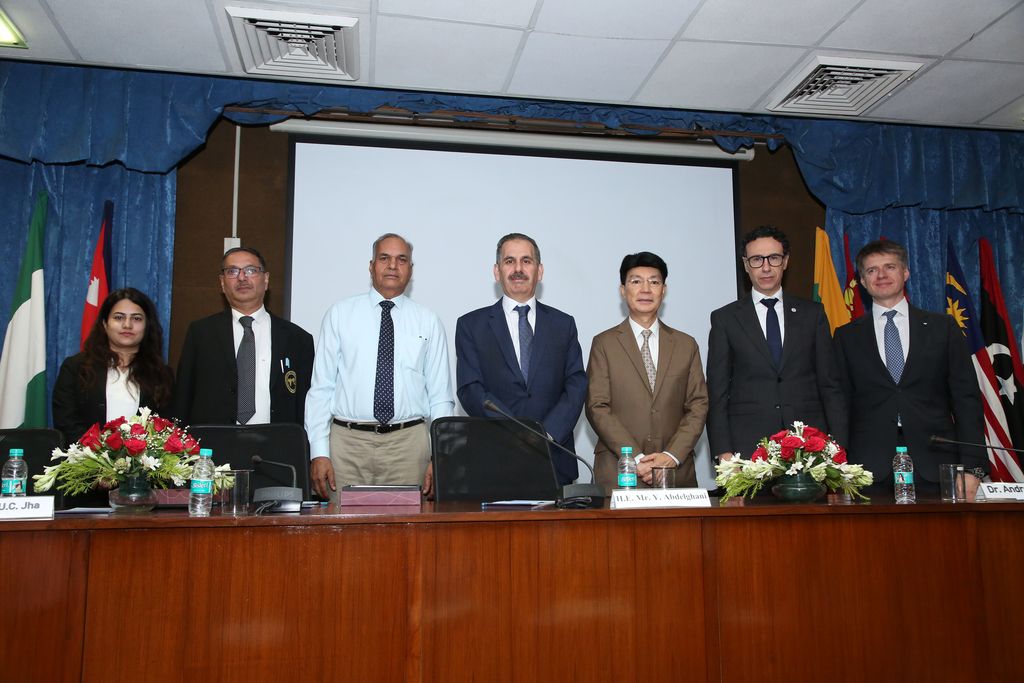
The panel marked a significant step in fostering discussion to address the pressing challenges of cyber operations and their implications for International Humanitarian Law. As the world continues to grapple with the complexities of modern warfare, such dialogues remain crucial in ensuring that the principles of humanity are upheld in all domains, including cyberspace.