

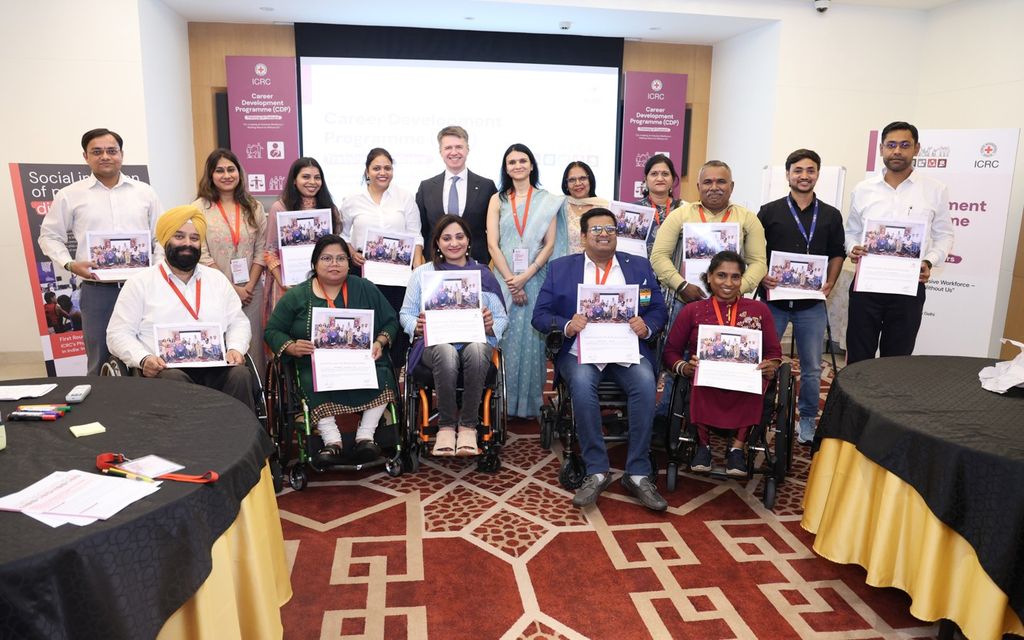
From 22–25 June 2026, the ICRC held a Training of Trainers (ToT) for its Career Development Programme (CDP) 1.0 in New Delhi, under its Physical Rehabilitation Programme (PRP). Twelve participants completed the training, drawn from a mix of organizations, including Youth4Jobs (Kolkata and Mumbai), Mobility India (Bengaluru), Wheelchair Basketball Federation of India (Coimbatore and Manipur), Voluntary Medicare Society (Srinagar), Lemon Tree Hotels (Delhi), Aptia Group (Noida), the Paralympic Committee of India, the National Career Service Centre for Differently Abled (Karkardooma, Delhi), and the International Federation of Red Cross and Red Crescent Societies (IFRC).
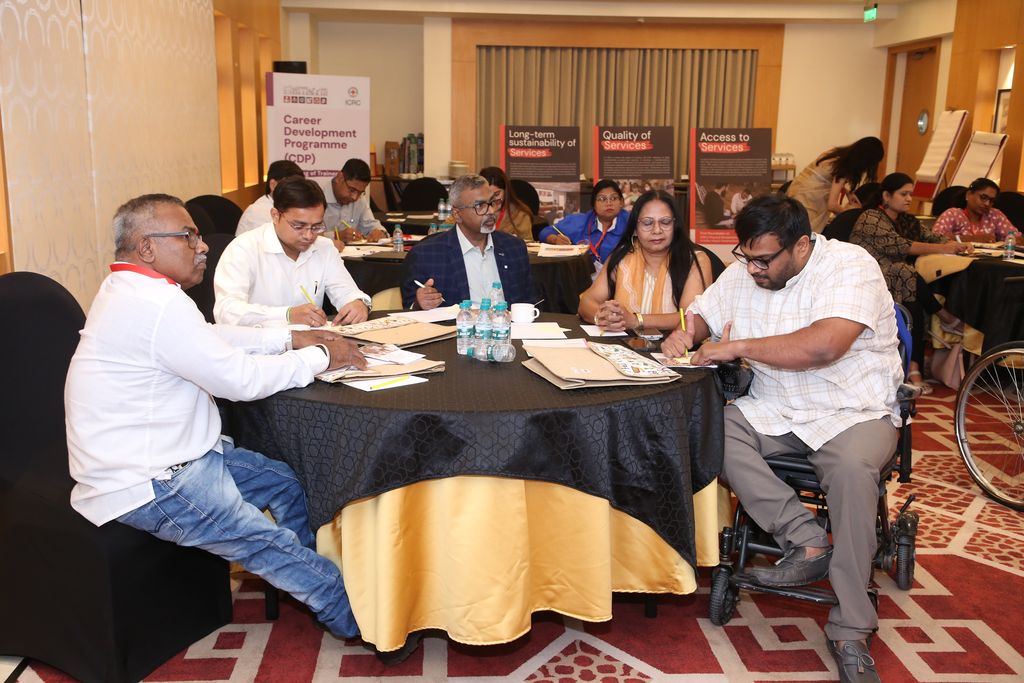
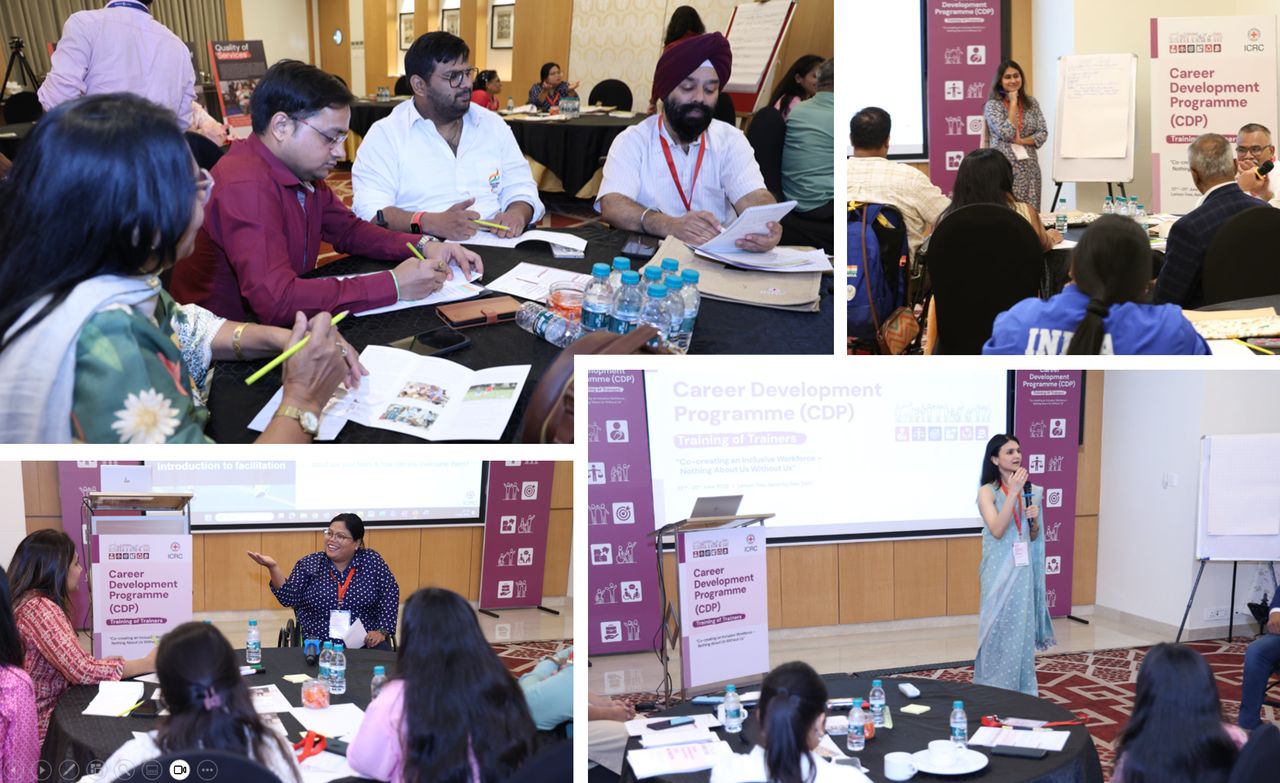
The group itself reflected the range of work involved in getting persons with disabilities (PwDs) into formal employment, with trainers, programme managers, social inclusion professionals, HR specialists, para-athletes, and senior programme officers sitting in the same sessions. Training combined instruction with practice – participants ran facilitation sessions themselves, then received peer and facilitator feedback. By the end, each participant was able to identify the first step that they will undertake in order to ensure CDP`s integration within their own organization.
Closing the skills gap
CDP 1.0 is a job-readiness curriculum, developed by the ICRC in collaboration with the Adecco Group – the world’s second-largest human resources firm – that helps PwDs identify their skills, match them to suitable roles, and prepare for the expectations of a professional workplace. The ToT model is built to expand the pool of trained CDP facilitators as each of the twelve trained facilitators can now deliver, contextualize, monitor, and integrate CDP sessions within their own institution, contributing to employability opportunities for PwDs.
The training also gave participants from diverse organizations a platform for collaboration and knowledge sharing. This intersectoral mix – para sports associations, rehabilitation and vocational training organizations, international humanitarian bodies, and the private sector – is essential for building an inclusive ecosystem for meaningful employment of PwDs, helping bridge the skills and opportunities gap faced by both PwDs and employers. Integrating initiatives like CDP offer a platform to demonstrate the comprehensive impact of physical rehabilitation efforts, helping partners/organizations leverage CSR funding opportunities—particularly those aligned with the priority areas outlined in the CSR Rules, 2014.
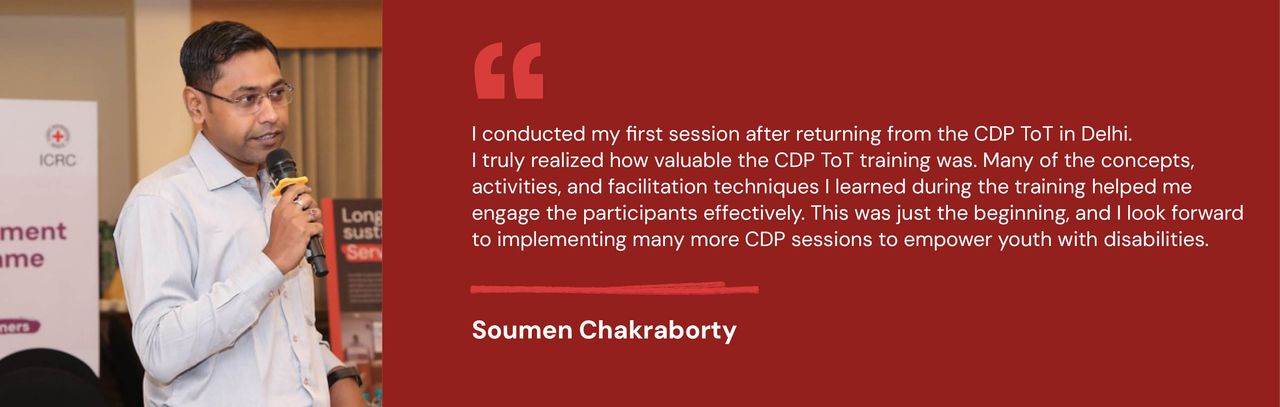
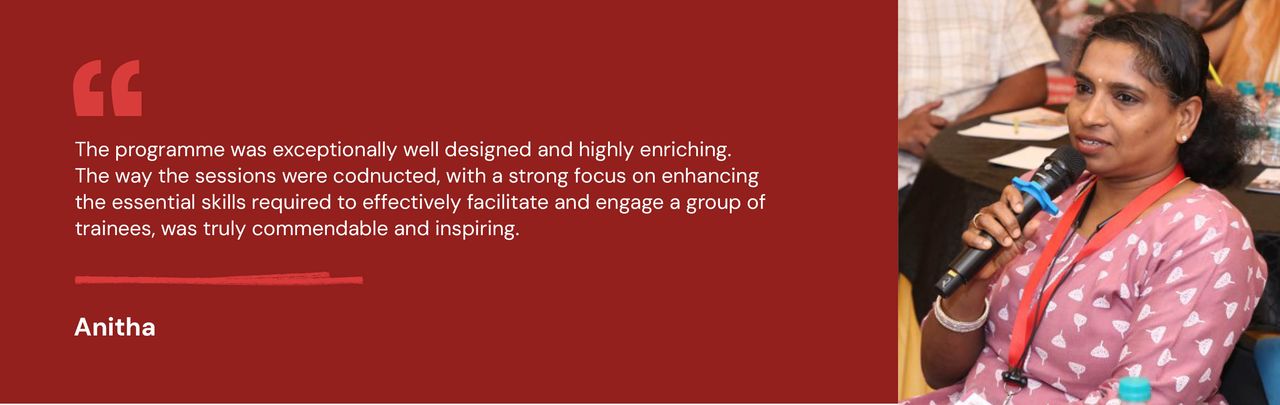
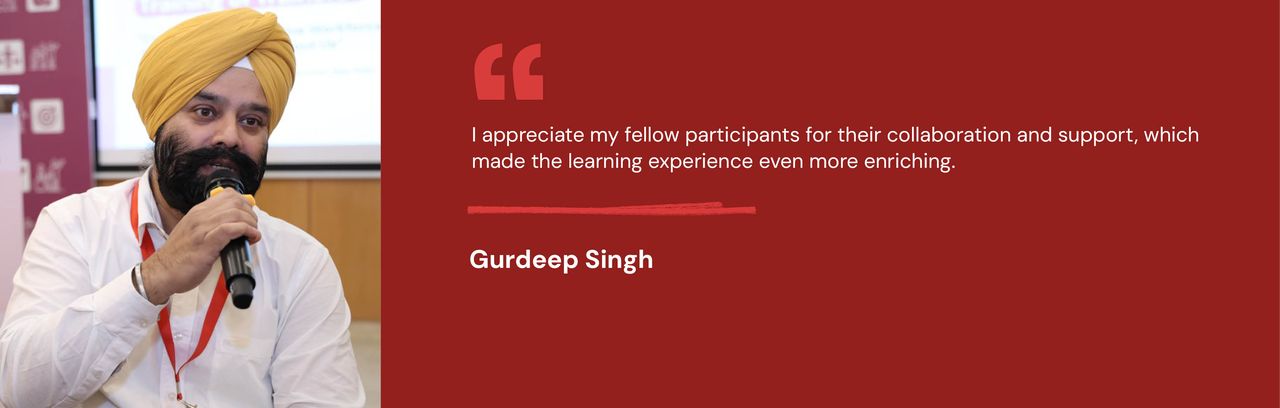
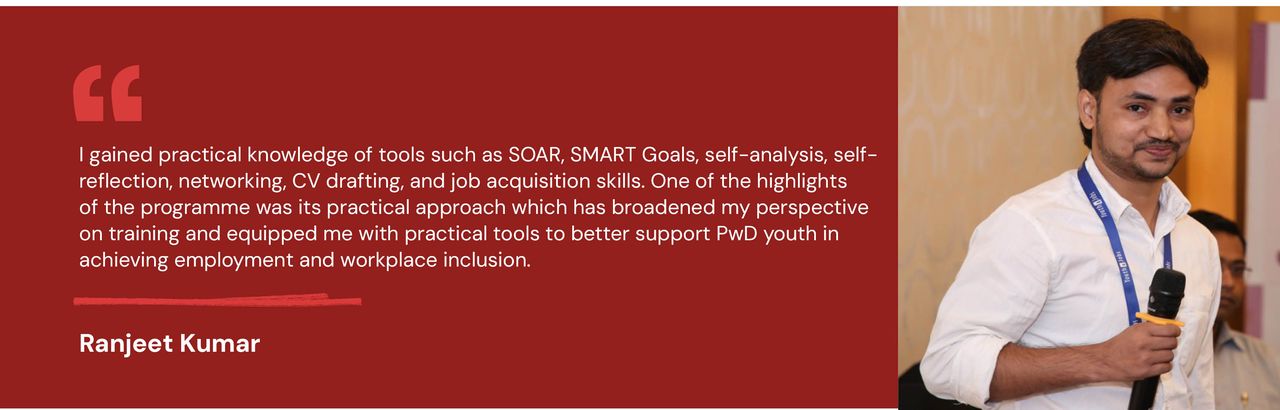
Here is the feedback participants shared after completing the training –
From para-athletes to a growing partner network: the story so far
PRP India has run social inclusion initiatives through para sports, vocational training, and employability since 2014, built through local partnerships, as part of the ICRC’s wider Physical Rehabilitation Programme active in dozens of countries worldwide. Over time the focus broadened from these direct activities toward strengthening partner organizations’ own capacity to sustain them. CDP 1.0 emerged from this shift, originally built for para-athletes, it has been delivered virtually and in person since 2022. Two virtual ToT phases followed in 2025, aimed specifically at building partners’ ability to integrate CDP into their own social inclusion interventions, of which the June 2026 New Delhi session is the latest iteration.
Way ahead
The immediate next step is implementation, with participants leaving the training with identified first step for integrating CDP 1.0 into their organizations’ existing social inclusion initiatives. The training also opened channels for continued knowledge-sharing across the participating organizations, given the range of sectors they represent.