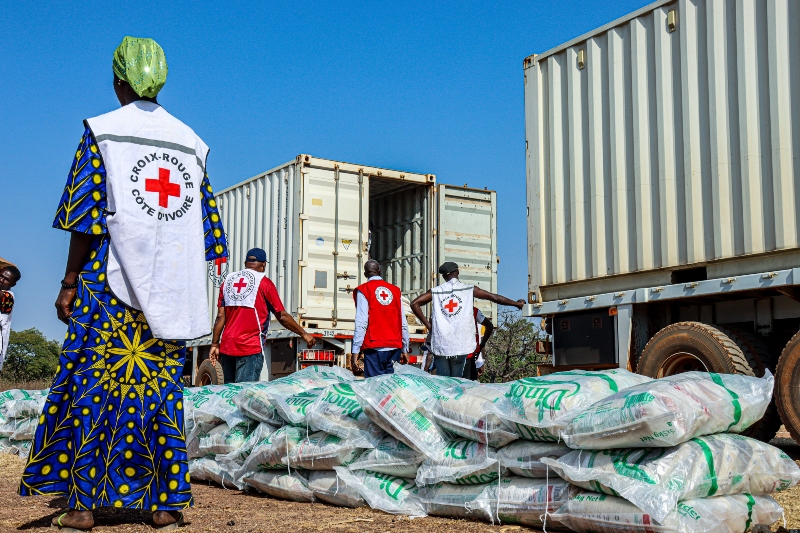
What are the principles guiding humanitarians in their work? And do they need a refresh? Today on the podcast, we learn more about the principles guiding humanitarian action. Then we meet Dr. Paul Spiegel, Director of the Center for Humanitarian Health at the Johns Hopkins School of Public Health, who is reimagining how the humanitarian system works.
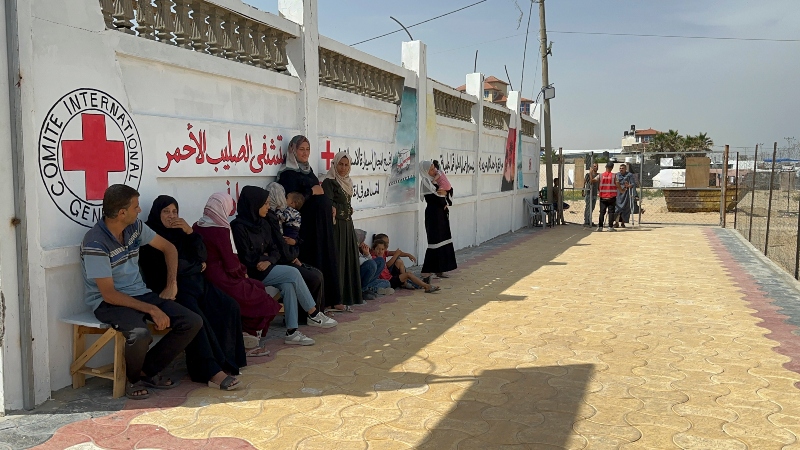
Gaza Strip, Rafah, ICRC field hospital. Children and adults are waiting to be treated. (2024/ICRC/Abed Shana’a)
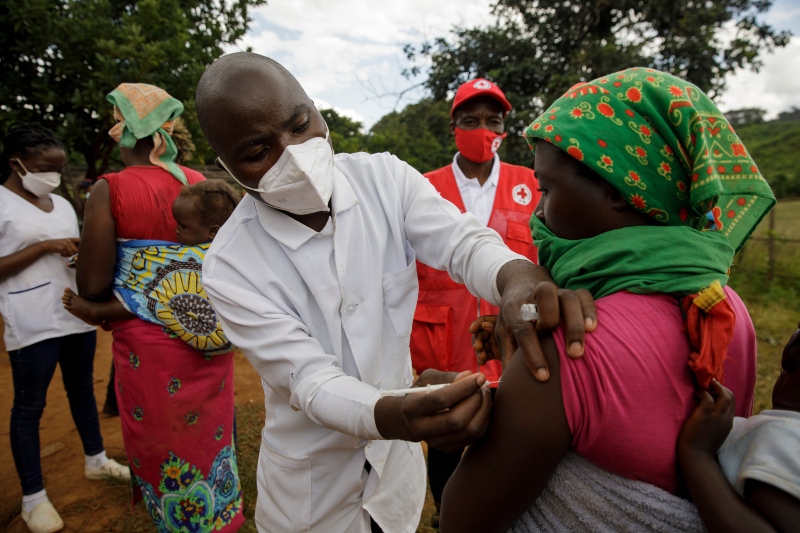
Manica province, Gorongosa district, Machongoizana village. An ICRC mobile health team, composed of health technicians and nurses, vaccinates people in isolated communities in the central provinces and advises them on COVID-19 prevention. (2022/ICRC/Ricardo Franco)
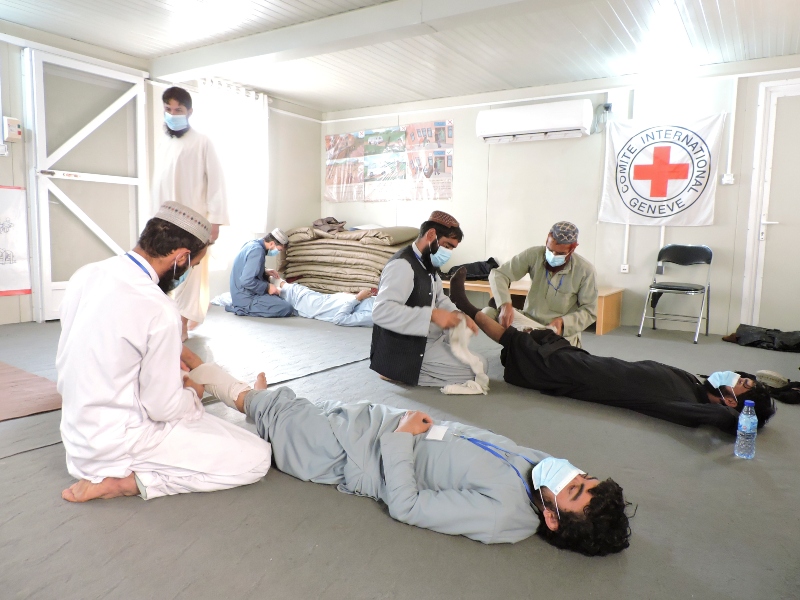
Kandahar, ICRC sub-delegation. The ICRC gives a first aid training to journalists working in conflict zone. (2020/ICRC/Fawad Ahmad Fozan)
Additional Information
Lancet Commission on Health, Conflict, and Forced Displacement
Transcript for the hearing impaired
[BONESSI] What are the principles guiding humanitarians in their work? And do they need a refresh? Today on the podcast, we learn more about the principles guiding humanitarian action. Then we meet Dr. Paul Spiegel, Director of the Center for Humanitarian Health at the Johns Hopkins School of Public Health, who is reimagining how the humanitarian system works.
[SPIEGEL] “The humanitarian system that was created for another time is clearly not fit for purpose. And while it’s incredibly painful, I do also see there is, I think this could be an opportunity for serious change because in my view, change.”
[BONESSI] I’m Dominique Maria Bonessi and this is Intercross, conversation about conflict and the people caught up in it.
[INTERCROSS INTERLUDE MUSIC]
[BONESSI] I want to start with a bit of a personal story.
I came to the International Red Cross and the world of humanitarian work with a background in journalism. A couple of months into the job, I went to this week-long course called the Staff Integration Program. It’s basically a 1-0-1 course to learn everything you need to know about the ICRC and what we do. The biggest thing you learn about in this course is what humanitarians like to call NIIHA.
[ANDREA] “NIIHA neutral, independent, impartial humanitarian action.”
[BONESSI] That’s Andrea Harrison, my boss and a proud Texan.
[ANDREA] “NIIHA could, could definitely sound like something, a Texan someone would say.”
[BONESSI] Andrea is deputy head of the ICRC’s Washington Delegation and head of operations, She’s been with the organization for the past 15 years and is probably the best person to explain why principled humanitarian action is important beyond just being humanitarian jargon…
[ANDREA] “ It’s actually just a way of talking about the, the way in which, organizations like the International Committee of the Red Cross, but other humanitarian actors, should be working in context, especially in conflict, but also disasters, and other operations around the world. So that they are delivering in a way that is predictable, and is understandable for populations who are receiving that aid.”
[BONESSI] Andrea says while those may sound lofty and elitist, they have real consequences for those populations and humanitarian workers on the ground. So just quickly to run through an abridged version of the meaning of each principle Andrea is going to break them down into examples.
So Neutrality means not taking sides whether it be political, ideological or warring sides in a conflict. Then there’s independence , which basically means humanitarian actors must be truly autonomous from authorities or any other influence or political agenda. The only agenda that matters is the humanitarian one.
[ANDREA] “ When we accept funds from a particular donor, that that donor understands that just because they give us an amount of money that doesn’t give them the right to say what we do with that money or to be able to control what we do on the ground.”
[BONESSI] Impartiality…
[ANDREA] “It’s really about the humanitarian need or the medical need, and you’re showing impartiality based on need rather than who the person or what party they belong to.”
[BONESSI] And finally, humanitarian action is more about remembering the humanity in ourselves and others. Which comes back around to why these principles are still relevant because without them…
[ANDREA] “ We lose sight of humanity, we lose sight of impartiality and we end up in these cycles reciprocity . It’s not about reciprocity.”
[BONESSI] Or reciprocal violence in which one group does something to another groups, so that group strikes back, and the cycle goes on and on.
[ANDREA] “It’s about doing the right thing.”
[BONESSI] Doing the right thing, even when it’s hard.
We’re going to take a quick break and hear from our podcast friends at Public Health on Call from the Johns Hopkins School of Public Health. We’ll be back in a moment with a conversation between ICRC’s Head of Delegation for US & Canada Fabrizio Carboni and Dr. Paul Spiegel, director of the school’s center for Humanitarian Health.
[PUBLIC HEALTH ON CALL TRAILER]
[BONESSI] Welcome back. We just heard from my boss Andrea Harrison, about why humanitarian actors work through principled action. Now you’re going to hear a conversation between Fabrizio Carboni, head of the ICRC’s US & Canada Delegation and Dr. Paul Spiegel on how some of those principles are being reimagined.
In addition to his full-time professorial duties, Dr. Spiegel has also worked in an advisory capacity with organizations like the United Nations Refugee Agency in Cairo for the crisis in Gaza and the World Health Organization in Poland during the onset of the conflict between Russia and Ukraine and Afghanistan during the transition of government.
He is currently chairing the Lancet Commission on health, conflict, and forced displacement. According to the commission’s website, it’s goal is to “rethink and reimagine the strategies, governance, and delivery modes of humanitarian aid by proposing systemic changes and bold recommendations that influence global humanitarian and health agendas.” Fabrizio starts the conversation by taking a long look at Dr. Spiegel’s career to understand his current thinking about the humanitarian system.
[FABRIZIO] I’m really happy to have this discussion with you. I looked a bit at, at your work and biography, and I think you have a very interesting, position because you have two foot in during a year or two, and then you have two foot out. A year or two dedicating your work on, on academics and reflecting on humanitarian action. So it gives you a very, very privileged, uh, point of view. And, and I would like, just as an intro, what do you see from your, your unique point of view? What do you see affecting humanitarian action, but not only.
[SPIEGEL] Great.Well, firstly, thanks so much for, for having me. You know, we’re in a very difficult and very challenging situation, so how I may have answered that question, uh, before January and now may be different.
I would say right now we are at a really, a really serious situation where. Because of what is happening, starting with the Trump administration, but then following by Europe where we’re having a reduction, dramatic reduction in funding, it’s affecting most, first and foremost, the people on the ground.
The people that you know need us most, those, those vulnerable women, children, men, everywhere, but it also will have a dramatic effect. In the longer term, and I’m thinking not just in terms of the NGOs and the UN agencies and international organizations like ICRC, but all the way down even to or up or down to academics.
And so it’s going to have an effect not just immediately a. But longer term in terms of the research that’s not going to get done, and therefore reduction in hopefully some of the ways to improve cost effectiveness and just the evidence base for interventions themselves.
[FABRIZIO] Can I a bit challenge you on the fact that you, you take January as the date, uh. Because I mean, yes, there is obviously, at least for the time being a disinvestment from the US administration. I mean there is foreign aid and then there is humanitarian aid because that’s another issue I would like to discuss with you is that we mixing a bit everything. So there is this, this investment, but I also believe that there was something preceding and that actually. It’s an accelerator. It’s more messy than what I, I expected. But at the same time, I believe that there are longer trends and, and yeah, I mean this is the aspect I would like also to explore. Uh, I think there is a kind of boiling frog situation for the humanitarian sector. And, and now we focus on the new US administration. But I would probably challenge this. I, I think the humanitarian consensus collapsed already, uh, before that.
And, and then there is question. You know, we focusing mainly on, on western actors, western donor, and I would say that I’m, I’m questioning our success with the rest of the world. So, I mean, just to give you a, I mean a, a taste of, uh, where I stand and, also what I would like to, to unpack with you.
[SPIEGEL] Yeah, no I agree. And I, I don’t yet know where, when you want to jump into some of this, but in 2000, so I was with UNHCR, the High Commissioner for refugees for nearly 15 years. I was there working primarily on health and then eventually moved to, directing most of the technical sectors for the organization.
In 2017, I moved from, uh, U-N-H-C-R to Johns Hopkins University to direct the Center for Humanitarian Health. But I wrote a piece in The Lancet even at that time, which may not even, but it’s, uh, cause it was problematic previously. But in 2017, I wrote a piece, really trying to document my years of thinking about what happened in the UN and, and that piece was called the humanitarian system is not just broke but broken.
To your point, it’s been problematic for a long for decades I would add. Um, and certainly the humanitarian system that was created for another time is clearly not fit for purpose. I would just say though, what’s happened now with the Trump administration, but it’s goes far beyond the US administration because as I mentioned in for the Western donors, they’ve all cut dramatically, cut their funding, um.
And putting more towards defense and NATO. What I would say now is that it is, it’s going to cause us to abruptly and directly, I hope, try to address the issues that have been going on for decades. And while it’s incredibly painful, I do also see there is, I think this could be an opportunity for serious change because in my view, change.
In this field, international organizations, western donors are not going to change unless they’re forced to because of money, ego, uh, influence, et cetera.
[FABRIZIO] Yeah, I, read the really great interest your, your 2017 paper and, I, you anticipated some trends and some, some challenges and I think it was really interesting for me. To see that you put protection as one of your first element. And I, and I, when I was reading this and I said on one hand, great, because we can provide water, we can provide, uh, food, but if we don’t address the reason why people need water, why people need food, and often is related to protection issues, I mean, we are not going very far at the same time.
What I found challenging is that the protection word has many meaning. Many different meaning in the sector, but not just in the sector. Also in the political sphere, and I’ve been in a couple of contexts in a couple of countries, including Western countries, but if you use the word protection, you disqualified. I think as ICRC, we have a very narrow understanding of protection. It’s, you know. Conduct of hostilities, the way you use force, the people detain who needs to be protected and and visited. And then there is the whole issue of people separated and missing dead body management. These are the [00:07:20] three. Then you introduce the human right and, and I feel, as I see, I see battlefield organization.I feel challenged by this. Because it’s broadening the definition and suddenly we are not giving the same meaning to the word.
[SPIEGEL] Yeah. The reason I put protection first was for a couple of reasons, and with UNHCR, which is also a protection agency and ICRC as well. Um, at times there is some frustration, I would say, from some of the technical sectors, both who are working, uh, in, in both ICRC and at UNHCR because protection is paramount. But I found at times the lawyers and the protection colleagues were too focused on t= — he written word or the law and not sufficiently focused on trying to say, what does that mean and how do we operationalize it?
And so I’ll give one example. This was a while back, but it’s still relevant, is that we at times had protocols for prevention of mother to child transmission. Um, and for HIV to test women, um, who were pregnant. However, in certain countries in the Middle East, if you test a refugee, uh, and they’re HIV positive, that that is, you’re not allowed to be HIV positive in that country and then you may actually be sent out of that country and how do we deal and how do we try to address these issues?
It was very complicated, and I found that. When I joined UNHCR actually my first job was really to set up an HIV section in the organization. And the best way I could work with protection officers and, and, and lawyers was actually to deal with health from a protection standpoint in HIV was perfect to, to work on that.
[FABRIZIO] I hear that you’re a bit skeptical on just the. Just taking the moral high ground on the protection in the protection field, and that there is a call for a down to earth action orientated can add pragmatic approach to protection.
[SPIEGEL] It’s not a skepticism because the, the bigger issues in terms of the Geneva conventions, in terms of refugee law, human rights law, are all really important.
So it’s not by any means denigrating that. However, if we just stick with that, and particularly because, and this is maybe something we can talk about, there’s a complete lack of accountability right now. Uh, people, governments, everyone seems to be breaking all of these laws with impunity and consistently, so it’s, a way to try to talk about the importance of those laws, but then also now.
Just like with everything else, bring it down to the field level, bring it down to the affected populations, and then what does it mean for them and how can we go from the law and how it is written actually to, to operationalize
[FABRIZIO] I think it’s interesting because I think it’s also a criticism from some of the states attacking existing humanitarian action, uh, in the sense that some of the criticism, it’s about us being too. Not pragmatic enough, not action orientated enough, grandstanding too much and not translating this into, into reality of everyday life, of, of, of refugee, in the case of U-N-H-C-R or, or civilian population. Um, and I found it interesting. I mean, yeah, you connecting with some of those challenge towards the, the humanitarian sector as, um, as a whole.
I mean, if you look at the eight years ago, how do you look at this today? I mean, what goes, what stays, what doesn’t? Was it bold enough? Was it structurally. enough, the proposal you made looking at the state of the world today, looking at humanitarian action today, looking at conflict today, I mean, small parenthesis, but I mean, the world is getting ready for conflict. Everybody is, you know, arming everywhere. And, and I, and I’d be interested to hear you reflect on 17, which looks almost like good old days. Yeah, yeah. In other words. And today, you know, how do you see those? Yeah. Those recommendation resonating today?
[SPIEGEL] There’s some changes that I’d like to men I can, we can talk about a little bit. The biggest issue though, that I don’t mention whatsoever, and, and I would put it in number four, which was to make the interventions more efficient, effective, and sustainable is climate change and the, the effects of, of climate.
I did mention tech even in that time technology. AI was not as it was then as it is now. And therefore, I do think there are a lot of, um, possibilities in terms of technology and AI as well as a lot of risks. And I also, as I said, didn’t include climate change. Um. Then the other area that I know we’ll talk about, because this will this affects ICRC is considering and looking at the humanitarian principles and trying to reexamine some of them.
And that aspect came out of some work I did in, in Mosul, um, that you may or may not be familiar with. But we worked eventually with ICRC, MSF and WHO where some. The humanitarian principles were directly challenged for humanity. And, um, so we, we’ve also brought in a couple other aspects that we haven’t discussed previously.
And maybe lastly to say we talk about looking at, um, leadership and coordination changes, they must, but we also in this commission have a very strong focus on financing and if financing doesn’t change. Significantly, a lot of the other areas may not be able to change.
[FABRIZIO] I feel that the, the, the, the consensus around humanitarian action collapsed. Okay. And it’s not something which happened six months ago. It’s a long degradation. And, and one can argue that, um, post 2001 was the beginning of this because you might, an action was seen as a tool to achieve political and military objective. And when you look at the battlefield today, it’s, it’s impressive how much humanitarian action is central. In how the battlefield is understood in how winning a war is understood and, and, and what it takes to control the humanitarian narrative.
And so I have the, while I am, I’m, I will ask you question on the commission and, and what are the, the tracks at the end of the day. I, I think that we need to come from states. With their responsibility and, and at the end of the day, redefine this consensus. I think we can come with a lot of proposal, a lot of ideas, but at the end, um, you know, we working in places where there is national sovereignty. We working on, with international convention with international law and domestic law, and, and we are not in my view above this, and so the, how do we remake the case for humanitarian action?
[SPIEGEL] Yeah, I, I think we will need to look at every avenue and pursue every avenue. So one is certainly in terms of states and governments, but I, I think we could also argue that in many situations, the state or part of a state is functioning and you, you’re having divisions in Yemen and Libya, you know, previously in Syria. And so one of the issues that we try to address in the, in the commission is trying to look at. Uh, we don’t call them governments, but rather authorities, you know, they may be recognized, they may be defacto but trying to understand a little bit about legitimacy in terms of these, authorities in the eyes of the communities.
And that can be very difficult to measure. Yeah, and also then see how we can work and ensure that we’re working on, on all sides, which then brings up issues in terms of some of the limitations of the United Nations. Because if you are a member state and you can only work with a recognized government, you know, the classic was the Assad government.
That is problematic. And so we need, I think we need to be able to try to do both. We need to be able to, in those countries and states that are recognized that our functioning, we need to be able to improve or, [00:21:20] uh, navigate and advocate for improving their national laws as well as respecting and, and through their national laws, um, accepting international treaties.
But I think we need to go beyond that because sadly, we’re certainly seeing a lot of civil unrest and a lot of areas, uh, where you don’t have recognized UN member states.
[FABRIZIO] But, so this means for humanitarian actors to have a political view on the authority.
[SPIEGEL] I don’t think it needs to be political as much as, um, and this is an interesting, because poli I think it, it means it should be the aspect if we focus on the aspect of impartiality and that we should be working and try to reach, as I think ICRC, that’s one of, its raison detra to meet, reach affected populations anywhere they are does mean often working with unsavory reactors. But it doesn’t mean that we are, um. Taking a political view, but rather we’re taking a pragmatic, pragmatic view to make sure that we reach these populations and eventually we can talk about neutrality and, and that, so for example, ICRC’s I neutrality is essential and independence is essential for ICRC given its mandate.
[FABRIZIO] Okay, so I, I propose we, we go a bit into the, um, the neutrality, um, issue. I think it was always challenged, uh, especially from people going through the conflict. I think when you part to a conflict as, as competent as civilian population. I mean, it’s really hard to be neutral in the humanitarian sense. And I read your article in the Guardian about Israel, the Jewish community, and it resonates a lot. And for me, I mean there are many things to say, but one thing to say, it’s that conflict, especially when it’s described as a survival. And many conflict around the world. I described like this, it’s really hard emotionally, intellectually between bracket to say neutral in a humanitarian sense, looking at people beyond the fact that they belong to one camp or another. I’m saying this, if tomorrow there is a conflict in Italy, I’m not sure I could be this neutral. You might try an actor.
So I’m not saying this to disqualify this, I’m, I’m saying this just to acknowledge the difficulty around neutrality. We experienced this in Ukraine very strongly, you know, and it was quite surprising because it comes mainly from states historically supported us. And supported the concept of neutrality and the humanitarian principle. We felt it a lot also around the crisis in Gaza, in Israel and Occupy territory. It, it was very, very brutal and at the same time. While I hear the challenges around neutrality or perception of neutrality, I always insist on this, neutrality is not a a, a principle of value. Neutrality is a tool, and we want to be perceived as neutral. I mean, more than ever, I’m convinced that you need. Neutral or actors who are perceived as neutral. If you want to be impartial, if you want to reach as many people as possible, who needs it, you need it. But I also hear the challenge and I’d be interested to hear you on this.
[SPIEGEL] Yeah, this has been a very big discussion within the commission, and we have a lot of legal scholars discussing this. I think of a couple different things is the way neutrality and the humanitarian principles are, the way I see it, number one, is that it’s not really meant for an individual worker, but rather for organizations overall. Right? Because I don’t think you’re going to expect a healthcare worker in a very remote area from a certain group who’s being attacked from another.
What we’re trying to suggest is that neutrality may depend, number one on the mandate, and it may depend on the context. So ICRC, who needs to work on all sides, go into prisons and, it’s your raison detra But a very small local NGO in the field who goal, whose goal is to really provide care to a group within a very small municipality and is not expecting to work even beyond that municipality neverminded the other side of the conflict.
They may not need to be neutral, but they definitely need to be impartial. Because their goals may be much more limited. And furthermore, we’ve seen that, uh, donors and others have at times discriminated against local NGOs saying, oh, they’re not neutral, and therefore they can’t receive funding. And we’ve seen that consistently, and that’s problematic because, um. That’s problematic because we need to, the whole idea is to shift, and we haven’t talked about this yet, but shift more towards localization, more towards getting the funds and getting the leadership and decision making as close to the affected population as possible.
And there’s a whole other discussion there, but. I think I strongly believe at this point that the UN and the big international organizations need to give up much more power, probably have significantly less funding in the future. We have an opportunity to do that because of the current situation, because as I said, I’ve found that organizations do not usually voluntarily give up funding and power unless they’re, they’re forced to.
But there is a time now, depending on the context, where local NGOs and local authorities can do much, much more particularly. We have, we have a very good chart we’re putting together to show that we all know maybe there’s 10 or so crises that dominate over the last two decades, and these crises have been going on for decades. You know, whether it be Somalia, Afghanistan, South Sudan. So to think that the international community should still be receiving and having as much influence in these situations, I think is a failure of humanitarian action.
[FABRIZIO] On the neutrality aspect, I think waiting to read the recommendation and that I hope will, will open interesting debates and discussion. My experience of conflict, I’m skeptical about the fact that it this distinction between local actor not needing to be neutral or perceived as neutral, I insist on perceived as neutral and. Others who have to, again, I, I mainly work in, in international, um, conflict, uh, non-international conflict where this situation of a clear cut, you know, work only for one side and not for the other is not very, is not often present.
And then comes the political activism of. Organization. And, and there I don’t make distinction. Local, uh, resident, local and international. And I think it blurs the message. It really blurs the message on what is humanitarian action today. And, and when I read, um, often reports or even, you know, official policies of states, I mean, it’s everything.
It’s HIV in South Africa. And, frontline food distribution in and I think it creates a conceptual and intellectual confusion, which has political consequences. And I think we need a bit more clarity. And I think that’s what you’re trying to, to do in saying when does it matter? But I think we need to clarify a bit the natural disaster conflict, political instability, international armed conflict versus, non-international armed conflict. I, think we need some clarity because we mixing everything.
[SPIEGEL] I agree, I mean, there, there are a couple different, there are a couple different aspects. Number one is, and you mentioned I, I may, I’m one of those rare birds that actually. I continue to be an operational humanitarian, but then I also do academia.
And it actually it’s wonderful because by me, you know, the last little bit I’ve had the opportunity and be in Afghanistan and then, and then Ukraine or Poland for the Ukrainian refugees. And then most recently with UNWRA in Cairo. And what’s great is that. I have a lot of the, we all have all these ideas, but then we can test them.
And so each time I go into these situations, I’m learning more. You know, in Afghanistan it was a lot about the sanctions and how we couldn’t work with the Taliban yet, the negative effects that, how that on the affected population, but, yet huge ethical issues and, um. So, each time I learn and, and get exposed to these, you know, the operational cause I’m, I’m literally, you know, the, an incident manager and so I’m very involved in, in day to day.
It’s nothing to do with research. It allows me to then come back and think and to say. There can’t be a one size fits all. And from an ICRC perspective, I understand a lot of what you’re saying, but we’re also not saying neutrality is not important by any means, but it just may depend on the context and on an organization’s mandate. Also just say what’s a bit privileged is that in this Lancet Commission, our goal is to look at as much as the evidence to get as much of a diverse view as we can, but to also push, uh, a little bit the community because in the end, we aren’t going to be the people making this decision.
It’s going to be all of you. And where I used to be, you know, the UN and ICRC and others that will actually have to do this, but. We want to, I think, and, and it’s about time to push certain areas. Also, you know, we want to, for example, one of the issues relate. Another issue that we’re looking at is to try to come up with a checklist to really go through first, to look at the situation. How long has the situation been occurring? In the authorities, what are the legitimacy and the capacity of the authorities? What is the legitimacy and capacity of national and local NGOs? And then let’s think about the regional and international NGOs, and let’s justify why you need these regional and international NGOs.
So we really want to be able to push, you know, we’re also pushing in terms we hope, pushing in terms of, um. Finance and is un in the best position to have these pooled funds is, are there other groups that can do it that may be cheaper and are not? There’s a conflict of interest when you are having a pool fund, and then you’re also the person or the groups receiving these pooled funds.
So there’s a lot I think we can do to really push the envelope. And despite the horrific-ness of what’s happening right now in both global health, but also or global, uh, development and humanitarian action, there probably has never been a, a better time for change than there may be. Now, I would like to come back to the accountability points.
[FABRIZIO] I mean, you repeatedly. Mention it. And it’s obviously also for us as ICRC, one of the holy grail to be honest. We have today an initiative on IHL. Uh, and it’s an interesting one because I believe instead of focusing on the latter of the convention, it’s to focus on the political commitment. Cause at the end of the day, I mean, you sign a convention, but it’s still.
A political act to apply it or not, and at the same time I’m switching on television or my social media feed. And, and yes, I have the impression that we’ve never been so far from accountability. And, um, yeah, I would like to, to hear your thought on this.
[SPIEGEL] For this commission, we have 13 working groups and one was on humanitarian principles, on governance financing. And we do have one on international law. And I would say some of our main areas is that if we look at, uh, and, and we have, as I said, some, some expertise in this area of, uh, colleagues who are international law experts. And if we look at international humanitarian law, international refugee law, and then human rights law, the argument is that for the most part.
There is, it’s we’re covered in terms of the law itself and, and the rights. Of course, there can be some improvements, but we’re certainly in this day, and at this day in particular, it’s not the time to open anything up. So it’s rather more about implementation of those laws and, and, and this lack of accountability.
So we’re, that’s where we’ll be, we’ll be focusing on, but it is very hard in terms of state accountability right now to. To push for this, when you have a, dysfunctional UN security council, you have an ICC that is certainly functioning and it can make, I think, certain, it can indict certain people, but then there’s no way it’s very difficult to get those people into the courts, uh, and, you know, eventually have that proper trial.
So one of the areas that we’re focusing on is trying to look at attacks on healthcare. Workers because, uh, and facilities and what’s happening and, and there, you know, I’m learning a lot. I’m not a lawyer, I’m a doctor, but I’m, I’m, there are a couple different areas. Number one is that international humanitarian law is permissive in many ways, and it’s, um, there is a lack of clarity particularly when we’re talking about dual use facilities.
And what we would like to see, I think is a better distinction between. Well, proportionality and distinction. What we see right now is that and Gaza is a very good example, is that the, the violations are so gross of what’s happening, where they’re not just taking into account that these healthcare facilities
[FABRIZIO] Yeah, and unfortunately, the grayness of IHL is on purpose. You know, it’s to reconcile military necessity with protection, and I believe that it’s this room for interpretation, which made, the law of armed conflict acceptable.
For the states and behind the states, um, the armies who, who, who sign and, and, uh, and approve this. I believe that the work you’re doing, uh, in Lancet and even beyond this commission on healthcare, uh, is a powerful contribution. In my view on this, you know, interpretation of proportionality, precaution, the relationship between military necessity and, and protection. And then last point, I mean, it’s the first point of the discussion is that unfortunately you might, an action became, it’s part of the toolbox. It’s how to decouple. You may turn action, you may turn crisis from a political use, military use, because today that’s where we are. You know, we’ve seen in many cases where IHL is invoke not to protect, but to allow a strike. Right. You know? Yeah. And I mean.
[SPIEGEL] One question still that we have is, so yes, we understand the permissiveness and, and it would never have been signed and agreed upon if it was too stringent, and too constricting of the military, but. What we’re seeing now are clearly overt cases. We’re not seeing it, oh, it’s just skirting a little bit.
That gray area we’re on like way more than two standard deviations away. And so that there shouldn’t be grayness. And I wonder if there’s a way, but I won’t be the person that will be doing this, but I wonder if there’s a way to really call out and have more accountabilities for these, these. These more egregious acts that are so clearly breaking the, the, the what? The intention of the law.
[FABRIZIO] Yes, can only wish you success. I think you’re doing an important work, uh, an important contribution to the discussion and more than the discussion, the decision which needs to be taken. Um, I don’t know if we, as you maintain actors, are.
You know, the ones who are going to take those decisions, I think we can make the case. Um, I think it’s about rebuilding or building a human humanitarian consensus and with an eye on all the states who today don’t feel represented. Uh, by the humanitarian values, by the way we do this and by who is doing it.
And that’s obviously it’s local versus international. And even if often international means mainly western base humanitarian organization. And I see this, your work as really an important contribution. Um. I wish you good luck for this work. When is the deadline to have all the findings?
[SPIEGEL] Well, I had hoped by the end of the year published.
We are, and I’m literally writing, you know, as day, day, and night on this. But I think it’s so complex that my feeling is, I hope it will come out the first quarter of January, 2026. So this next year, the first quarter would be, I think, more, most realistic. But if we can get it out earlier, we would love to,
[FABRIZIO] Will be an attentive reader of your, of your production. And, I wish you good luck, important work. And, and thank you for taking the time to, to be with us.
[BONESSI] That was Fabrizio Carboni speaking with Dr. Paul Spiegel, Director of the Center for Humanitarian Health at Johns Hopkins School of Public Health.
If you liked what you heard here, please rate, review and subscribe wherever you listen to podcasts.
If you’d like to learn more about ICRC’s principled humanitarian action, the Lancet Commission or Dr. Spiegel’s other work, please visit our blog at intercrossblog.icrc.org.
See you next time on Intercross.