

In times of conflict, the care of the wounded and sick is a basic responsibility shared by all those involved – without distinction. This is precisely what international humanitarian law (IHL) calls for.
The first five minutes of a medical emergency are often the most decisive. At that moment, the first point of care is not a hospital; it is you and me. At any one point in our lives, anyone can find themselves in a situation that calls them to act, stepping into the role of a first responder.
Seamless, uninterrupted care can greatly determine the outcome of a tragic incident. This chain of events, right from first aid on the ground through prehospital care, to transportation and finally hospital admission, is only as strong as its first link. And first aid proudly takes that mantle. It is the first knot tied in a moment of crisis, the link that bridges a person in distress to hope, to professional help, and ultimately to healing.
On this World First Aid Day, we celebrate all those who step up. We honour the hands that hold life steady in those critical minutes – the trainees, the volunteers, the skilled paramedics, and the community members who make the conscious choice to be that unbreakable first link. Their actions set everything else in motion.
With support from the ICRC, the Somali Red Crescent Society (SRCS), operates a nationwide First Aid and Prehospital care programme designed to ensure Somalis in need, are never alone in their times of crisis.
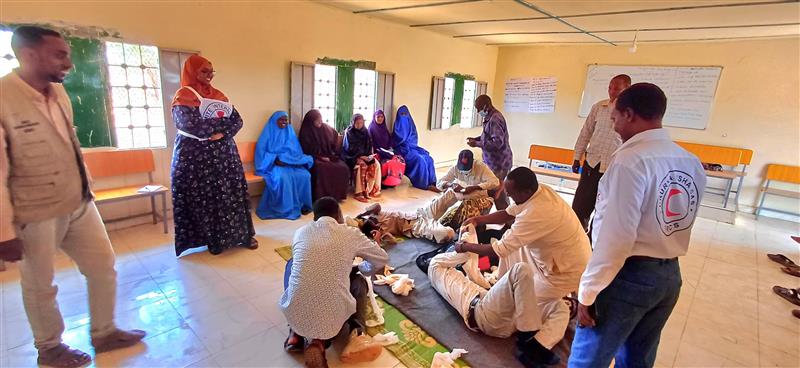
During the first half of the year, close to 300 community members were trained in fundamental first aid skills. They learned how to control bleeding, perform CPR, improvise bandages and splints, and stabilize injuries before casualties are transported to the nearest hospital. They are the first line of response.
@SRCS
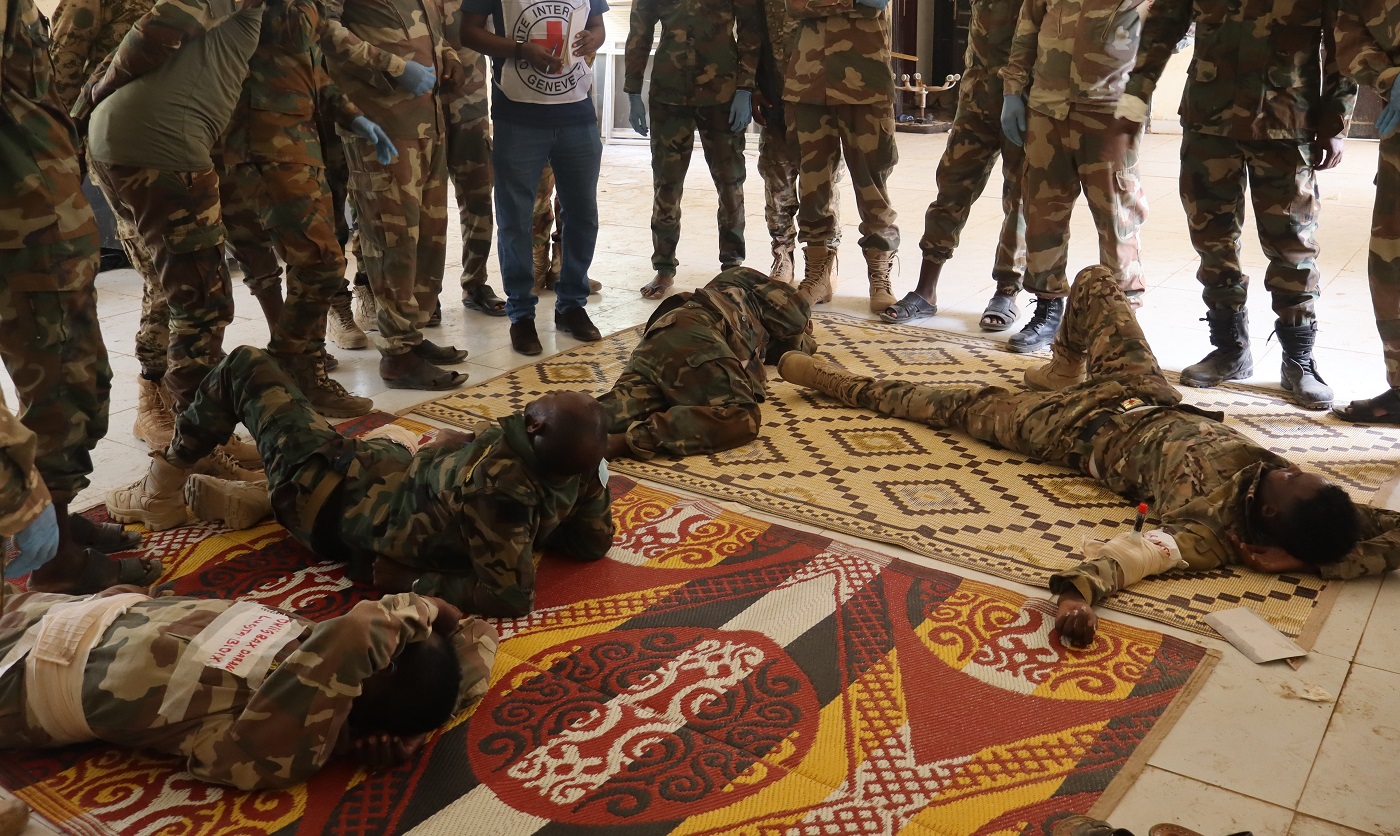
Across Somalia, fighters especially those on the frontlines, are trained in first aid, and the principles of IHL, ensuring care can reach anyone, anywhere.
In 2024, 227 fighters received first aid training, and a further 125 received training in the first half of 2025.
@ICRC/Elmi Ali
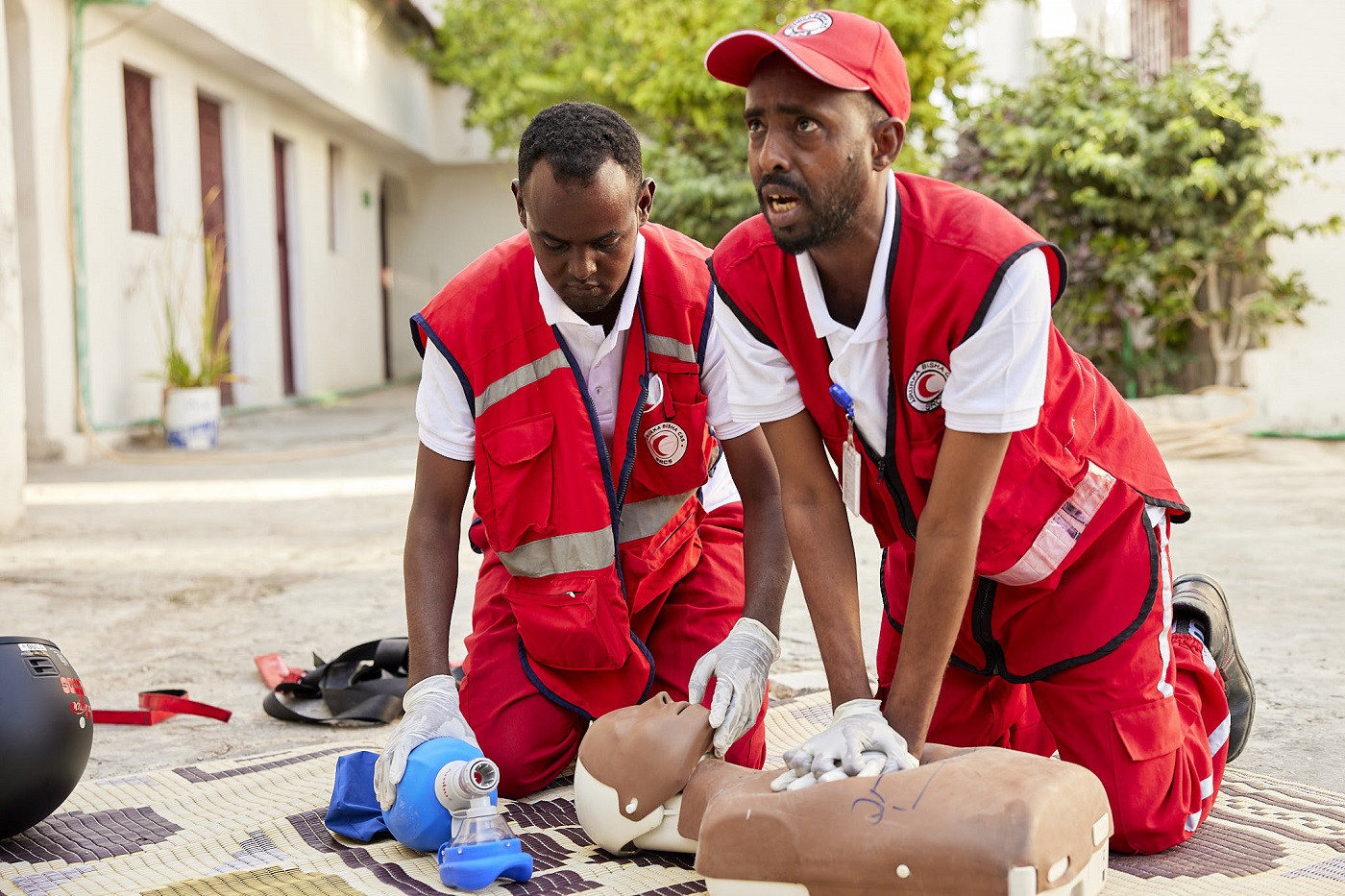
A network of more than 300 dedicated SRCS volunteers nationwide stand ready to respond during emergencies, backed by the ICRC-supported ambulance response teams (ARTs) in Mogadishu, Galkayo and Las Anod. Building lifesaving capacity for volunteers helps provide a vital safety net for communities in hard-to-reach places.
@ICRC/Abdikarim Mohamed
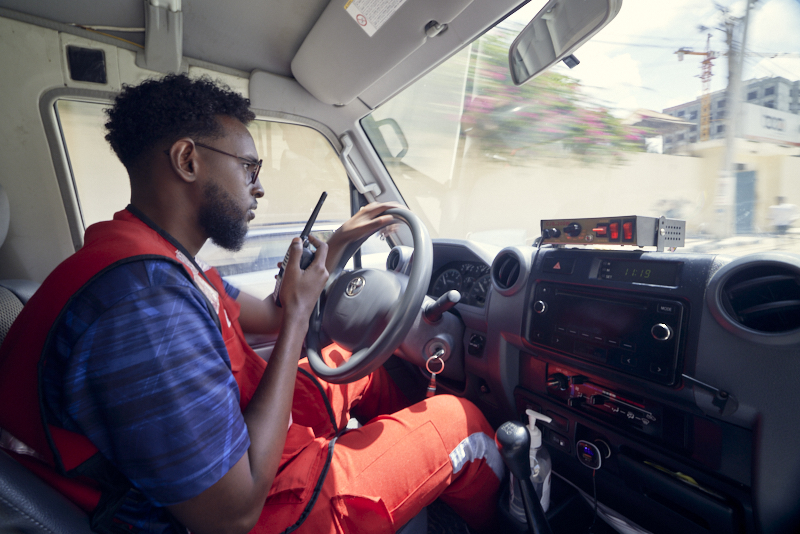
From the moment a distress call is received, it is a race against time.
For help, communities can call toll-free number of their nearest SRCS ambulance teams:
Mogadishu ART: 446
Galkayo North ART: 383
Galkayo South ART: 446
Las Anod ART: 936
@ICRC/Abdikarim Mohamed
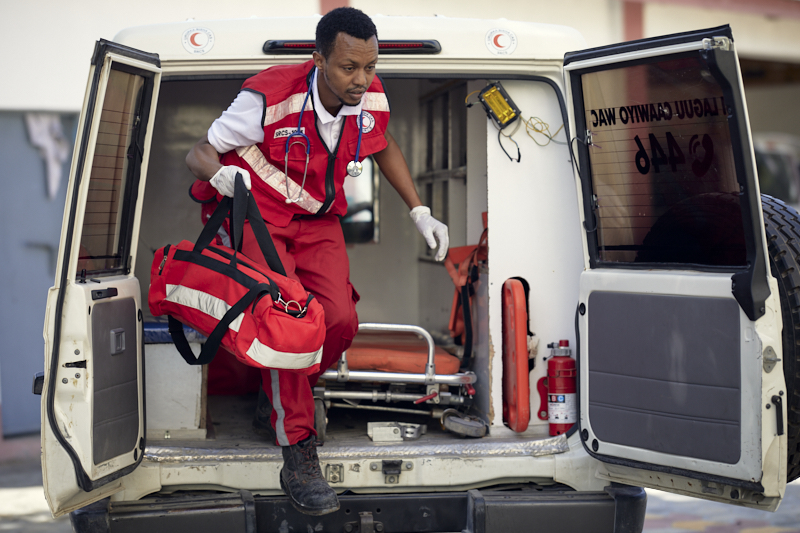
Once on the ground, SRCS paramedics help stabilize patients before transporting them to the nearest hospital, giving them the best chance at survival
In the first half of the year, more than 5,000 patients received first aid treatment, including 859 wounded by weapons.
@ICRC/Abdikarim Mohamed
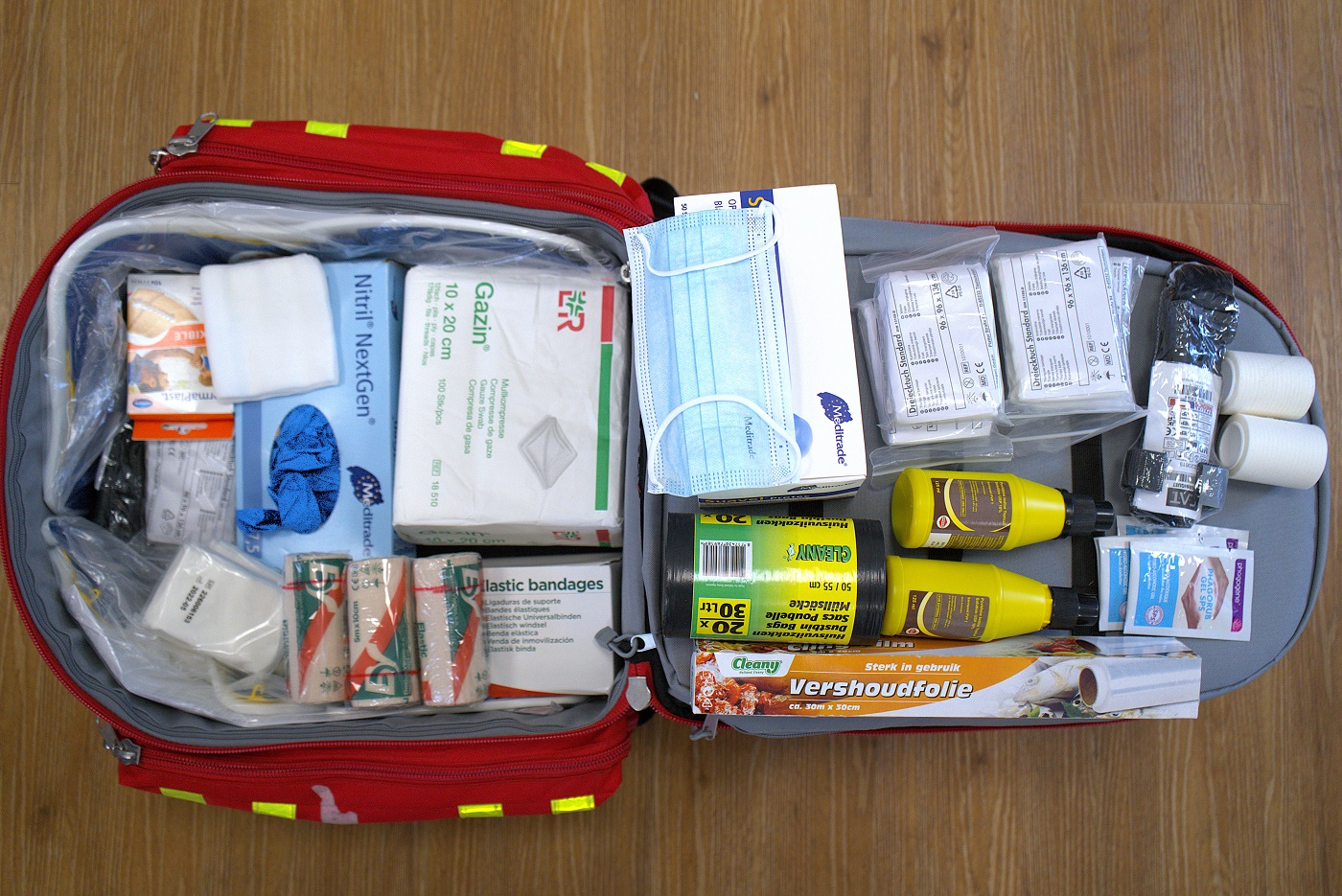
A standard first aid kit is stocked up with bandages and plasters, antiseptic solutions, sterile gauze to cover up wounds, a pair of scissors and tweezers, gloves, thermometer, and pain relievers. In 2024, 550 kits were distributed to communities and fighters to help manage emergencies. So far in 2025, 754 more have been provided.
@ICRC/Rahime Issack
The Somali Red Crescent Society runs an SRCS Training Institute in the heart of Mogadishu city, where the community can learn lifesaving skills. On this World First Aid Day, be that first link in a long chain of survival.