
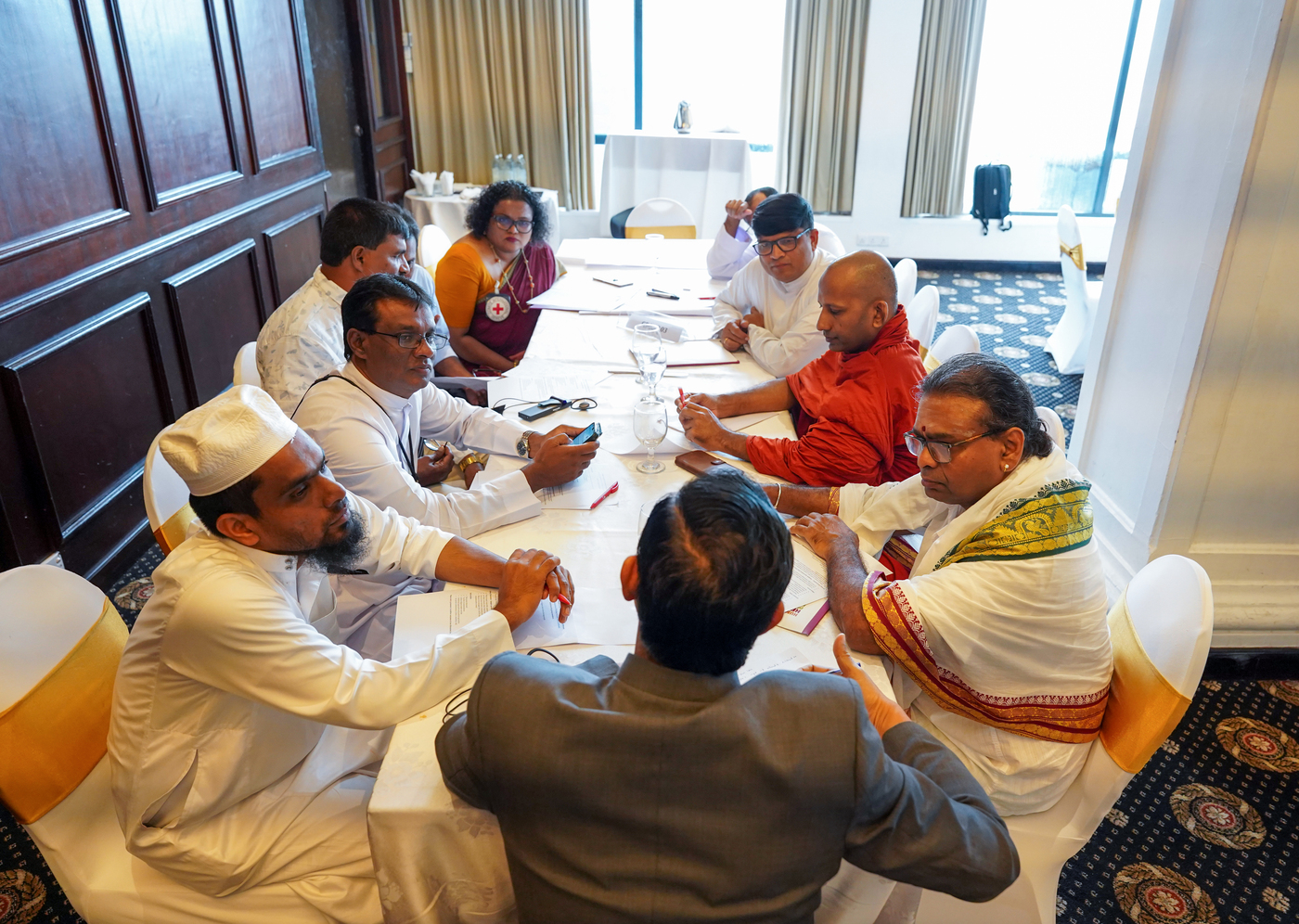
On 27 November 2025, the ICRC delegation in Sri Lanka held its first multireligious forum on religious perspectives on the issue of missing persons and their families. The forum was attended by twenty-four religious interlocutors representing the Buddhist, Roman Catholic, Anglican, Hindu and Islamic religious circles, academics, and civil society members. The objective of the forum was to sensitize the interlocutors to the pressing needs of families and explore the role of religious leaders in supporting families of missing persons.
In her opening remarks, Angelique Appeyroux, gave an outline to delegation’s interaction with Buddhist circles since 2017 and highlighted milestones; the international Conference on “Reducing suffering during conflict: The interface between Buddhism and IHL” organized in 2019 in Dambulla, and the 2nd international conference in 2022 in Chiangmai, as well as a number of research and articles, many of which were published in “IHL & Buddhism” book published by Routledge in 2023.
The forum included a presentation on the ICRC’s engagement with religious circles worldwide, along with insights from recent consultations on the needs of families of missing persons in Sri Lanka conducted by the delegation (2024-2025), consistent with findings from previous assessments made in 2015.
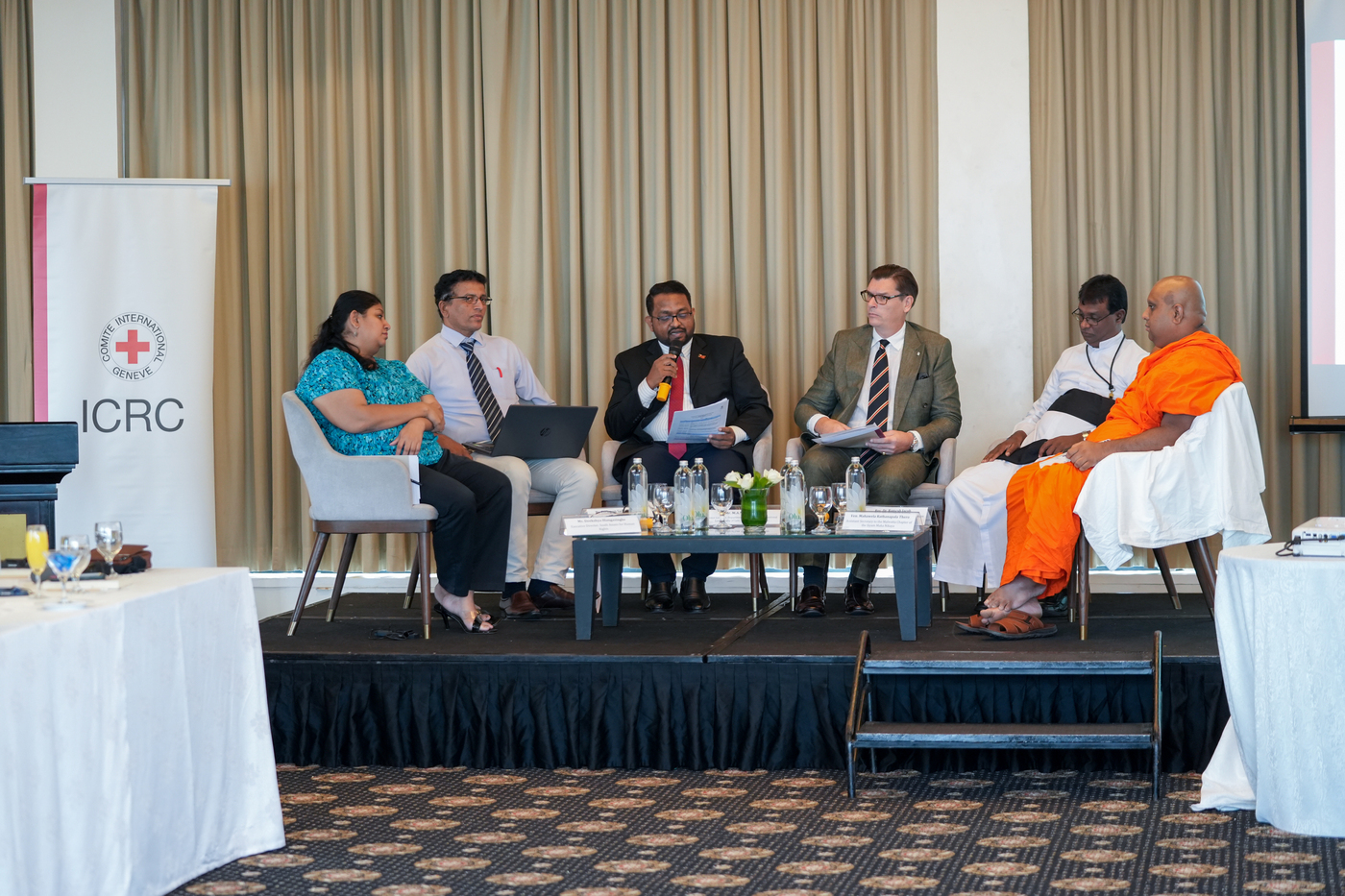
During a panel discussion on the role of religious leaders in addressing the issue of missing persons, Ven. Mahawela Rathanapala Thero emphasized the importance of an empathy-based approach, advocating for self-reflective methods and teachings that encourage compassion and societal responsibility. Rev. Fr. Dr. Ramesh Jacob highlighted the need to create spaces for families to share their pain and foster socially responsible groups to provide direct support. In addition, Dr. M.A.M. Hakeem stressed the spiritual responsibility of religious leaders to advocate for truth, justice, and reconciliation, while Mr. P. Sachithanantham emphasized the role of religious teachings, such as impermanence and the eternal nature of the soul, in consoling affected families. Deekshya Illangasinghe noted the unique influence of religious leaders in South Asia, suggesting they act as coordinators between families, authorities, and civil society to provide emotional, spiritual, and social support.
The participants also engaged in group discussions on the right to know and the clarification of fate and whereabouts of missing persons, social support for families of missing persons and commemoration of missing persons.
The participants deliberated on recommendations and possible next steps on how religious circles can assist families of missing persons.