
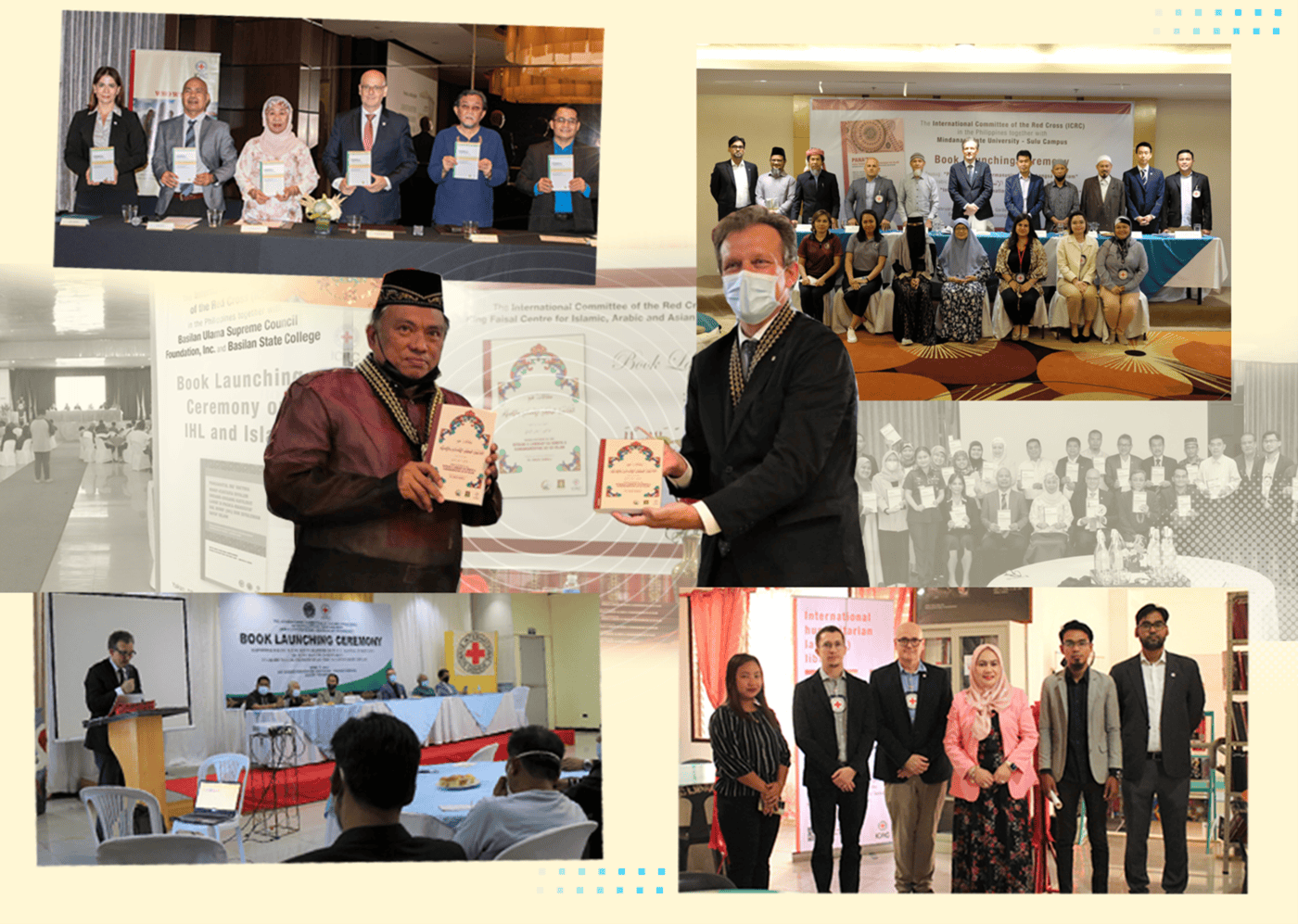
The fundamental principles of limiting suffering caused by war are universal and embodied in ancient cultures and religions. International humanitarian law (IHL) and Islamic law of war, for example, share the same objective of preserving human dignity and limiting suffering during armed conflict.
To promote awareness about the complementarity of IHL and Islamic law of war to a wider audience, the International Committee of the Red Cross (ICRC) in the Philippines has collaborated with academic and religious institutions in recent years to translate key publications, originally written in Arabic, into several local languages, including Maguindanaon, Meranao, Tausug, Yakan and Filipino. The publications, distributed to weapons bearers, community leaders, religious leaders, academics, and students, aim to promote a deeper understanding of IHL, while highlighting the shared principles and complementarity between IHL and the Islamic law of war in safeguarding the dignity and protection of victims of armed conflicts.
“The books explore the foundations of humanitarian principles in Islamic jurisprudence,” says Johannes Bruwer of the ICRC. “It emphasizes Islam’s long-standing rules on protecting civilians, prisoners and non-combatants during armed conflicts.”
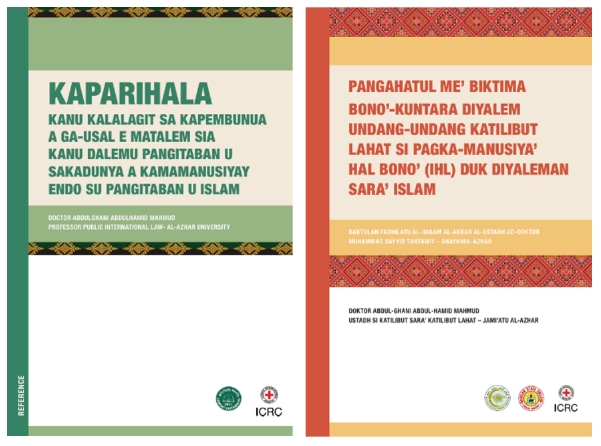
The book “Protection of the Victims of Armed Conflict in International Humanitarian Law and Islamic Law,” authored by Dr. Abdulghanī Abdulhamīd Mahmūd, was translated into Maguindanaon (Kaparihala Kanu Kalalagit sa Kapenbunua a Ga-usal e Matalem sia kanu Dalemu Pangitaban u Sakadunya a Kamamanusiyay endo su Pangitaban u Islam) through a partnership with Jamiat Cotabato and Institute of Technology, and into Yakan (Pangahatul me` Biktima bono`- kuntara Diyalem Undang-undang Katilibut lahat si pagka-manusiya` hal bono` (IHL) Duk diyalem Sara` Islam) in collaboration with Basilan State College and the Basilan Ulama Supreme Council. The publication provides a comprehensive understanding of the principles of safeguarding victims of armed conflict, comparing and harmonizing perspective from both IHL and Islamic law, looking into shared values and objectives emphasizing the mutual commitment to protect human dignity, limiting the effects of war, and ensuring the humane treatment of non-combatants and other vulnerable groups.
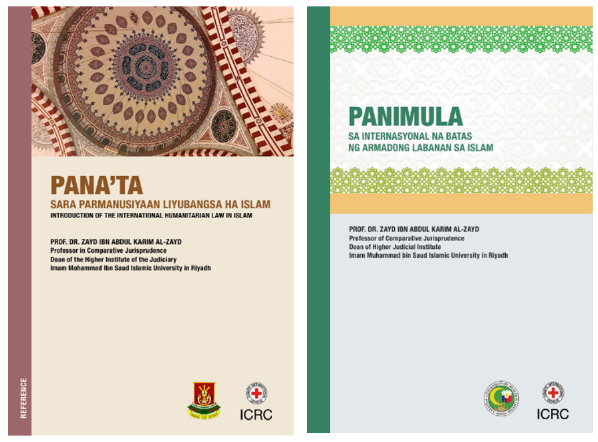
Through a partnership with Mindanao State University – Sulu, the ICRC translated “Introduction to International Humanitarian Law in Islam,” written by Dr. Zaid bin Abdul Karim Al-Zaid, into Tausug (Pana’ta: Sara Parmanusiyaan Liyubangsa Ha Islam). In addition, the National Commission on Muslim Filipinos (NCMF) supported the book’s translation into Filipino (Panimula sa Internasyonal na Batas ng Armadong Labanan sa Islam). The book highlights the ethical and legal frameworks within Islamic teachings that uphold the sanctity of human life, the human treatment of prisoners, and the protection of civilians, including women, children, and the elderly.
During the June 2025 launch of the Filipino translation, Dean Julkipli Wadi of the Institute of Islamic Studies of the University of the Philippines in Diliman said, “Today’s situation—particularly in the Middle East—affects us all. It is a situation that makes it imperative to promote the visions and principles of international humanitarian law.”
“This book fights against the misinformation and prejudices being fabricated to justify violence,” Dalisay Macadawan, Officer-in-Charge of the NCMF, said during the book launch.
In partnership with the King Faisal Centre for Islamic Arabic and Asian Studies of Mindanao State University in Marawi City, the ICRC facilitated the Meranao translation of “Articles on Islam and International Humanitarian Law” (Manga Katharo si-i ko: Bitikan a langkap sa doniya a kamamanosiyae go so Islam). The publication contains15 articles by various experts and was compiled by the ICRC’s former Islamic World Affairs Adviser, the renowned Tunisian scholar Dr. Ameur Zemmali. It contributes to bridging cultural and legal perspectives, while promoting a more inclusive approach to humanitarian protection in diverse contexts.
These initiatives seek to broaden access to key reference works and provide practical resources to support the promotion of humanitarian principles and values.
Copies have also been donated to ‘IHL corners’ established in academic institutions and madrasahs to enhance accessibility and visibility of the publications.
Links to ICRC Publications:
- 2021 Protection of the Victims of Armed Conflict in IHL and Islamic Law (Maguindanaon)
- 2021 Articles on Islam and International Humanitarian Law (Meranao)
- 2023 Introduction to International Humanitarian Law in Islam (Tausug)
- 2024 Protection of the Victims of Armed Conflict in IHL and Islamic Law (Yakan)
- 2025 Introduction to International Humanitarian Law in Islam (Filipino)