

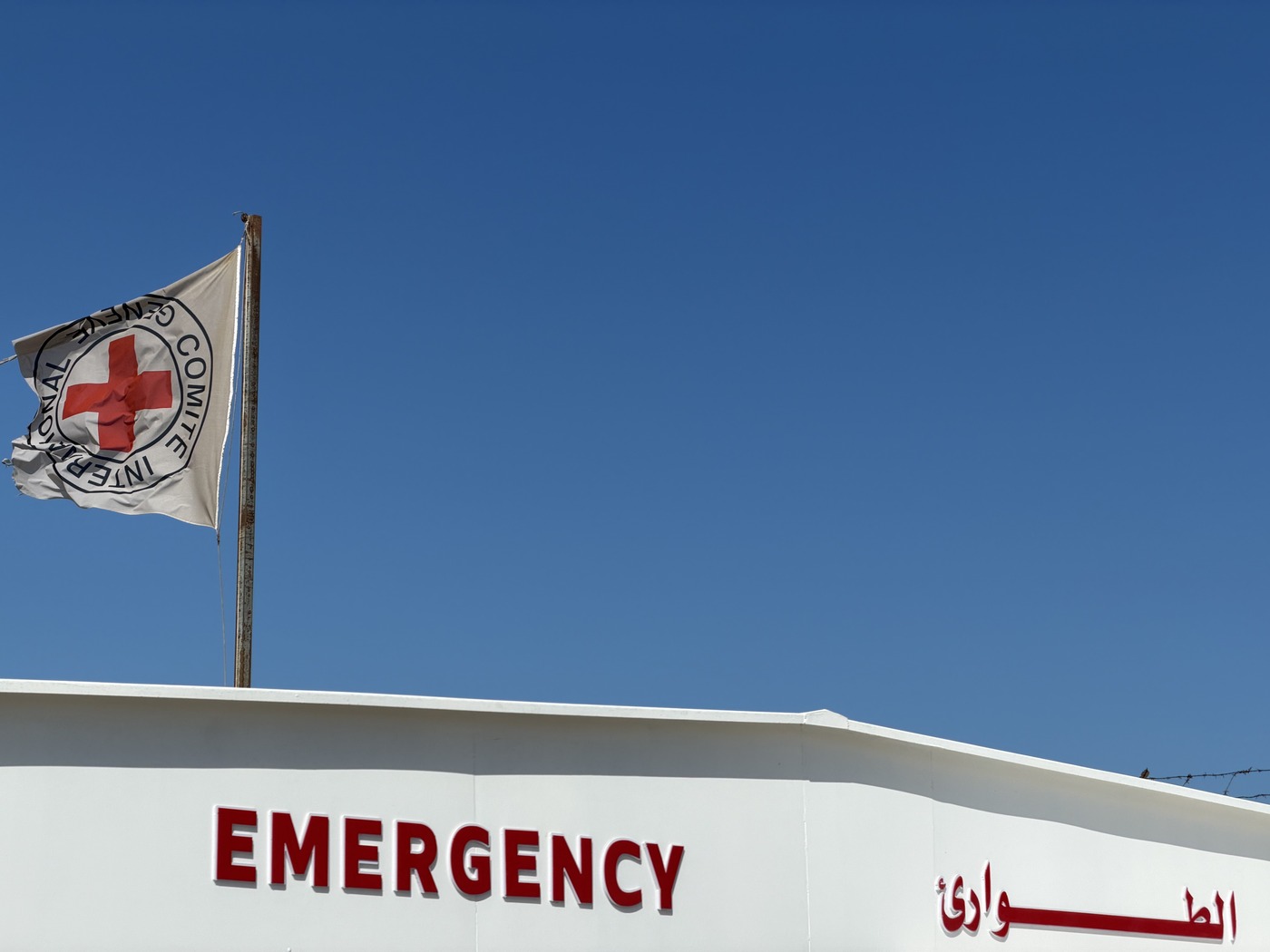
The International Committee of the Red Cross (ICRC) today finalized the import to Gaza of essential materials to refurbish and upgrade its field hospital in Rafah, which has provided lifesaving health care for communities since it opened two years ago.
“The entry of medical equipment and supplies for the Red Cross Field Hospital is a positive step towards responding to the medical needs of people in Gaza,” said Julien Lerisson, the ICRC’s head of delegation in Israel and the Occupied Territories. “But a single field hospital alone cannot absorb the sheer scale of the needs.”
The field hospital represents a partnership between 16 National Red Cross and Red Crescent Societies – with the Norwegian Red Cross playing a leading role – and hosts psychosocial support volunteers and ambulance teams from the Palestine Red Crescent Society.
It is one of very few functional health facilities in the south of Gaza, with its outpatient department serving as a primary health-care provider in the area.
The upgrade comes after a lengthy approval process and will result in meaningful improvements across the hospital as well as an expansion from 60 to 72 beds. Patients and staff will benefit from an improved operating theatre, upgraded emergency and outpatient departments, renovated maternity and paediatric care, reduced overcrowding in wards and improved post-surgical care.
Since it opened in May 2024, the field hospital has facilitated more than 11,300 surgeries, 250,000 consultations, 1,200 deliveries, 19,200 physiotherapy sessions, and at least 1,500 blood transfusions.
“Field hospitals are designed as temporary solutions, with tent structures typically intended to last a year at most,” Lerisson said. “That our field hospital has needed to function for so much longer – and is still needed to fill gaps in health services – shows just how dire access to health care in Gaza remains.”
Every hospital in Gaza has reported damage or destruction since October 2023. Health-care facilities need sustained access to water, power, basic medical supplies, medicines, as well as advanced medical equipment. Many much-needed pieces of equipment are still not permitted to enter Gaza.
“People in Gaza need medical assistance but also access to clean water and sanitation, heavy machinery to clear rubble, forensic items to facilitate the identification of the deceased, and news of their loved ones in detention,” Lerisson said.
“The upgrading of this field hospital is certainly a step in the right direction, but with the prevailing conditions, much more is needed. The long path to recovery can be realized only through ensuring dignity for people in Gaza.”